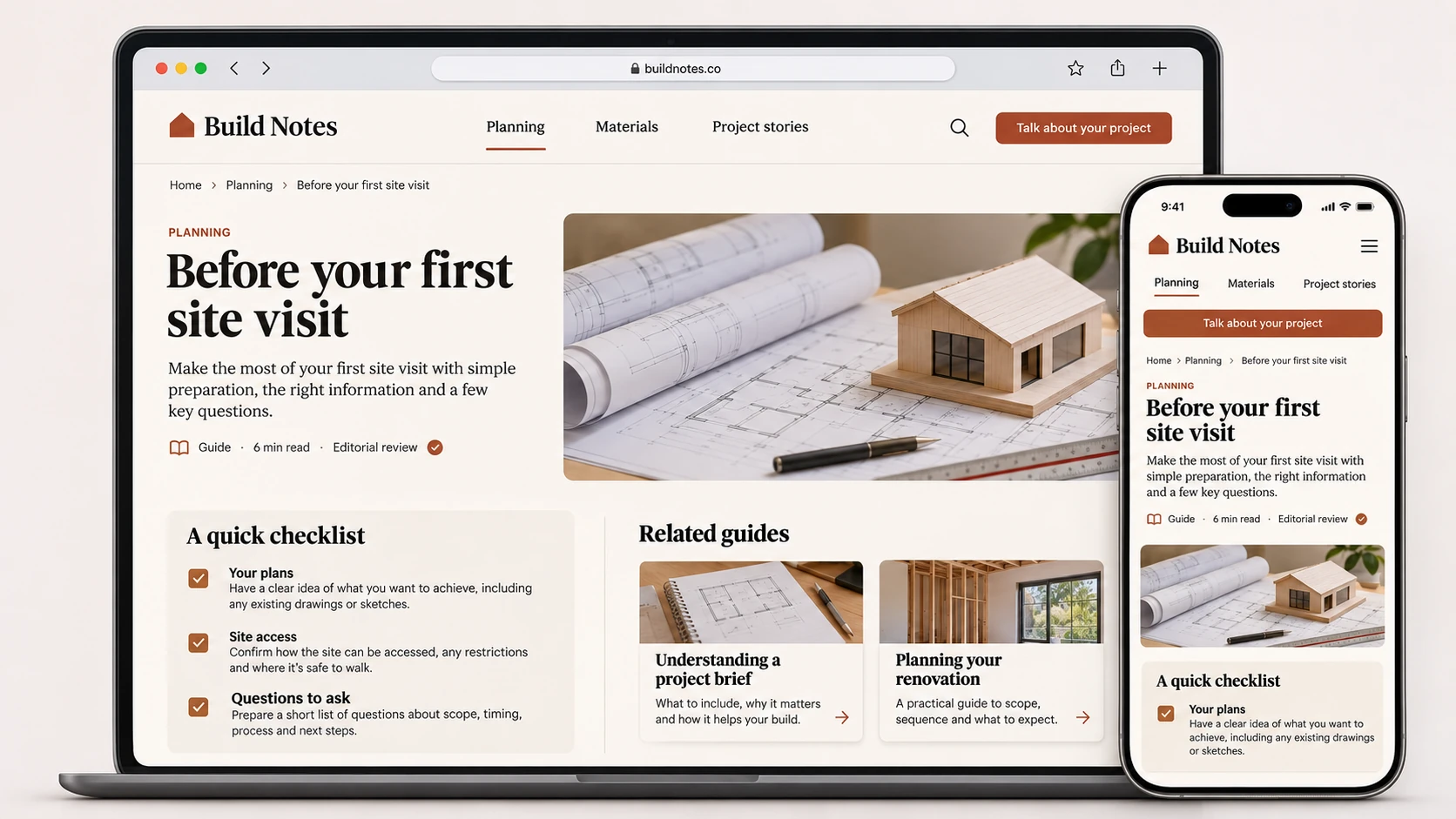
Your team explains the same thoughtful question during many consultations. A guide could let a future customer meet that helpfulness before they contact you. Publishing gives your experience a place to live, provided the articles stay accurate, readable and connected to the services or products they help someone understand.
Helpful explanations remain in repeated calls and private messages, so new visitors cannot benefit from them before approaching your team.
Readable guides answer common questions, connect related material and give the reader an appropriate next step when they are ready.
Where it could
make a difference.
Professional services
Explain common decisions in plain language.
Educators
Publish useful introductory resources.
Specialist brands
Help customers understand use and care.
Useful on: Business website, Publication, Learning website.
What this could mean
for your business.
Guides can support visibility and familiarity by showing how your business helps people think through a real problem. They may lead to suitable enquiries over time. Budget for writing, review and updates, and assess useful reading and next-step actions rather than article count alone.
Start with something
worth using.
Start with a few important questions, readable article pages and useful topic links. Give each piece an owner and review date. Add a complex publishing schedule only when you can sustain the quality.
- Readable article pages
- Useful categories and links
- An editorial review process
Give the promise
something to stand on.
You need knowledgeable contributors, an editor and a realistic review schedule. Choose questions you can answer responsibly and make the source or author clear where expertise matters.
Someone needs to prepare, review and update the material. Separate opinion from sourced factual guidance and keep examples accurate, especially where people could act on them.
- Knowledgeable contributors
- Publishing responsibility
- A review schedule
How it fits what you already have
Check publishing permissions, article templates, navigation and image rights. Decide who can draft, approve and update material, and connect guides to relevant offers without making every paragraph a sales interruption.
Let a small beginning
teach you something.
Ask staff which questions repeatedly delay decisions, then draft one useful answer. Invite a few intended readers to explain what it clarified and what they would still need to ask a person.
Does the article help the reader make a clearer next decision and know when they need more specific help?
Look for these signs
- Articles answer recognisable customer questions.
- Readers find relevant next steps.
- Outdated material reaches an owner for review.
A little more
clarity.
Do we need to post every day?
No. A manageable collection of useful, maintained material can be a better starting point than a frequent schedule your team cannot keep accurate or interesting.
Can AI write the articles?
It can assist drafting or organisation, but your business should check facts, examples and tone. Publish material you are prepared to stand behind, with appropriate expert review where the subject requires it.
Could this work with my existing website?
We would check how your current website is built, what it already does and which services need to connect. That helps us choose a suitable addition and avoid paying twice for something you already have.
What would this change
in your business?
Your customers. Your working day. The part you would love to make easier. Answer a few questions and leave with a starting plan you can keep.
Free to explore. No account or email needed for your starting plan.