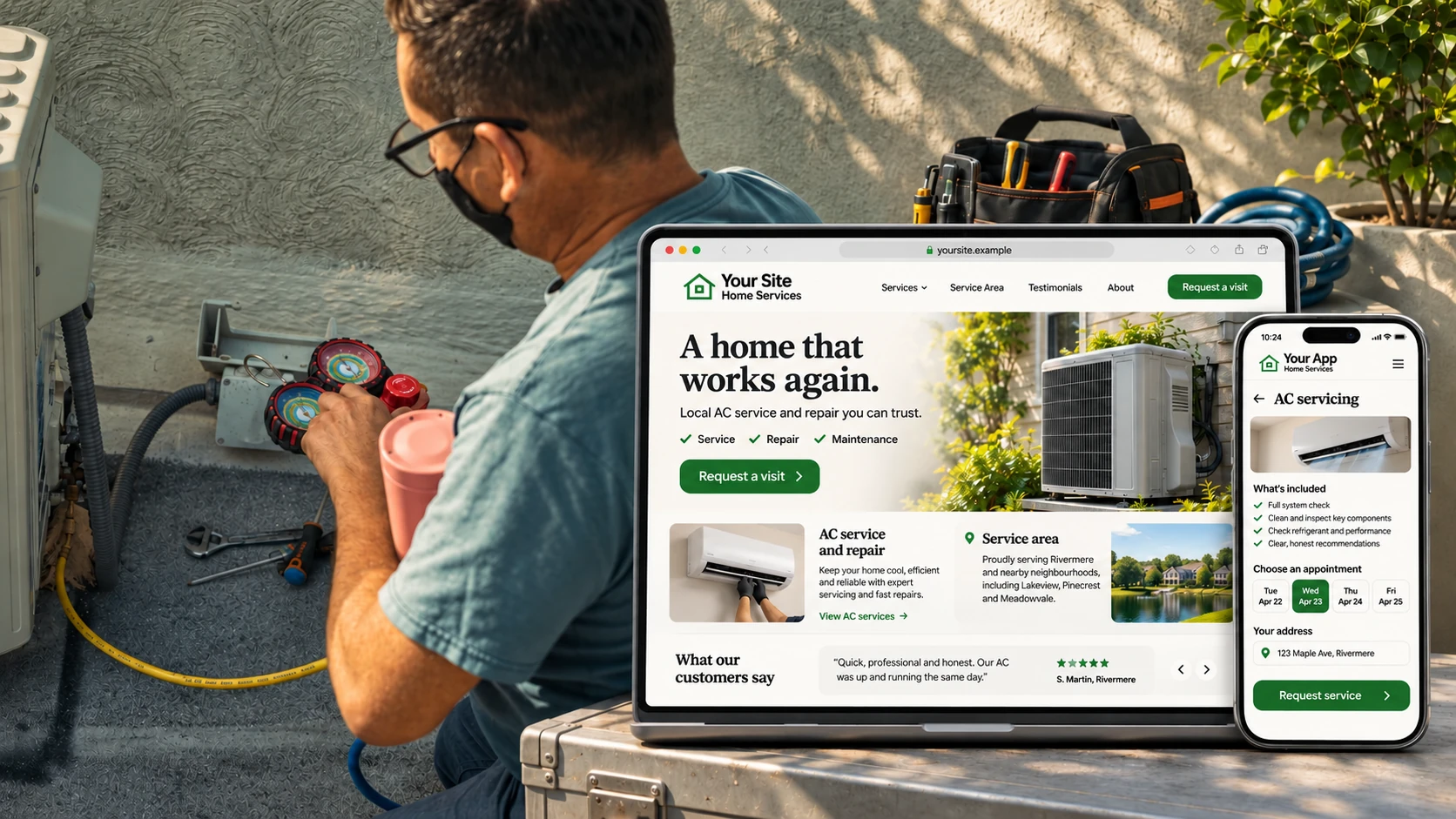
A tradesperson scrolls through a phone full of finished jobs when a customer asks what they can do. The photographs are good, but the story of the challenge and their exact role is missing. Your service could turn that scattered evidence into a clear portfolio that helps the right customer start a more informed conversation.
A business you can
picture.
Begin with one trade or service category. A guided interview turns selected projects into concise records with the customer's permission, relevant details and a clear account of the provider's contribution.
Who would be glad
you built it?
Tradespeople and small service firms
A useful presentation of completed work
Prospective customers
Context for understanding a provider’s relevant experience
Trade associations
A practical portfolio service for members
Where the money
could come from.
Providers could pay a fixed portfolio-preparation fee and an optional hosting subscription. The fee covers selecting work, interviewing, editing and permission checks; photography or later updates can be separately scoped. The service sells a clearer presentation, not guaranteed enquiries or a certification of competence based on attractive pictures.
The part you could
make your own.
Your possible edge is useful evidence rather than a polished gallery alone. Showing which part of a job the provider handled could help a customer recognise relevant experience and ask better questions.
An angle to test with the people you want to serve.Start with something
worth using.
Choose one trade or service category. Prepare a small set of project stories with approved photographs, the problem, the provider’s role and the result. Publish a clear contact route and an easy update process.
- Organise genuine work into readable project stories.
- Separate personal contributions from team work.
- Share selected examples suited to an enquiry.
Give the promise
something to stand on.
You need careful interviewing and permission-aware editing. Confirm the provider’s actual contribution, protect client locations and keep self-described work separate from independently checked credentials.
Obtain permission, protect client locations and avoid presenting unverified claims as credentials. Any verification badge should explain exactly what was checked and by whom.
Let a small beginning
teach you something.
Work with a few providers in one trade and prepare portfolios from work they are authorised to show. Ask prospective customers to explain what each provider actually did and what they would still want to check.
Can a prospective customer understand the provider’s role in a relevant project and identify the right follow-up questions?
Look for these signs
- Project descriptions match the provider’s actual role
- Image permissions and sensitive details are reviewed
- Customers can find relevant work and contact information
A little more
clarity.
Does a portfolio badge prove qualification?
Only use a badge with a precise explanation of what was checked and by whom. A completed portfolio or supplied photograph should not imply professional certification.
What if the best work belongs to a former employer?
Check ownership, client permissions and confidentiality before using it. The provider may describe only what they are authorised to share, with their role stated accurately.
What should my first version focus on?
Start with the first test described here, then build around the part people actually use and would pay to keep.
Now picture it
with your name on it.
Your people. Your priorities. The version you keep thinking about. Answer a few questions and leave with a starting plan you can keep.
Free to explore. No account or email needed for your starting plan.