A learner opens a blank portfolio page and realises the certificates do not show how they think. Your studio could give them a realistic brief, a useful review and a reason to revise. The finished piece matters, but the decisions behind it may be the more valuable story.
A business you can
picture.
Pick one skill and a small set of realistic briefs. Make it clear which tasks are practice and which, if any, are commissioned by a real business.
Who would be glad
you built it?
New practitioners
Build evidence of a specific skill.
Training providers
Offer reviewed projects after lessons.
Career returners
Refresh a portfolio through current practice.
Where the money
could come from.
A learner could pay for a project package that includes specified rounds of review. Training providers could buy places for a class. The commercial offer must account for expert review time, revision rounds and moderation; selling unlimited feedback cheaply could undermine the very experience customers are paying for.
The part you could
make your own.
The possible difference is a portfolio with a visible learning story: challenge, choices, feedback and revision. Test whether learners and the people reviewing their work find that account more useful than a gallery of polished final images.
An angle to test with the people you want to serve.Start with something
worth using.
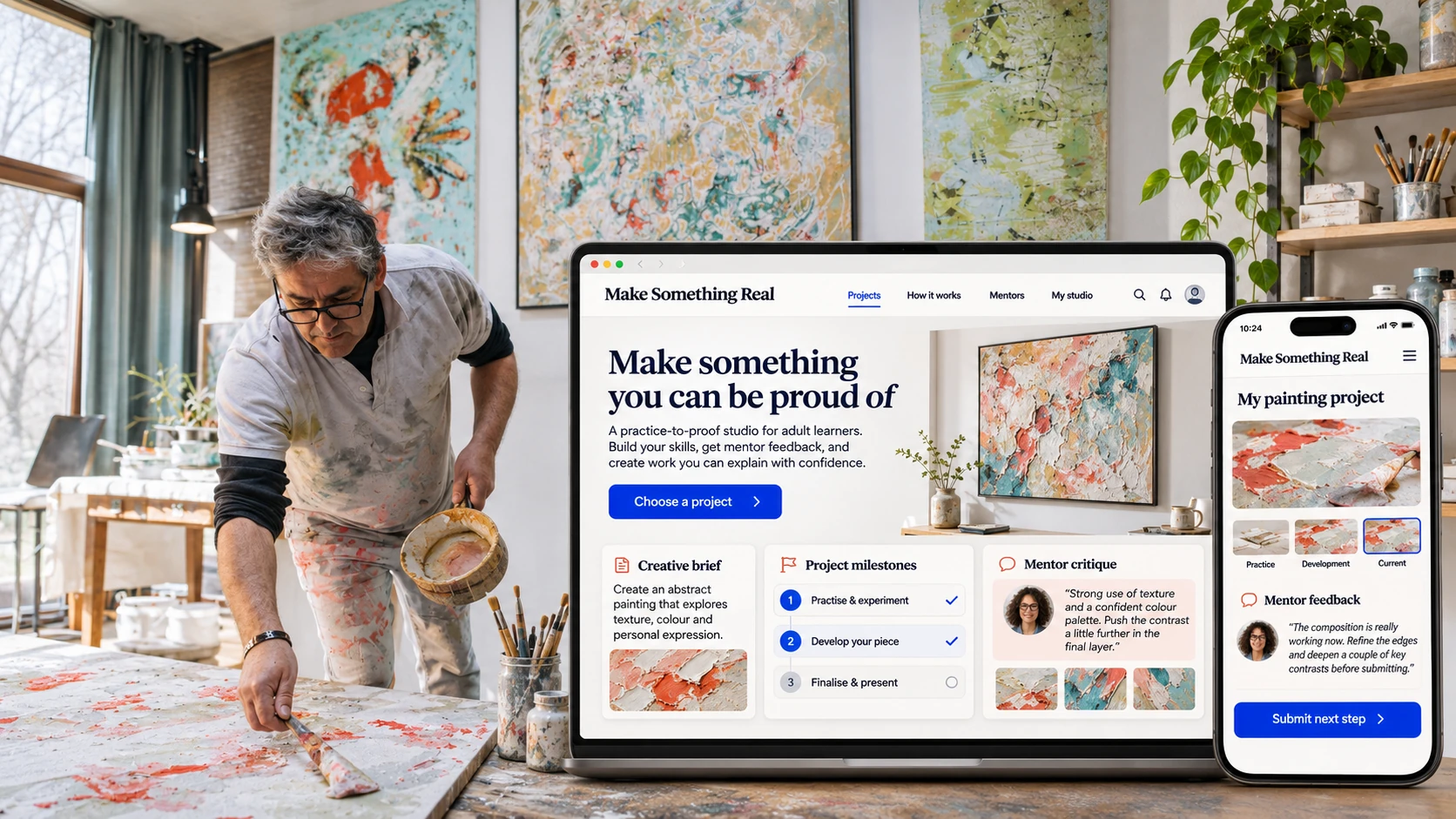
Begin with one skill, two or three practice briefs, a submission area and scheduled reviewer feedback. Let learners display their process and revisions, with clear labels separating simulated work from actual client projects.
- Give each project a clear brief and review criteria.
- Collect drafts and the thinking behind them.
- Let a mentor guide revisions.
- Create a shareable portfolio with the learner’s permission.
Give the promise
something to stand on.
This suits someone who can design realistic briefs and recognise good work in a particular field. Reviewers need time, clear criteria and a consistent approach to helping learners improve without doing the task for them.
Qualified review is central to the service. Plan fair workloads, mentor availability and support. Keep confidential business material out of practice briefs unless permission is in place, and make each contributor’s role visible.
Let a small beginning
teach you something.
Partner with a small training group finishing a relevant course. Ask participants to complete one brief, then observe which feedback leads to a meaningful revision and which instructions leave them stuck or confused.
Does the reviewed project help a learner explain their decisions more clearly to another person?
Look for these signs
- Feedback leads to visible improvements
- Learners explain their own choices
- Reviewers can sustain the workload
A little more
clarity.
Can real companies supply briefs?
They can, but clarify whether the work is practice or a paid commission. Agree ownership, use permissions and compensation before learners begin so a learning exercise does not become hidden unpaid client work.
What if someone submits work they did not create?
Ask for intermediate decisions, drafts and a short explanation of the process. Set clear rules for outside help and AI use. A polished final file alone is weak evidence of someone's understanding.
Can learners use AI?
Set a clear assistance policy. Learners should explain the decisions and stand behind the work they submit.
Must I have employer projects from day one?
No. Clearly labelled practice briefs can establish the learning experience before live work is added.
Riipen connects learners and employers through real projects. It is an adjacent reference for learning through work. Your focus could be one specific skill and a clearer record of improvement.
Now picture it
with your name on it.
Your people. Your priorities. The version you keep thinking about. Answer a few questions and leave with a starting plan you can keep.
Free to explore. No account or email needed for your starting plan.