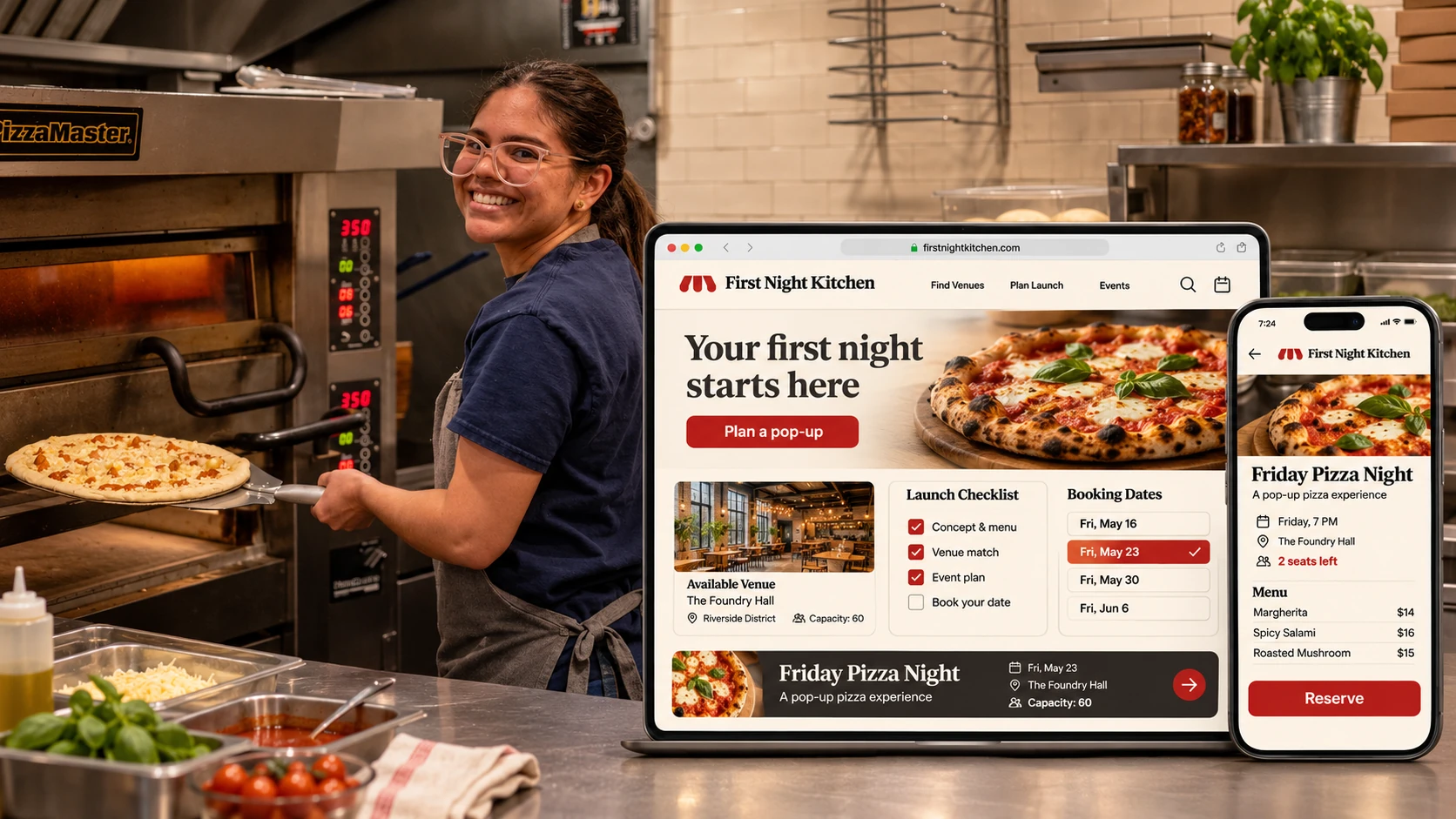
People keep asking a cook when they can taste the food beyond a private gathering. Opening a permanent venue feels too large, but a pop-up still needs a kitchen, a host and a workable service plan. Your network could help organise that bounded first event and the questions it should answer.
A business you can
picture.
Start with vetted venue partners and a limited event format. The operator helps the creator prepare a brief, agree responsibilities and publish the event once the practical arrangements are confirmed.
Who would be glad
you built it?
Cooks testing a public food concept
A scoped launch process with suitable partners
Venues considering a guest kitchen
Clear operating and event commitments
Guests interested in the confirmed event
Honest information about food, timing and experience
Where the money
could come from.
The cook could pay a defined launch-coordination fee covering planning and partner liaison. Ticketing may carry a separately disclosed booking fee. Budget venue, production, staff and guest-support costs explicitly so the trial can inform a real decision. The service should not present a sold-out-looking concept page as proof of a sustainable restaurant business.
The part you could
make your own.
Your proposed difference is a supported first public service with a learning goal. The cook could examine preparation and guest experience together, while the venue knows exactly what it is agreeing to host.
An angle to test with the people you want to serve.Start with something
worth using.
Plan one small confirmed pop-up with a limited menu and a suitable host. Record responsibilities, capacity, service timings and guest terms. Open bookings only when the necessary arrangements are ready.
- Match the proposed format to a suitable venue.
- Agree equipment, staffing and service responsibilities.
- Sell confirmed places with clear event details.
Give the promise
something to stand on.
You need suitable venues, food-operation expertise and clear event responsibilities. Permissions, preparation facilities, food information and cancellation arrangements must be reviewed before an attractive concept becomes a ticketed event.
Food operations, venue permissions and event responsibilities need appropriate review. Do not sell an unconfirmed event as ready; define cancellation and guest-support arrangements before bookings open.
Let a small beginning
teach you something.
Partner with a capable cook and suitable venue on one limited event. Collect practical guest feedback and review service flow and actual costs with the team before proposing another date.
Can the team deliver the promised menu and guest experience, and identify what must change before another event?
Look for these signs
- Bookings open only after arrangements are confirmed
- Service responsibilities are understood
- The review includes costs and practical guest feedback
A little more
clarity.
Can the event be advertised while the venue is uncertain?
An interest page can describe a proposal honestly, but it should not sell an unconfirmed event as ready. Clearly distinguish expressions of interest from paid confirmed bookings.
Does the network handle food compliance?
The responsibilities must be assigned to appropriately qualified people and operators. Coordination does not remove the cook’s, venue’s or other responsible parties’ obligations for the actual food operation.
What should my first version focus on?
Start with the first test described here, then build around the part people actually use and would pay to keep.
Now picture it
with your name on it.
Your people. Your priorities. The version you keep thinking about. Answer a few questions and leave with a starting plan you can keep.
Free to explore. No account or email needed for your starting plan.