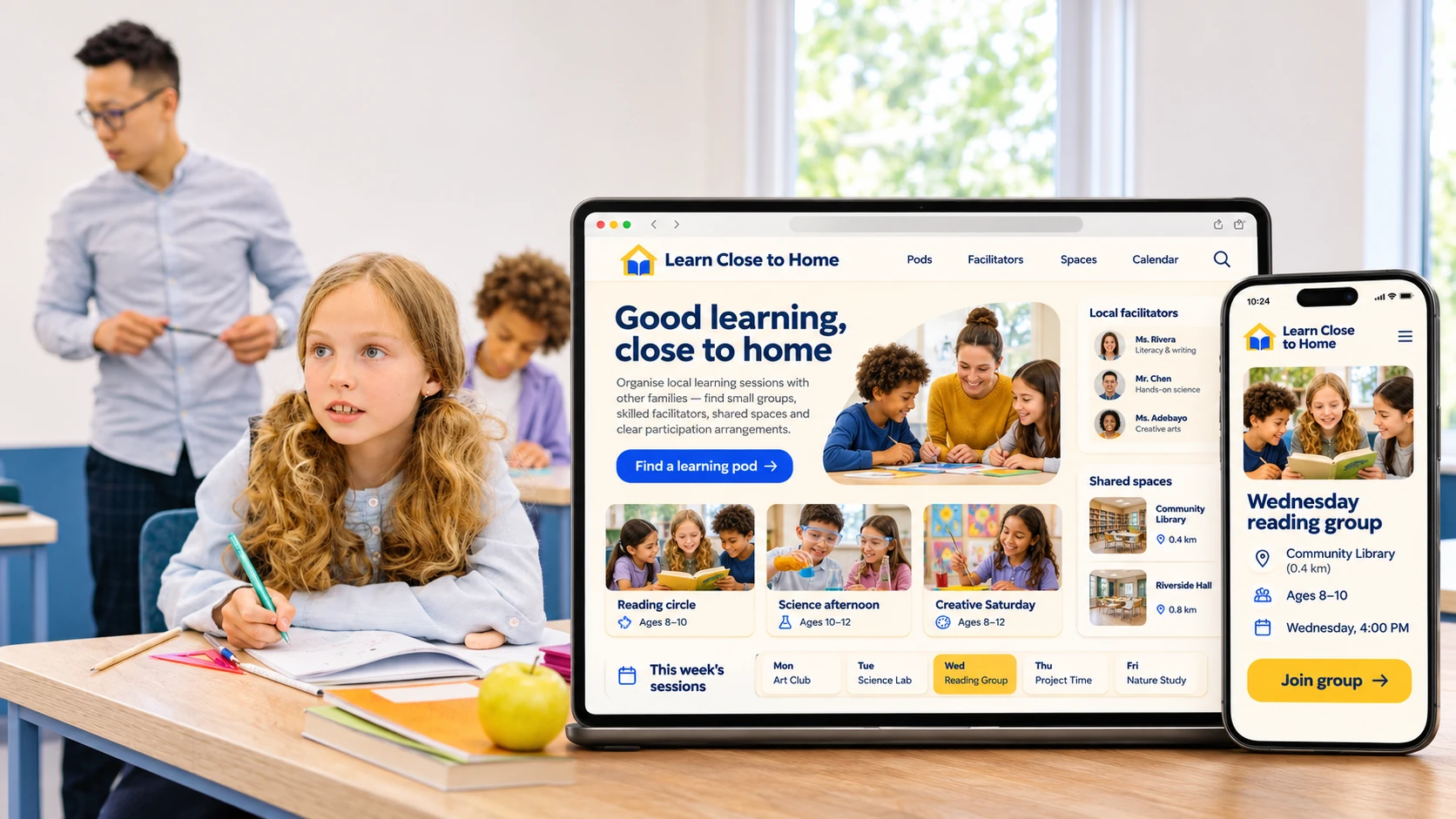
A few parents want a regular science or reading group, but one person keeps chasing the venue, facilitator and replies. The idea is appealing; the organisation is tiring. Your service could give that shared wish a practical home, with responsibilities, sessions and changes clear enough for the group to continue.
A business you can
picture.
Start with one area and one kind of activity. Families express interest, a coordinator confirms the facilitator and space, and participants receive the agreed schedule and costs.
Who would be glad
you built it?
Families seeking a small learning group
A clear programme and dependable arrangements
Independent facilitators
Suitable group briefs and organised schedules
Community venues
Understandable booking and supervision responsibilities
Where the money
could come from.
Families could pay a clearly stated coordination fee within the confirmed programme price. Separate that fee from facilitator and venue costs so the offer is understandable. Revenue supports scheduling, communication and administration. An interest form should remain a way to explore the group, not a hidden financial commitment or an unverified promise of a place.
The part you could
make your own.
Your possible advantage is sharing the organising burden without making the group feel impersonal. A dependable change process and visible session responsibilities could help families sustain a programme they already want.
An angle to test with the people you want to serve.Start with something
worth using.
Choose one age range and activity in a compact area. Gather interest, confirm a suitable facilitator and venue, then offer a bounded programme with dates, responsibilities and cancellation terms before collecting committed places.
- Collect interests, ages and practical availability.
- Confirm the facilitator, venue and group size.
- Keep attendance and parent communication together.
Give the promise
something to stand on.
You need suitable facilitators, reliable venues and clear safeguarding responsibilities. The coordination role must explain who supervises, who communicates changes and what families are paying for.
Work with suitable facilitators and venues, establish safeguarding responsibilities and protect children's information. Interest forms should stay distinct from a confirmed place or a paid commitment.
Let a small beginning
teach you something.
Work with a small parent group that has a specific activity in mind. Help them organise one short programme, then review attendance, communication and the work that still falls unexpectedly on a single parent.
Can families understand who is responsible for each session and stay informed when the group’s arrangements change?
Look for these signs
- Interest becomes clearly confirmed participation
- Session responsibilities are understood
- Changes reach all affected families
A little more
clarity.
Does a facilitator listing prove suitability?
No. Explain the review actually performed and ensure the programme has appropriate safeguarding and supervision arrangements. A paid listing or attractive profile should not imply a comprehensive suitability guarantee.
What happens if too few families join?
Set a clear confirmation threshold and refund or cancellation process for the programme. Families should know when an expression of interest becomes a confirmed paid place.
What should my first version focus on?
Start with the first test described here, then build around the part people actually use and would pay to keep.
Now picture it
with your name on it.
Your people. Your priorities. The version you keep thinking about. Answer a few questions and leave with a starting plan you can keep.
Free to explore. No account or email needed for your starting plan.