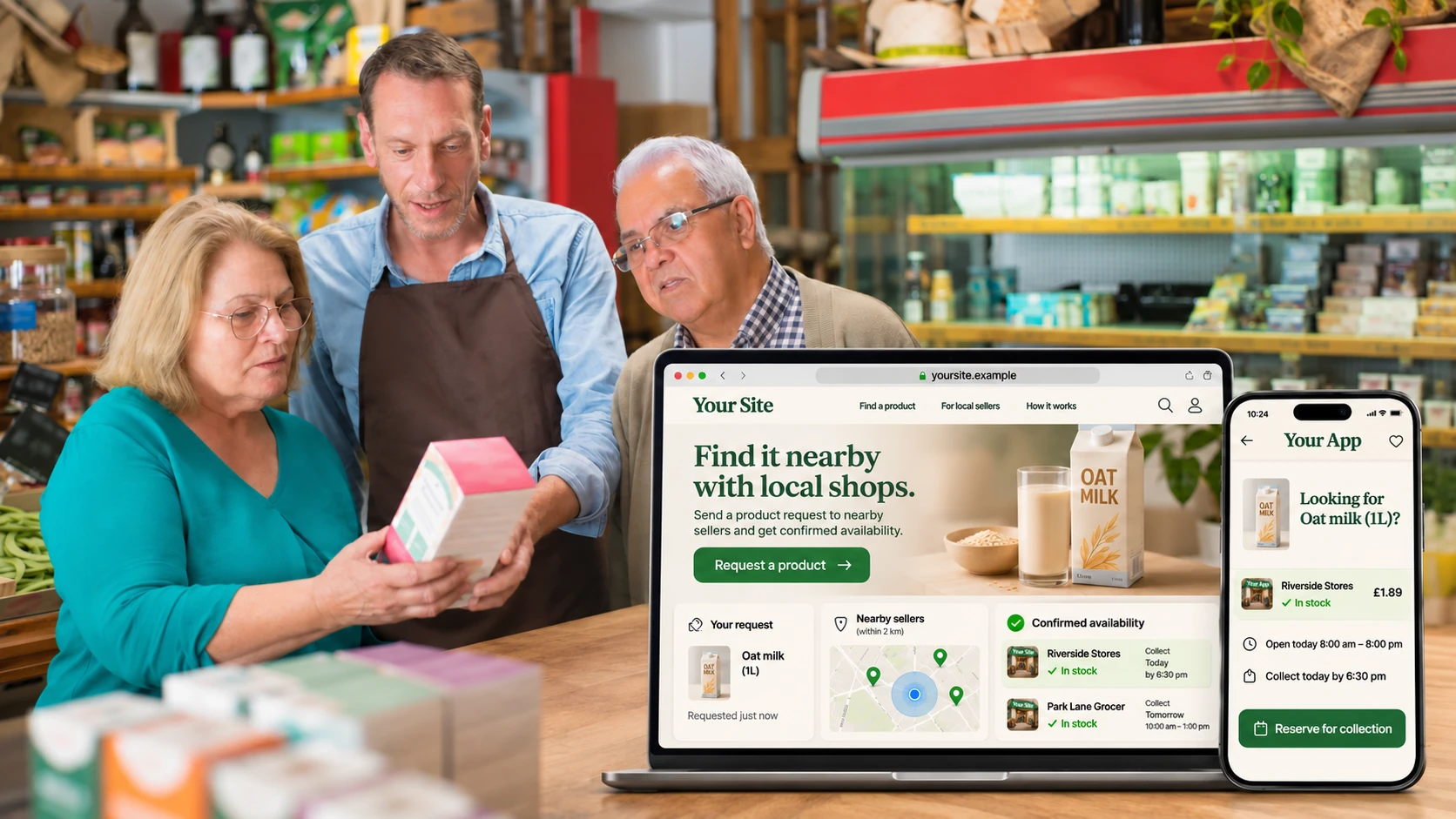
A customer needs a particular size of fitting today and has already called several shops. One might have it, another offers a substitute without enough detail. Your service could carry the actual request to suitable sellers and return dated, specific answers, helping the customer choose a workable next step.
A business you can
picture.
Begin with one product category in a manageable area. A shopper describes the item, sellers confirm a suitable match and the customer sees the details before committing.
Who would be glad
you built it?
Local shoppers with a specific need
Current answers about the item they are looking for
Small shops without complete online catalogues
A manageable way to respond to relevant requests
Local delivery coordinators
Confirmed item and collection details when a delivery is agreed
Where the money
could come from.
Sellers could pay a subscription for relevant request handling and response tools. Start with a defined category or service area so the fee relates to a clear workflow. Revenue supports routing, seller onboarding and support; it should not depend on sending every request indiscriminately or charging customers for unconfirmed stock claims.
The part you could
make your own.
Your angle could be getting a fresh answer without requiring a small shop to maintain a perfect catalogue. A photograph or exact model in the reply may help customers distinguish a genuine match from a convenient substitute.
An angle to test with the people you want to serve.Start with something
worth using.
Choose one product category and a compact area. Let customers describe an item, route the request to suitable sellers and display timestamped replies. Confirm the selected collection or order separately.
- Send a specific request to relevant sellers.
- Require confirmation of item, quantity and price.
- Show when an availability answer was given.
Give the promise
something to stand on.
You need responsive seller relationships and a clear request format. Availability needs an expiry, substitutions must be explicit and a reply should not become a reservation without the seller’s confirmation.
Set response expectations, make substitutes explicit and prevent bait-and-switch listings. An availability reply should have a clear expiry and should not silently become a reserved order.
Let a small beginning
teach you something.
Invite a small group of willing shops and trial real customer requests in one category. Follow the chosen answer through to collection and record whether the offered item and price were still available.
Does the shopper receive an accurate, timely answer that leads to the item they actually asked for?
Look for these signs
- Replies identify the item and expiry
- Substitutes are clearly distinguished
- Collection matches the confirmed seller response
A little more
clarity.
Does an availability reply reserve the item?
Not automatically. Show the next confirmation step and any hold period clearly, so a shopper understands whether the seller has merely answered or actually set something aside.
What if sellers respond with unrelated offers?
Set relevance rules and a reporting process. The service should protect the customer’s specific request rather than turn it into permission for repeated promotional messages.
What should my first version focus on?
Start with the first test described here, then build around the part people actually use and would pay to keep.
Now picture it
with your name on it.
Your people. Your priorities. The version you keep thinking about. Answer a few questions and leave with a starting plan you can keep.
Free to explore. No account or email needed for your starting plan.