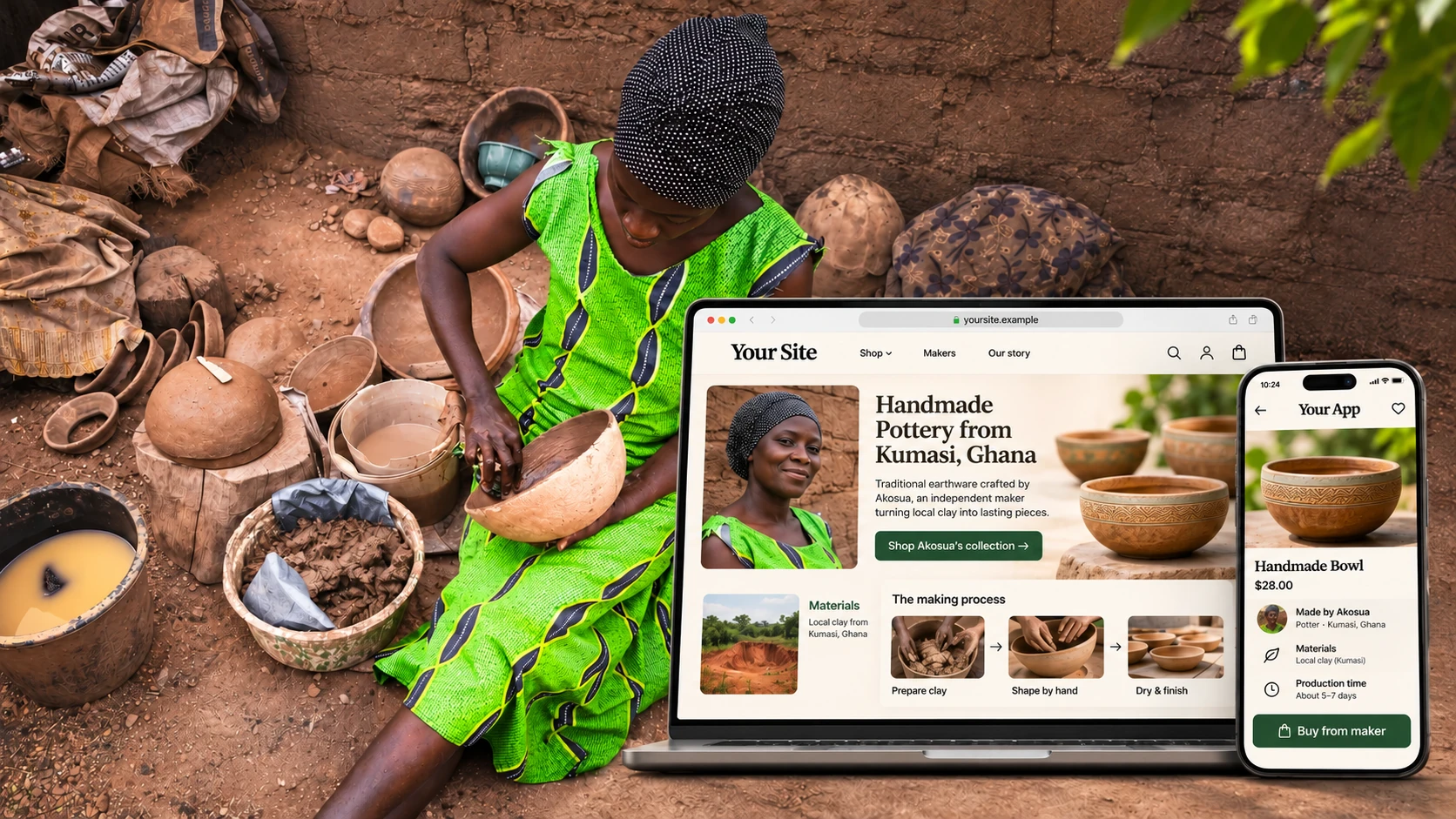
A maker spends years learning a technique, yet the finished object appears online as a small photograph beside a price. The care behind it is hard to see. Your marketplace could make room for the process, materials and person, helping a buyer understand what they are choosing and the maker explain it in their own words.
A business you can
picture.
Choose a coherent maker community or product category. Each seller builds an approved story alongside product details, fulfilment information and evidence supporting specific claims about the work.
Who would be glad
you built it?
Buyers interested in craft
Meaningful context and a clear purchase process
Independent makers
A respectful way to present their work and fulfil orders
Gift buyers
A story and product detail they can understand and share
Where the money
could come from.
A disclosed share of completed sales could fund the marketplace. Optional photography or storytelling services can be separately priced, with the maker’s approval over the result. Your share must cover editing, payments and buyer support. Paid editorial placement should be labelled and should not imply that provenance claims have been independently verified.
The part you could
make your own.
Your proposed difference is letting the maker’s choices remain visible: why a material was selected or how a technique shapes the piece. Test whether that context helps buyers make a more meaningful, informed purchase.
An angle to test with the people you want to serve.Start with something
worth using.
Choose a focused craft collection. Build product pages with maker-approved stories, accurate materials and dimensions, clear lead times and order terms. Keep seller support and delivery updates manageable before expanding the range.
- Connect the product to its maker and process.
- Explain materials, care and delivery clearly.
- Keep claimed origins separate from verified evidence.
Give the promise
something to stand on.
You need maker relationships, editorial care and dependable fulfilment arrangements. Obtain permission for stories and images, check factual claims and avoid making a polished narrative look like independent certification.
Obtain permission for images and stories, agree usage rights and review factual claims. The platform needs dependable seller support, fulfilment processes and a way to address inaccurate information.
Let a small beginning
teach you something.
Work with a few makers in one tradition and invite relevant buyers to compare a complete story-led page with the information they usually receive. Ask which details influenced understanding and which raised further questions.
Does the buyer understand a specific aspect of the piece’s making and still have the practical information needed to order?
Look for these signs
- Makers approve their published stories
- Product details match the supplied piece
- Buyers can explain what distinguishes the work
A little more
clarity.
Does a maker’s story prove authenticity?
It is a source to assess, not automatic verification. Explain who supplied the information and what checks, if any, were performed before making a stronger provenance claim.
Can every piece be delivered immediately?
Only show availability and lead times the maker can support. Handmade or made-to-order work needs clear expectations about variation, production and delivery before a buyer commits.
What should my first version focus on?
Start with the first test described here, then build around the part people actually use and would pay to keep.
Now picture it
with your name on it.
Your people. Your priorities. The version you keep thinking about. Answer a few questions and leave with a starting plan you can keep.
Free to explore. No account or email needed for your starting plan.