A small retailer needs temporary room for seasonal stock, while a nearby property has unused storage space. The dimensions look right, but access hours and moisture conditions may decide the fit. Your marketplace could make those details explicit before either side agrees to store anything.
A business you can
picture.
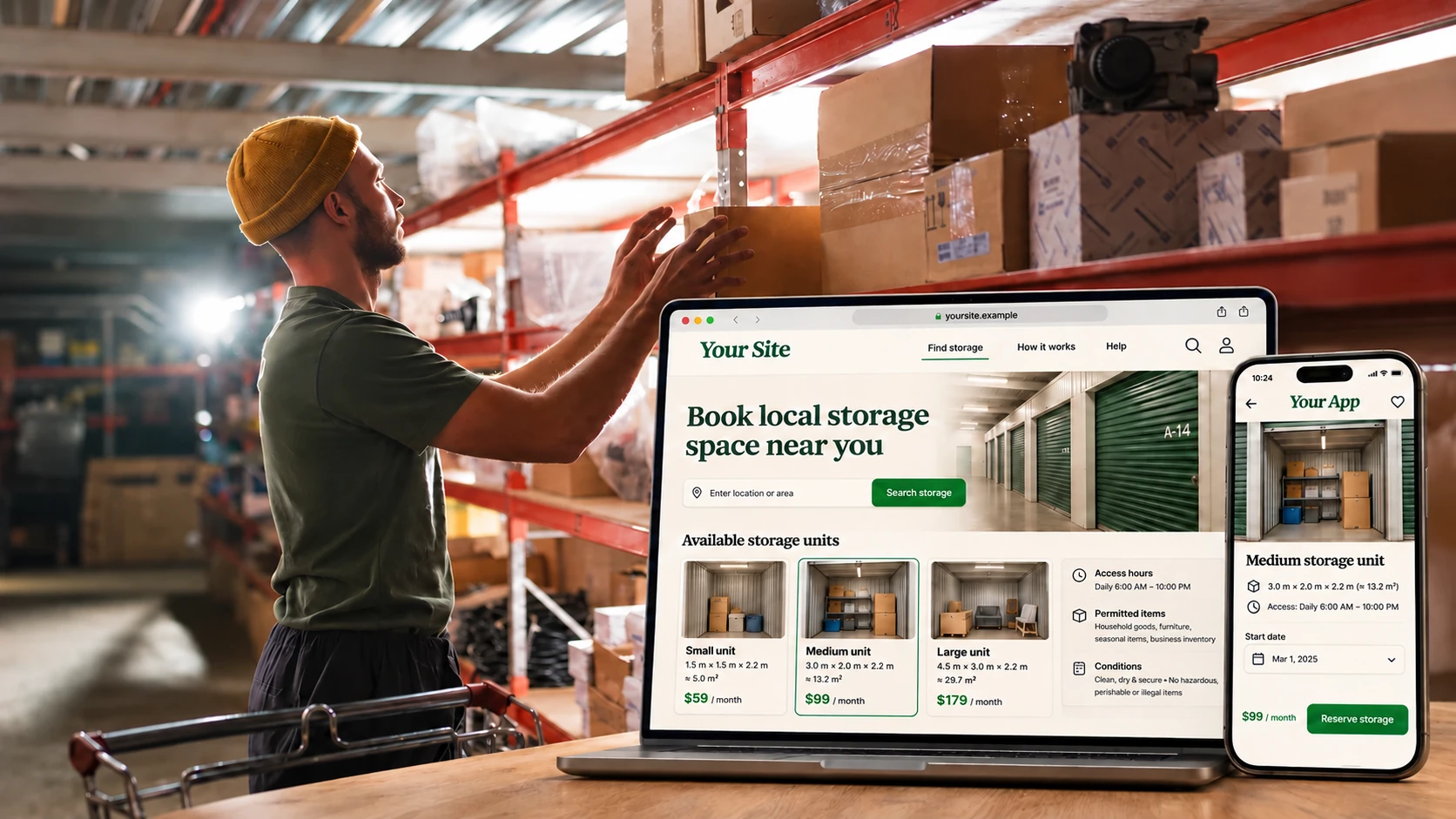
Create a marketplace for a defined storage category. Show dimensions, access times, permitted items and conditions, then support booking and a documented handover.
Who would be glad
you built it?
Households between moves
Find suitable temporary storage.
Small businesses
Store permitted stock under clear conditions.
Space hosts
Offer usable capacity with defined access.
Where the money
could come from.
The marketplace could retain a disclosed booking fee, with hosts receiving the agreed storage payment. The fee must support onboarding, payments and disputes. Hosts still have property, maintenance and any cover costs, while the platform should explain deposits and additional access charges separately from its own revenue.
The part you could
make your own.
Fit-specific information could be the difference. Usable dimensions, realistic access and clear item restrictions may help customers choose more confidently than a low monthly price alone. Test the complete retrieval experience as well as the initial booking.
An angle to test with the people you want to serve.Start with something
worth using.
Choose one storage category and local area. Show dimensions, conditions, access hours, permitted items and complete charges. Use a documented handover and clear end-of-booking process before offering broad instant bookings.
- Storage listings and usable dimensions
- Availability and access arrangements
- Booking, inventory and condition records
Give the promise
something to stand on.
You need knowledge of the storage category and a careful host onboarding process. Security, access, prohibited goods and what happens when a booking ends are practical responsibilities that cannot be solved by a listing alone.
Confirm host authority, prohibited items, security arrangements and insurance responsibilities. A platform description must not imply protection or access that the host cannot actually provide.
Let a small beginning
teach you something.
Work with a few suitable hosts and customers with real short-term needs. Inspect the proposed fit and follow the first handover and retrieval, asking where assumptions about access or condition differed.
Can the customer store and retrieve permitted items under the conditions both sides understood before booking?
Look for these signs
- Space descriptions match practical conditions
- Access arrangements are followed
- Handover and retrieval are documented
A little more
clarity.
Can hosts accept any kind of goods?
Set explicit permitted and prohibited categories for the service. Suitability, storage conditions and any applicable obligations need review; a spare room or warehouse is not automatically appropriate for every item.
What happens if a customer does not collect on time?
Publish a clear extension and contact process before booking. Handling uncollected goods can have significant consequences, so use appropriately reviewed terms and avoid improvising disposal or extra charges after the fact.
Neighbor is a reference for storage and parking marketplaces.
Now picture it
with your name on it.
Your people. Your priorities. The version you keep thinking about. Answer a few questions and leave with a starting plan you can keep.
Free to explore. No account or email needed for your starting plan.