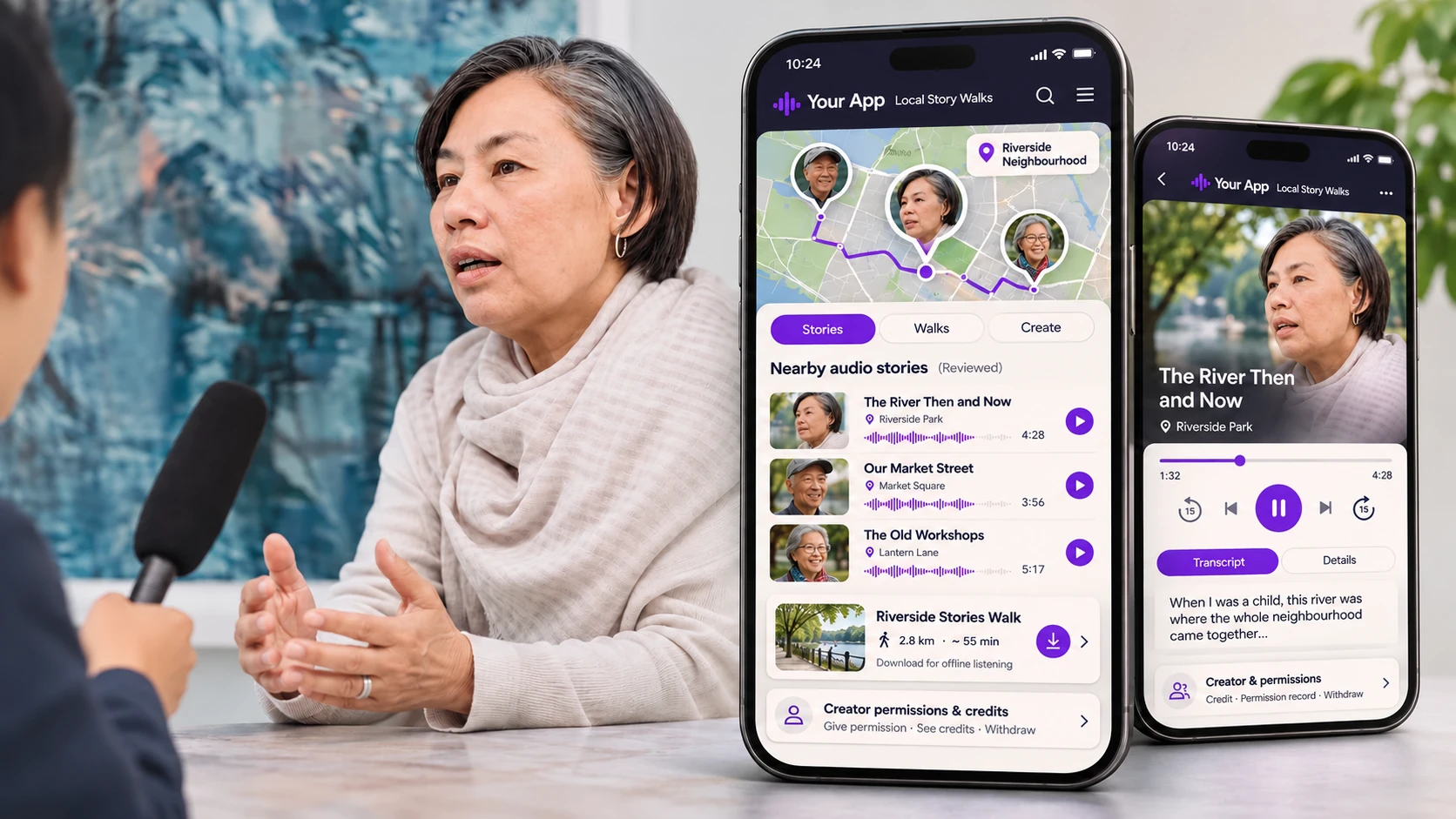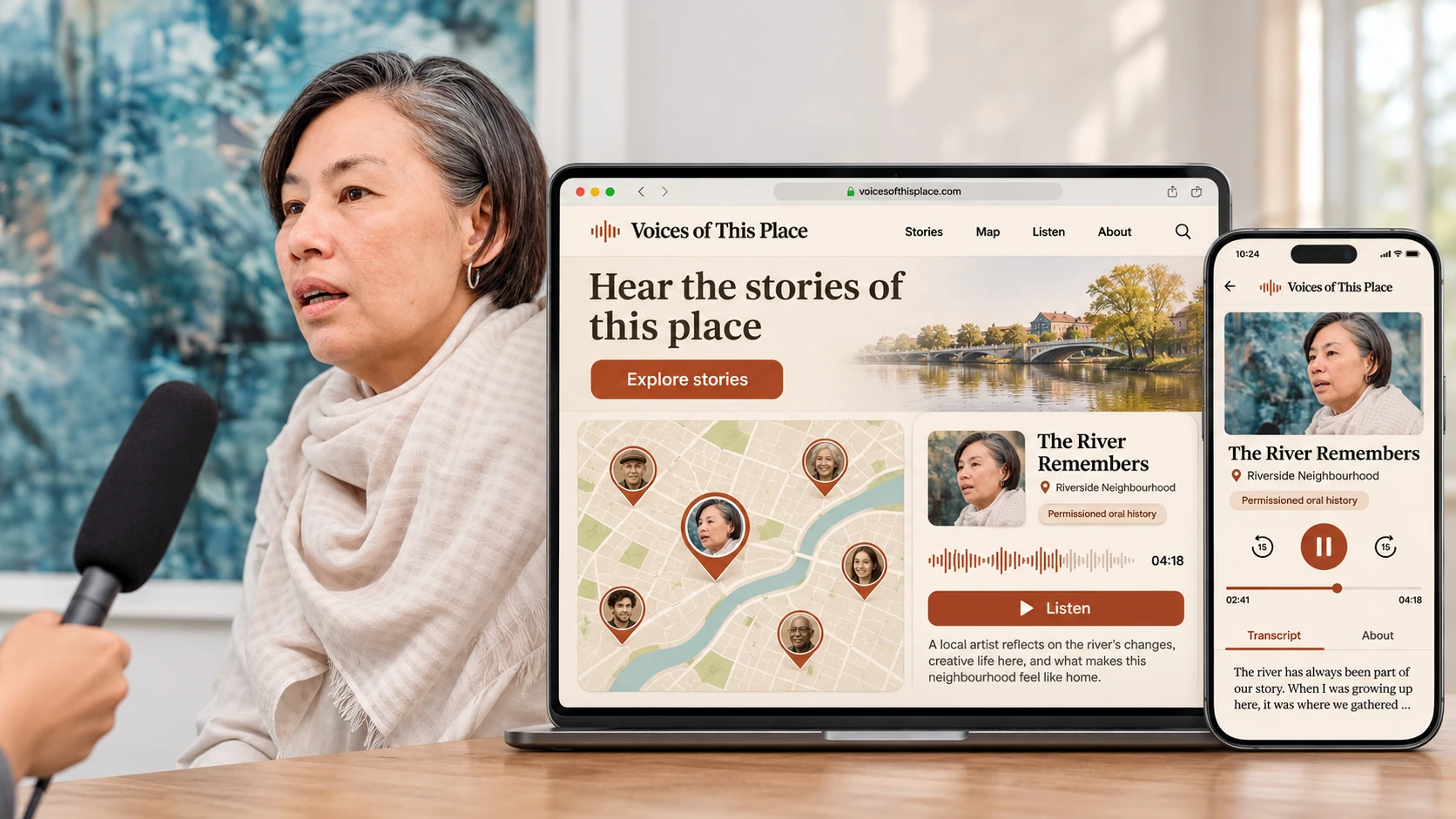
A long-time resident remembers when a quiet corner held a busy workshop, but the story lives only in occasional conversation. You could build a publishing business that records such memories with permission, giving listeners a way to hear the human meaning of a place while preserving uncertainty and different recollections.
A business you can
picture.
Begin with one neighbourhood and a small editorial collection. Contributors agree how their stories may be used, editors provide context and listeners explore through themes or a place-based guide.
Who would be glad
you built it?
Residents interested in local memory
A careful collection of voices and stories
Visitors exploring a neighbourhood
Context beyond a list of attractions
Schools and community archives
Permissioned material for suitable learning or preservation
Where the money
could come from.
Listeners could buy the completed collection, with community organisations commissioning an archive as a separately scoped service. The price supports interviews, editing, permissions and hosting. Any sponsorship should be labelled and should not silently rewrite a contributor’s account. Pay contributors according to the agreed arrangement and avoid selling access to personal stories beyond the rights granted.
The part you could
make your own.
Your proposed difference is intimacy with context. Hearing a person’s voice and knowing when they are uncertain could make the collection more meaningful than a polished narration that removes every ambiguity.
An angle to test with the people you want to serve.Start with something
worth using.
Produce one small themed audio collection in a defined area. Obtain contributor approval, provide transcripts and explain the difference between recollection and checked factual context. Use only locations appropriate for public presentation.
- Record stories with clear contributor permission.
- Distinguish personal memory from verified context.
- Offer accessible transcripts and listening routes.
Give the promise
something to stand on.
You need sensitive interviewing, audio production and editorial review. Agree attribution, rights and withdrawal arrangements, protect private locations and check claims that could affect living people.
Agree rights, attribution and withdrawal arrangements before publication. Protect sensitive information, avoid exposing private locations and review factual claims that could affect living people.
Let a small beginning
teach you something.
Work with a local archive or community group and willing contributors on a short sample. Ask contributors to review their recordings and listeners to explain what they understood as memory versus verified background.
Do contributors feel accurately represented and can listeners distinguish personal recollection from independently checked context?
Look for these signs
- Contributors approve agreed publication use
- Transcripts make stories more accessible
- Sensitive details receive editorial review
A little more
clarity.
Can we publish every location mentioned?
No. A story may involve private homes or sensitive places. Review location details with contributors and avoid turning a personal memory into an invitation to visit somewhere without permission.
What if two people remember an event differently?
Preserve that difference honestly when appropriate. Attribute the recollections and check consequential factual claims rather than forcing one confident narrative where the evidence remains uncertain.
What should my first version focus on?
Start with the first test described here, then build around the part people actually use and would pay to keep.
Now picture it
with your name on it.
Your people. Your priorities. The version you keep thinking about. Answer a few questions and leave with a starting plan you can keep.
Free to explore. No account or email needed for your starting plan.