A training provider has a useful workbook that other teams keep asking to adapt. Each enquiry becomes a fresh negotiation about copies, branding and permitted use. A licensing desk could turn a defined part of that offer into a clearer purchase, while leaving unusual requests open for a proper conversation.
Each buyer asks separately about copying, adaptation and team use, leaving the price and permission unclear until a long exchange.
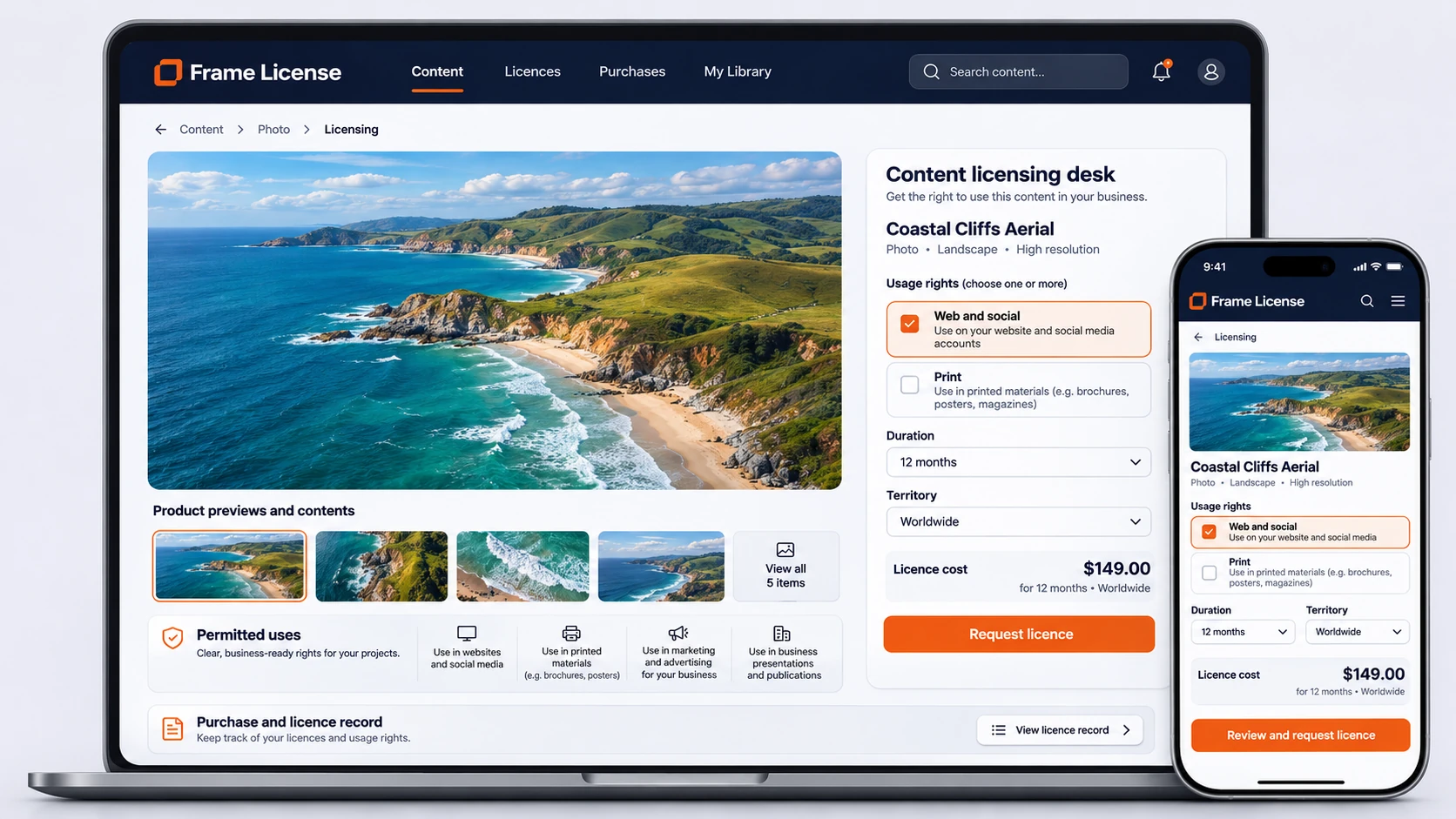
The buyer sees a defined licence, useful preview and clear delivery, with a separate route for requests outside the standard terms.
Where it could
make a difference.
Training providers
License reviewed material to defined teams.
Specialist creators
Explain how a resource may be reused.
Business buyers
Choose the permission that matches their intended use.
Useful on: Creator website, Learning website, Resource library.
What this could mean
for your business.
Licensing can turn original material into a defined paid offer for business buyers. Revenue comes from the permissions and support actually sold. Rights review, content updates, delivery and buyer assistance have costs, so assess paid use and support effort rather than assuming every existing file is ready to monetize.
Start with something
worth using.
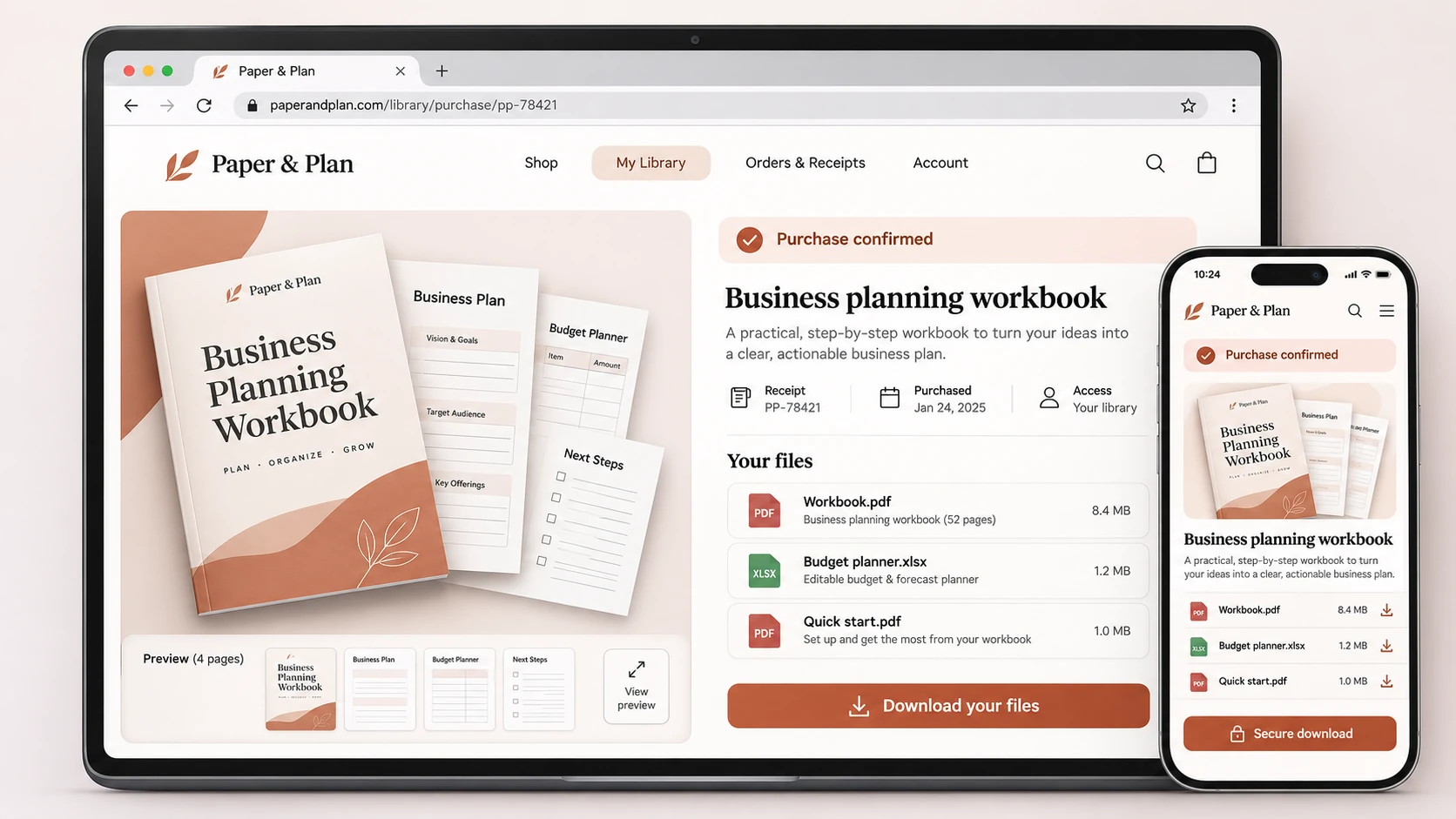
Begin with one finished kit, a useful preview and a clear business-use licence. Deliver the files with a record of the version and permission purchased. Keep custom-use enquiries separate.
- Product previews and contents
- Clear permitted uses
- Purchase and licence record
Give the promise
something to stand on.
You need rights to every included component and appropriately prepared licence terms. Decide what support, updates and customisation are included before creating several tiers that buyers struggle to distinguish.
Plan for content updates, file delivery, support and suitable licence drafting. Check rights to contributed text, images, fonts and audio. A product you can display is not always a product you can license for someone else’s use.
How it fits what you already have
Check checkout, file delivery, customer records and licence documentation. Confirm that the system can preserve what each buyer purchased and keep later updates distinct from the original licensed version.
Let a small beginning
teach you something.
Offer the kit to a small group of relevant willing business contacts. Ask them to explain the permitted use in their own words and note which questions prevent a confident purchase.
Can the buyer tell whether the licence permits their intended use before paying for the resource?
Look for these signs
- Buyers understand the permitted use.
- Purchases retain a licence and version record.
- Unusual requests reach a person.
A little more
clarity.
Can I license material I found online?
Only where you have the necessary rights for that use. Check contributed text, photographs, fonts and other components; permission to display something does not automatically permit onward licensing.
Should we offer exclusive rights immediately?
Exclusive arrangements can affect what you may sell later. Keep them as a separately reviewed agreement until you understand the commercial and rights implications.
Can a buyer resell the material?
Only if their specific licence allows it. State the answer clearly before purchase.
Can this be a feature on my current website?
Yes. A focused licensing desk can sit beside your existing services or content.
Gumroad supports selling digital products. It is an adjacent reference for purchase and delivery. This concept places greater emphasis on clear usage rights, team access and optional customisation on your own site.
What would this change
in your business?
Your customers. Your working day. The part you would love to make easier. Answer a few questions and leave with a starting plan you can keep.
Free to explore. No account or email needed for your starting plan.