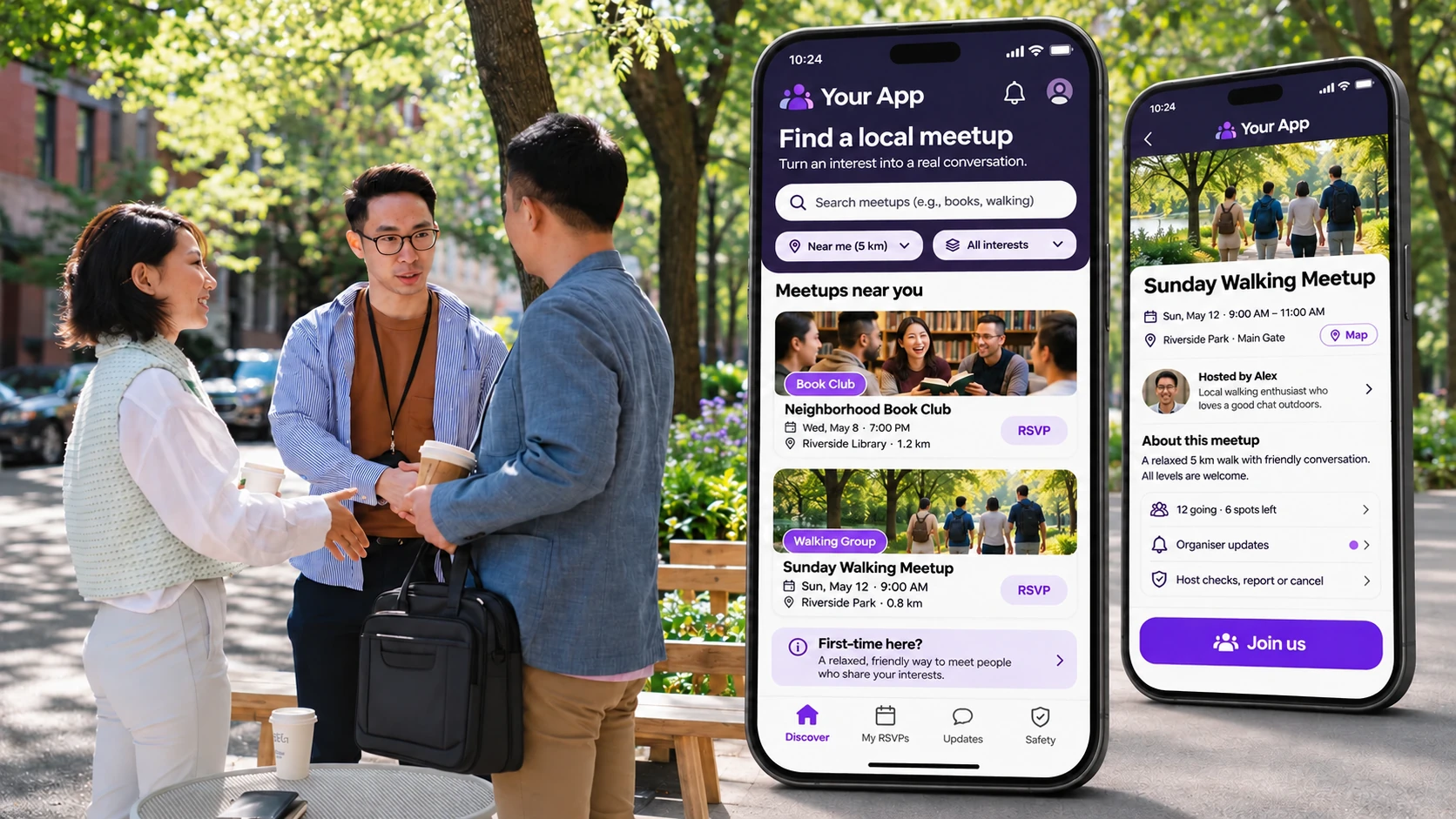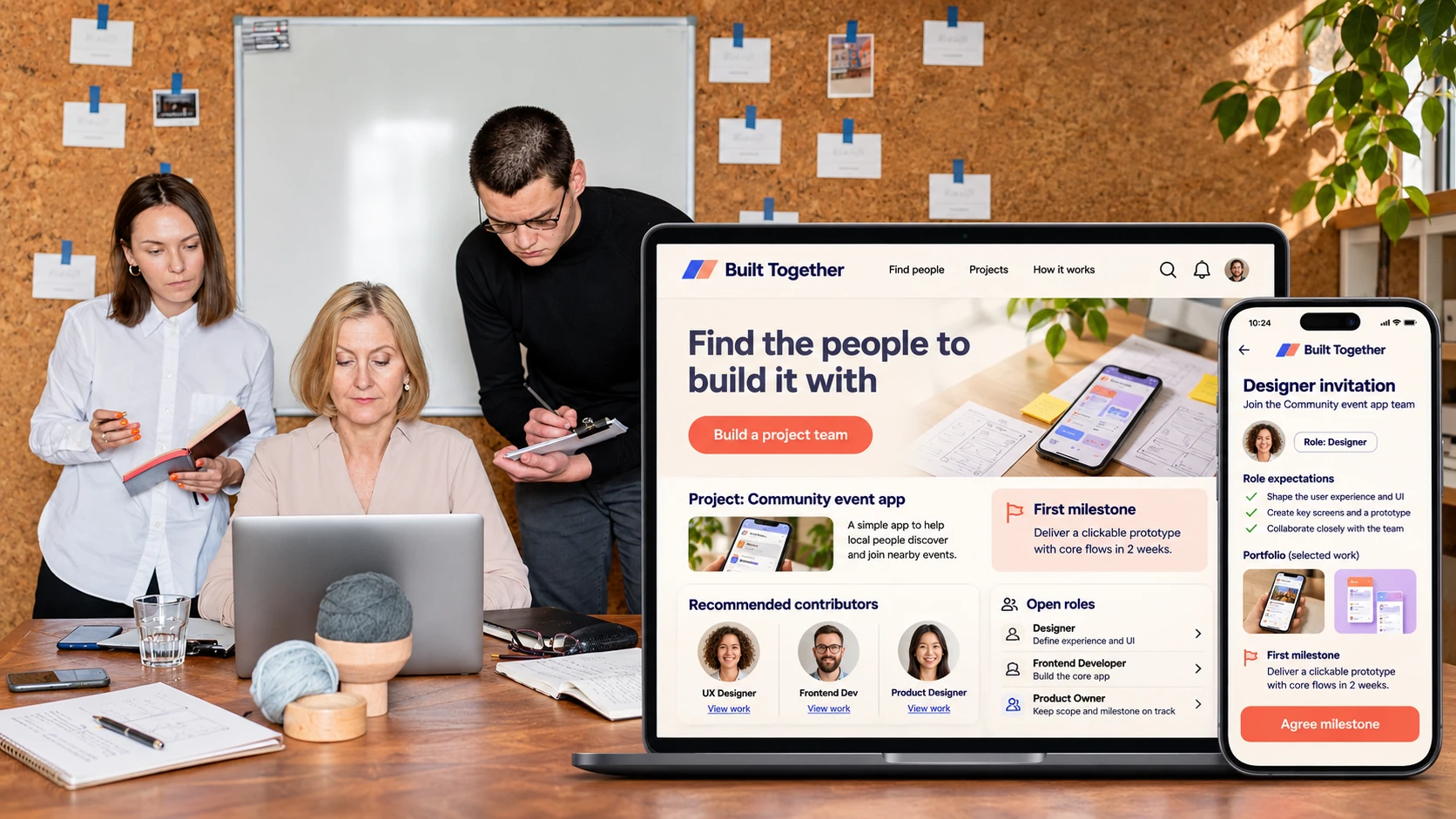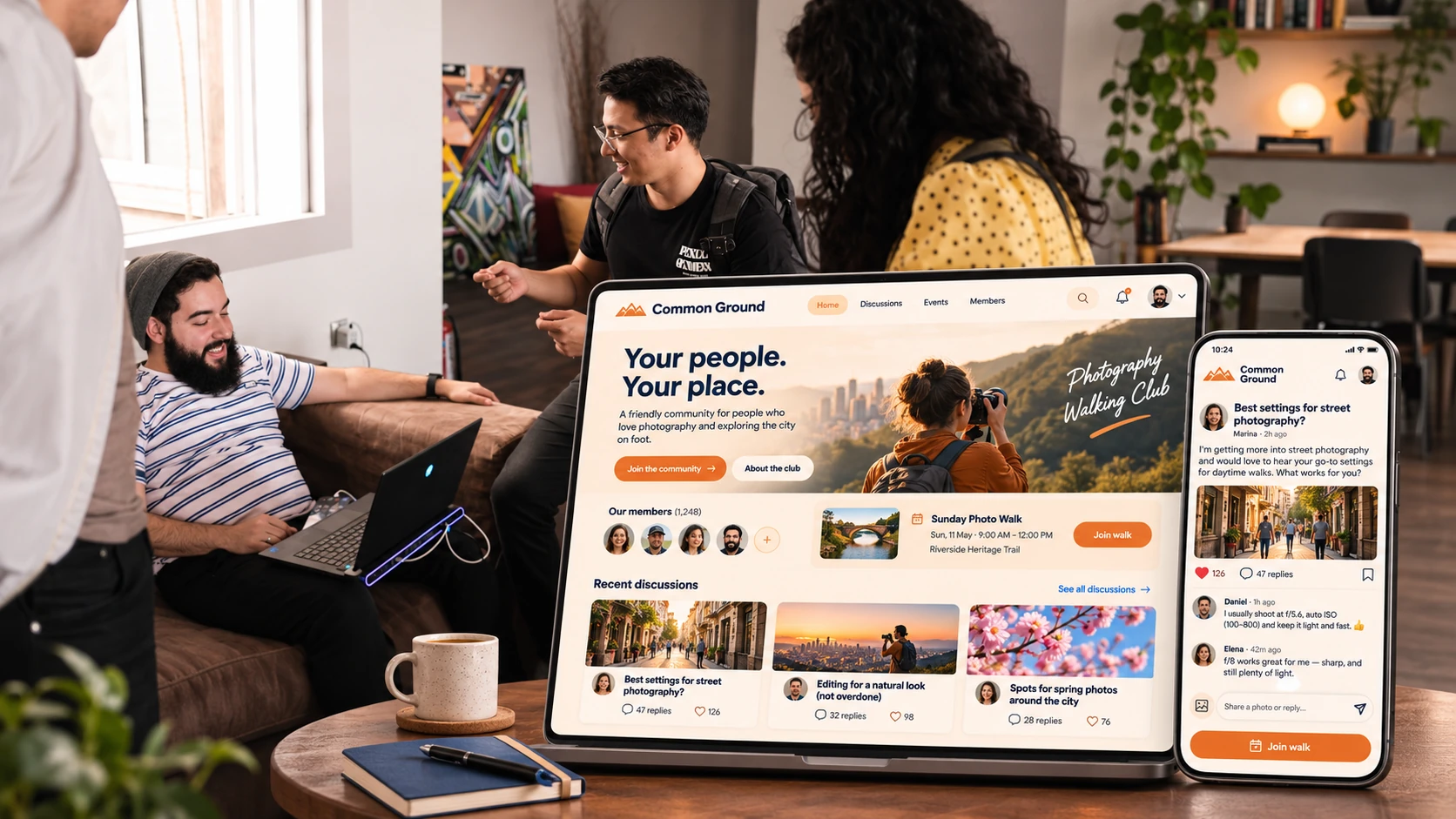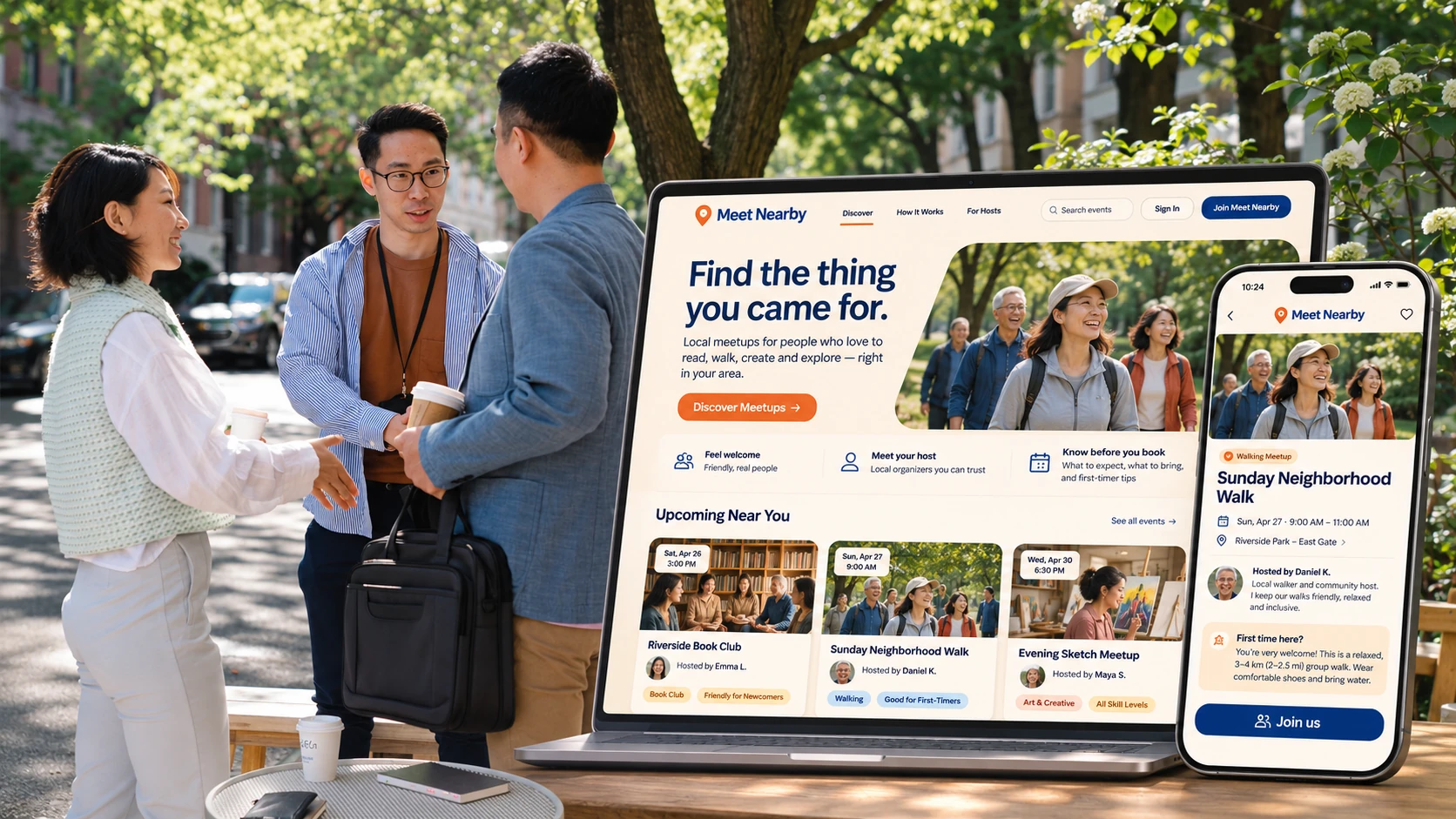
A newcomer wants to meet people but cannot tell whether a local walking group welcomes beginners or where everyone gathers. Your discovery platform could make the practical and social expectations clear, giving a host a better way to welcome someone who might otherwise stay home.
A business you can
picture.
Build an events community around a defined area or activity. Explain what attending will feel like, who is hosting and what a newcomer should know before booking.
Who would be glad
you built it?
New residents
Find approachable local activities.
Independent hosts
Explain and manage recurring gatherings.
Interest groups
Reach people suited to their activities.
Where the money
could come from.
Hosts could pay a recurring fee for registration, attendee communication and event management. Start with organisers who run repeated gatherings and can assess the service over time. Support, reminders and inaccurate listings create work; the platform earns for useful organisation rather than taking ownership of every host's event revenue.
The part you could
make your own.
Newcomer confidence could be your edge. Photos of the meeting point, realistic activity expectations and a welcoming host introduction may matter more than a crowded events calendar. Test whether those details help people choose and attend.
An angle to test with the people you want to serve.Start with something
worth using.
Choose one area and a few activity types. Show host details, newcomer guidance, meeting arrangements and booking terms. Begin with a reviewed host group and practical attendance updates before expanding discovery features.
- Local groups and event listings
- Reservations and attendance updates
- Host profiles and community guidelines
Give the promise
something to stand on.
You need local hosting relationships and a way to keep listings current. Clear organiser identity, cancellations and participation expectations matter, particularly when visitors are meeting a group for the first time.
Check event details, host responsibilities and cancellation arrangements. Location accuracy and support matter when people travel to attend. Provide reporting and clear boundaries for member contact.
Let a small beginning
teach you something.
Work with hosts who already run real activities. Ask first-time attendees which detail helped them decide to come and which unanswered question made them hesitate, then improve the next listing together.
Can a newcomer understand what attending will feel like and find the group without needing a private briefing?
Look for these signs
- Listings remain current
- Newcomers know the meeting arrangements
- Hosts can communicate changes clearly
A little more
clarity.
Can free events still support a business model?
Hosts may pay for useful organising tools, while some paid events can carry a disclosed booking fee. Test the payer's actual need instead of assuming every free gathering should become a ticketed experience.
What if an event changes at the last minute?
Give hosts a clear update process and attendees an understandable notification route. Display cancellation and refund terms where relevant, and make it easy to see whether a gathering is still going ahead.
Meetup is a reference for local groups and events.
Now picture it
with your name on it.
Your people. Your priorities. The version you keep thinking about. Answer a few questions and leave with a starting plan you can keep.
Free to explore. No account or email needed for your starting plan.