CommerceEstablished model
Grocery delivery

Make a familiar shop easier to reach on a busy day.

A customer may trust a local shop and still struggle to find time to visit. Build an ordering service that helps them see what is available, choose what they need and understand how it will reach them.

Make this fit me
You could also build this as a mobile app
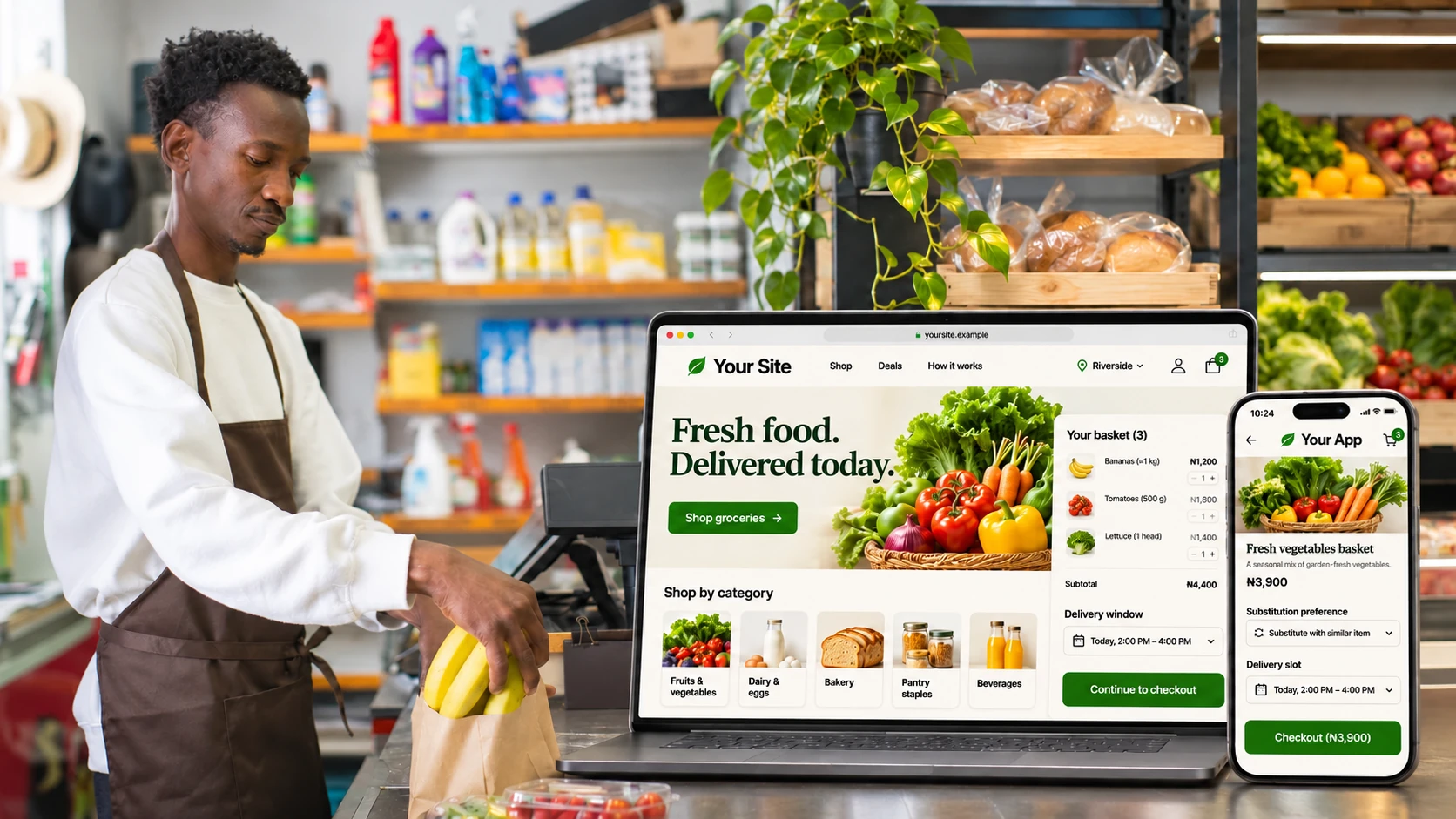
Grocery delivery concept: Grocery store employee packing bananas into a paper bag. Indoor setting with vibrant products. A desktop website and matching phone show the digital business.Illustrative concept
IMAGINE THIS MOMENT

A customer trusts a nearby grocer but cannot visit before closing. They would gladly order their usual items if they knew what was available and how substitutions would be handled. Your service could connect that familiar shop to a manageable ordering routine, without promising a delivery operation the team cannot support.

A business you can
picture.

Create a grocery service for one store or a small supplier network. Keep product availability, substitutions and delivery windows connected to the people actually preparing the order.

Who would be glad
you built it?

Households planning groceries

Choose available essentials and delivery options.

Customers with limited shopping time

Order from a familiar local store.

Small offices

Arrange recurring supplies with clear quantities.

Where the money
could come from.

An operator working with one shop could earn from an agreed service fee or the shop's own product margin, with delivery charges clearly shown. Choose that relationship before building. Picking labour, packaging, payments, substitutions and transport all affect what remains from an order, especially when baskets or routes are small.

The part you could
make your own.

A familiar-store experience with thoughtful substitutions could distinguish the service. Test whether customers value knowing who prepares their order and having clear choices when an item is unavailable more than an oversized catalogue or unrealistic speed claim.

An angle to test with the people you want to serve.

Start with something
worth using.

Start with one store, a focused range and a limited service area. Offer delivery or collection windows, substitution preferences and order confirmation. Give staff a usable picking list before expanding the product selection.

  • Current product availability
  • Customer-approved substitution choices
  • Collection or delivery scheduling

Give the promise
something to stand on.

WHAT YOU BRING

You need a reliable shop or supplier relationship and a practical picking and delivery process. Stock changes, substitutions and customer contact are daily operating work, so the catalogue must reflect what staff can fulfil.

Freshness, food handling, stock changes and missed deliveries require active operations. Make the customer’s final order and any approved changes easy to review before fulfilment.

Let a small beginning
teach you something.

Invite existing store customers to try a small number of order windows. Follow each order through picking and handover, and ask which substitution or availability questions still needed a call.

THE QUESTION TO TEST

Can the shop fulfil the order as agreed while the customer understands and controls any necessary substitutions?

Look for these signs

  • Stock and order confirmations align
  • Substitutions follow customer preferences
  • Picking and delivery costs are understood
WHEN THE FIRST VERSION HAS TAUGHT YOU MORE
Where you could take it next

Recurring essentials, saved shopping lists and additional stores can follow once the basic order is delivered consistently.

A little more
clarity.

Must every product be listed at launch?

A focused range is easier to keep accurate and fulfil. Add categories when the store can manage stock, descriptions and substitutions reliably, rather than creating a huge catalogue that disappoints at picking time.

Can delivery be free?

Only if the business can support the complete cost elsewhere. Picking, transport, failed handovers and support still require resources. Test the economics of actual orders before making a broad free-delivery promise.

SOMETHING TO LEARN FROM

Instacart is a related example of grocery ordering.

WHAT COULD GO INSIDE

A few additions
to explore.

Online shop and checkoutGive the customer who already likes your product a clear way to choose it, pay and know what happens next.Stock visibility and restock alertsHelp your team say what is available with more confidence, while keeping reservations and physical stock checks in view.Delivery route and load planningGive your delivery coordinator a clearer view of the day's promises before assigning work to the vehicles that must fulfil them.
MAKE ROOM FOR YOUR VERSION

Now picture it
with your name on it.

Your people. Your priorities. The version you keep thinking about. Answer a few questions and leave with a starting plan you can keep.

Free to explore. No account or email needed for your starting plan.
PICTURE THE MOBILE APPGrocery delivery app

Make the weekly essentials one less thing to carry.

People often want the same essentials, with a few changes for the week ahead. You could build a grocery app for a dependable local supply area, helping households assemble a basket, choose substitutions and understand when it will arrive. Start with what your shop or partners can fulfil well.

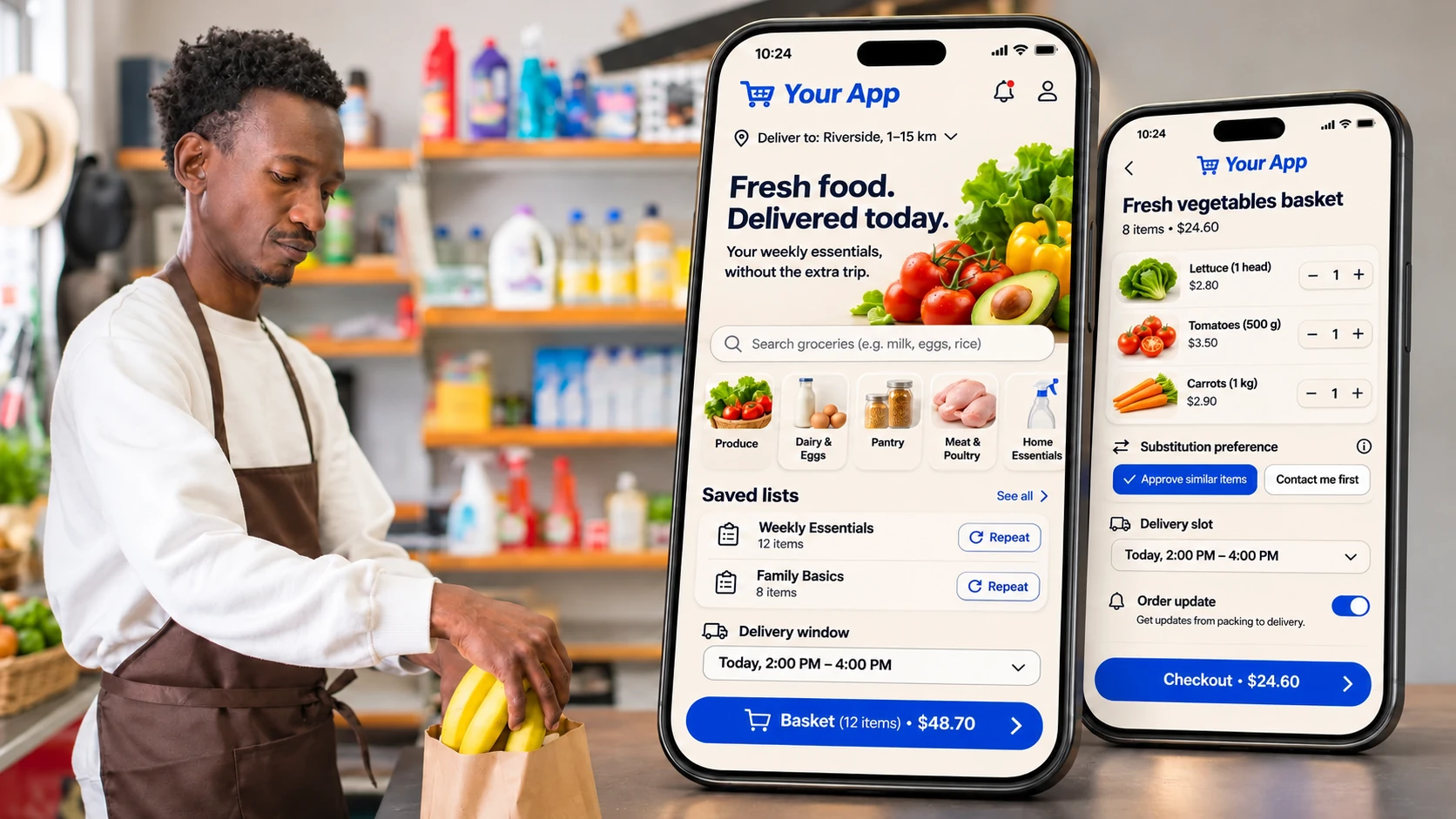
Grocery store employee packing bananas into a paper bag. Indoor setting with vibrant products. Two phone screens preview the grocery delivery app, with no desktop view.App concept
IMAGINE THIS MOMENT

A household has ordered its usual essentials, but several are unavailable when the picker arrives. A chain of rushed calls begins. Your app could let shoppers express substitution preferences in advance and give the operator a clear way to ask about the exceptions that still need a decision.

One useful moment.
A reason to open it.

A shopper opens a saved list, changes this week's quantities and chooses replacement preferences. They see the available delivery window before confirming the order.

Who would be glad
you built it?

Repeat households

Rebuild a familiar basket with a few changes.

Store pickers

Know which substitutions are acceptable.

Local grocery operators

Offer delivery windows they can actually fulfil.

A place in their life.
At the right moment.

Why it belongs on a phone

Shopping lists form in the kitchen, on a commute and during everyday conversations. A phone keeps the list nearby and can deliver useful updates when an order needs a substitution or arrives.

A reason to come back

Households return when the next shopping cycle arrives. Accurate stock, careful substitutions and dependable delivery give them a stronger reason to repeat than an attractive screen alone.

Personal routinesTimely remindersLocation & maps

Where the money
could come from.

An operator can earn the retail margin on goods and a disclosed delivery charge. Customers pay for the confirmed basket under clear substitution terms. Picking time, packaging, transport, spoilage and failed delivery affect what remains. A subscription should follow evidence that repeat households value a defined ongoing benefit.

The part you could
make your own.

Focus on dependable repeat baskets and thoughtful substitution control for a specific local audience. Test whether these details make ordering feel easier, rather than competing first on an enormous product range.

An angle to test with the people you want to serve.

Start with something
worth using.

Start with a limited range and delivery area. Include quantities, saved baskets, substitution choices and order updates. Define how a changed item affects the total before accepting paid orders.

  • Available products and practical quantities
  • Saved lists and repeat baskets
  • Substitution preferences and approval
  • Delivery windows and order updates

Give the promise
something to stand on.

WHAT YOU BRING

You bring dependable supply, picking capacity and an understanding of the area you serve. The operational promise matters: someone must keep availability, substitutions and delivery commitments realistic.

Freshness, food handling, stock changes and missed deliveries require active operations. Make the customer’s final order and any approved changes easy to review before fulfilment.

Let a small beginning
teach you something.

Ask existing shop customers whether they would try a scheduled grocery order. Run a small, manageable pilot and review missing items, substitution decisions and delivery questions with the picking team.

THE QUESTION TO TEST

Can the household receive a useful basket without repeated calls about replacements, quantities or arrival arrangements?

Look for these signs

  • Substitution preferences reach the picker.
  • Customers understand changes to their order.
  • Promised delivery windows reflect capacity.
WHEN THE FIRST VERSION HAS TAUGHT YOU MORE
Where you could take it next

Recurring essentials, saved shopping lists and additional stores can follow once the basic order is delivered consistently.

A little more
clarity.

Must every item show live stock?

Only promise live availability if the underlying stock process supports it. A first version can explain how availability is confirmed and how unavailable items are resolved before fulfilment.

Should we offer unlimited delivery?

Only after understanding the real service costs and capacity. A clearly priced delivery window is easier to evaluate than a broad promise that may be expensive to honour.

SOMETHING TO LEARN FROM

Instacart is a related example of grocery ordering.

WHAT COULD GO INSIDE

A few additions
to explore.

Online shop and checkoutGive the customer who already likes your product a clear way to choose it, pay and know what happens next.Stock visibility and restock alertsHelp your team say what is available with more confidence, while keeping reservations and physical stock checks in view.Delivery route and load planningGive your delivery coordinator a clearer view of the day's promises before assigning work to the vehicles that must fulfil them.
MAKE ROOM FOR YOUR VERSION

Now picture it
with your name on it.

Your people. Your priorities. The version you keep thinking about. Answer a few questions and leave with a starting plan you can keep.

Free to explore. No account or email needed for your starting plan.
KEEP THE POSSIBILITIES OPEN

Something else
might speak to you.

CommerceFamiliar model

Online store

Give the products you believe in a shop of their own, where customers can understand the details and place an order confidently.

  • Product sales
  • Independent brands