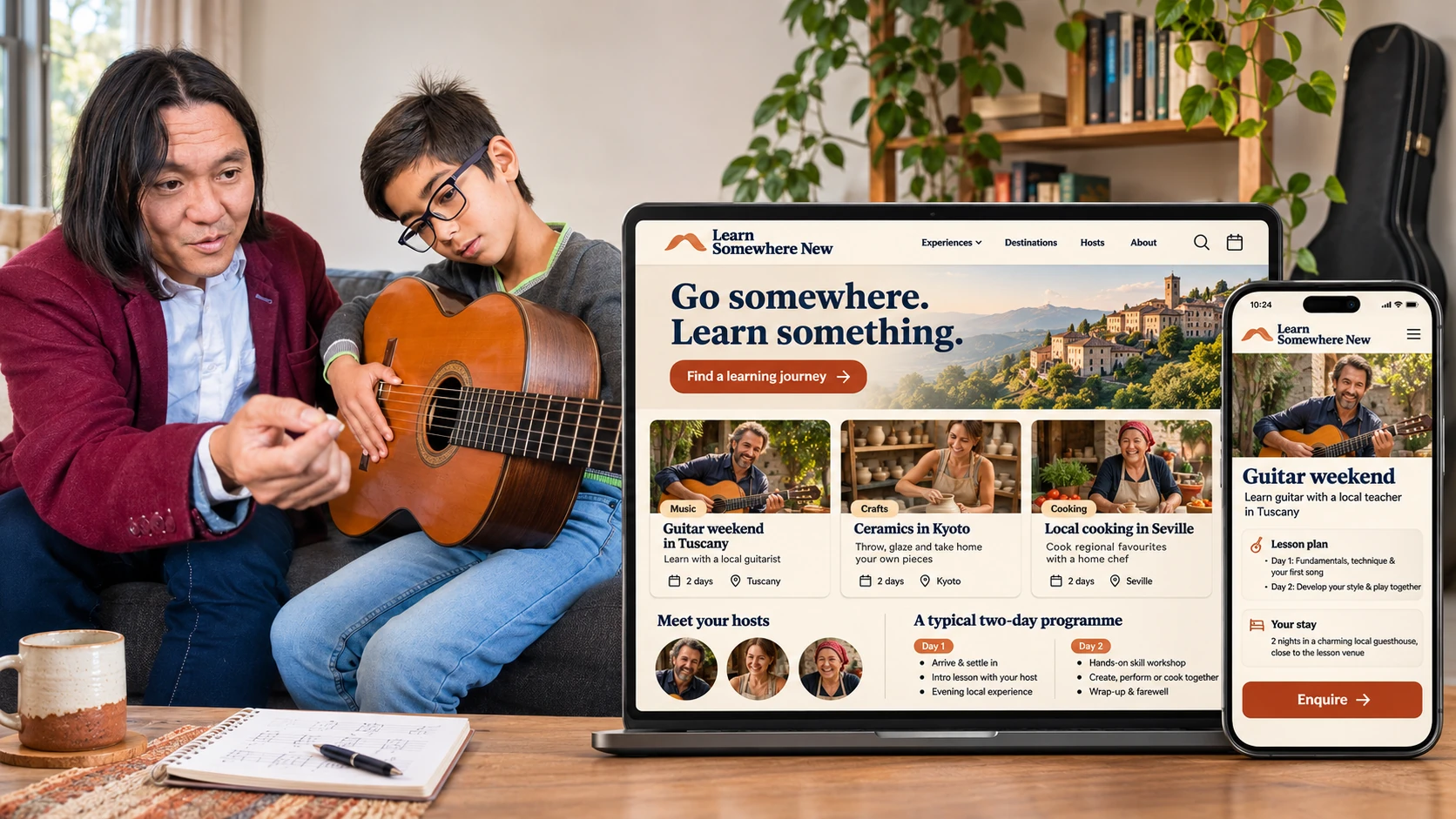
A traveller wants more than a photograph of a craft or skill; they want to spend time learning with someone who practises it. Your studio could turn that wish into a carefully scoped experience, where the daily work, starting level and limits of a short visit are as clear as the destination.
A business you can
picture.
Choose one skill and a willing host partner. The programme explains what participants will practise, what experience they need and which parts of the journey are included.
Who would be glad
you built it?
Travellers seeking practical learning
A realistic programme and suitable starting level
Skilled hosts
A clearly agreed teaching and hosting role
Small learning groups
An organised journey built around a shared practice
Where the money
could come from.
Participants could pay a programme fee with the host’s payment and your coordination share clearly arranged. The fee must cover preparation, teaching, materials and support included in the offer. Accommodation or travel can remain separately booked. The commercial promise is a defined learning experience, not mastery, certification or permission to commercially use every technique encountered.
The part you could
make your own.
Your proposed difference is an honest practice-centred itinerary. Showing the repetition, preparation and reflection involved may attract participants who value learning rather than treating the host’s work as a quick activity stop.
An angle to test with the people you want to serve.Start with something
worth using.
Choose one practice and a suitable host. Define the learning activities, prerequisites, daily rhythm and included arrangements. Confirm the programme before selling places and provide clear questions for prospective participants to assess fit.
- Describe the learning outcome and participation requirements.
- Confirm teaching time, materials and practical arrangements.
- Help participants prepare and reflect on the experience.
Give the promise
something to stand on.
You need capable hosts and appropriate review of activities, equipment and risks. Respect ownership of techniques and cultural material, and never imply that a short experience creates professional qualification.
Review host capability, equipment and activity risks. Respect ownership of techniques and cultural material, and avoid implying that a brief programme provides professional qualification.
Let a small beginning
teach you something.
Co-design a small pilot with a suitable host and willing learners at the stated level. Review what participants could attempt, what needed more support and whether the programme respected the host’s work and boundaries.
Does the programme deliver the described learning experience at a suitable pace without overstating what a short visit can achieve?
Look for these signs
- Participants understand prerequisites and limits
- Hosts can deliver the agreed teaching scope
- Feedback identifies meaningful practice and remaining questions
A little more
clarity.
Does finishing the journey make someone qualified?
Not unless a legitimate qualification process explicitly supports that claim. Describe the practice and participation honestly, leaving professional competence and certification separate.
Can participants teach or sell what they learn?
That depends on the rights and agreements involved. Explain any restrictions around techniques, recordings, materials or cultural knowledge before the programme begins.
What should my first version focus on?
Start with the first test described here, then build around the part people actually use and would pay to keep.
Now picture it
with your name on it.
Your people. Your priorities. The version you keep thinking about. Answer a few questions and leave with a starting plan you can keep.
Free to explore. No account or email needed for your starting plan.