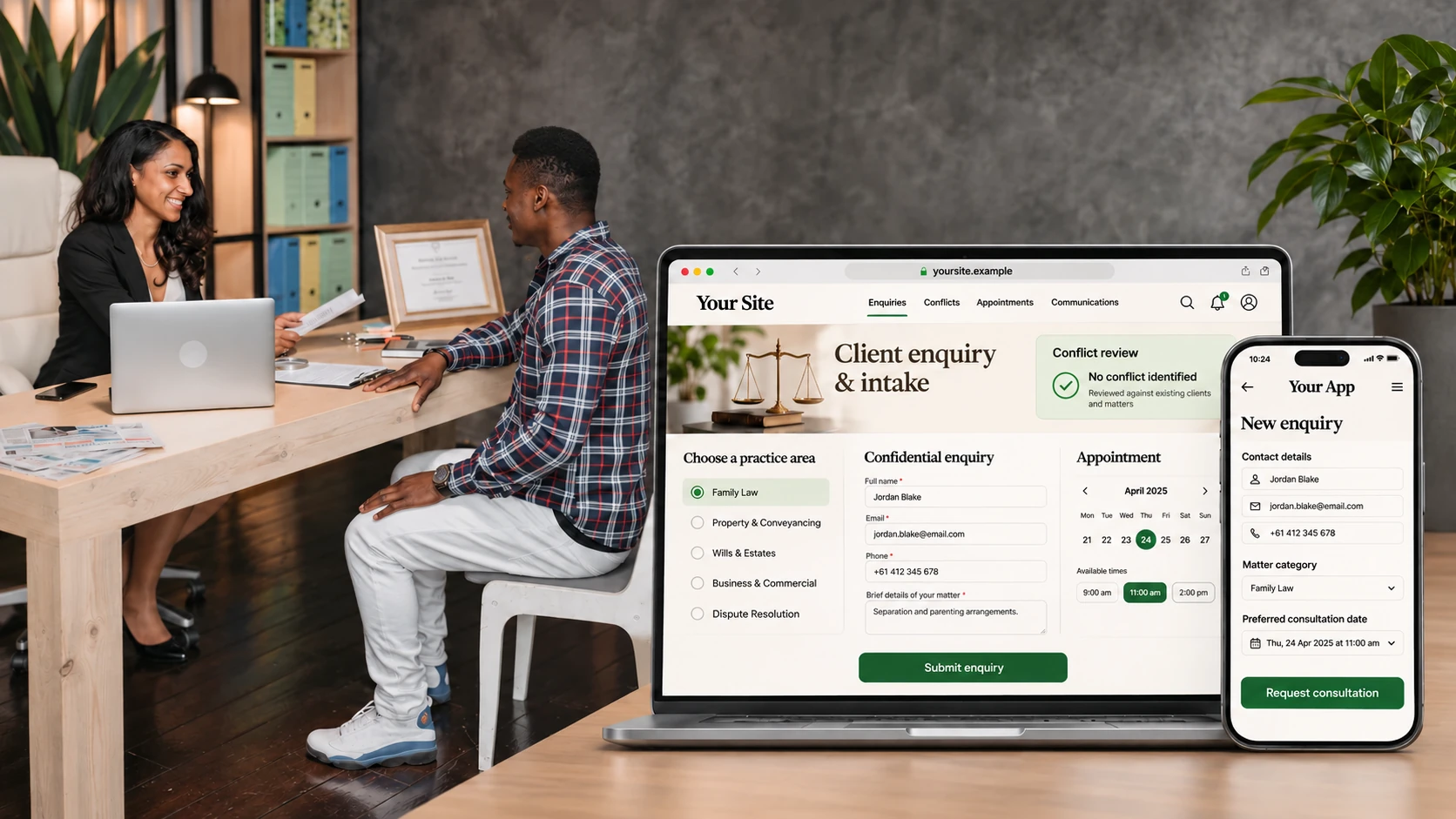
Someone contacts a law firm with a long story but omits the detail the intake team needs to route it. They are unsure whether the firm has accepted the matter. Your workspace could make the starting questions and next step clearer while preserving the firm's professional review and communication responsibilities.
A business you can
picture.
Offer enquiry-management software to a defined practice type. Organise initial requests, conflict-check steps, appointments and approved communication around the firm’s own intake process.
Who would be glad
you built it?
Law firm intake teams
Organise and route initial enquiries.
Potential clients
Understand what to provide and what happens next.
Authorised practitioners
Review information within an agreed process.
Where the money
could come from.
Firms could pay a software subscription plus a scoped setup fee for approved forms and workflows. That income funds administration, secure handling and support. Legal advice and representation remain the firm's own services; any professional drafting or review by your team would need a separate appropriately qualified arrangement.
The part you could
make your own.
A clear and considerate first contact could distinguish the product. Plain questions, understandable next steps and accurate engagement status may help prospective clients feel less lost while giving the firm better information to review.
An angle to test with the people you want to serve.Start with something
worth using.
Choose one practice area and an approved intake form. Include enquiry routing, conflict-review steps, appointment requests and clear status wording. Limit initial information to what the firm needs and keep access tightly aligned with responsibilities.
- Structured initial enquiries
- Staff review and appointment requests
- Document requests and status updates
Give the promise
something to stand on.
You need close collaboration with the firm's responsible professionals. Confidentiality, conflict checks, enquiry acceptance and engagement terms require a carefully defined process; a website form should not imply representation has begun.
Confidentiality, conflicts and professional responsibilities require the firm’s approval. Submission must not imply that a lawyer-client relationship has been accepted or that urgent deadlines are being monitored.
Let a small beginning
teach you something.
Use sample enquiries with the firm's intake team to test routing and comprehension. Review whether a prospective client can explain the next step and whether staff can distinguish an unreviewed enquiry from an accepted engagement.
Can the firm route a new enquiry appropriately while the person understands that professional review and acceptance are still required?
Look for these signs
- Intake questions match the practice workflow
- Confidential details have controlled access
- Status wording reflects the actual engagement stage
A little more
clarity.
Does submitting the form make someone a client?
Not automatically. The firm should provide approved wording explaining its review and engagement process, including when representation begins. The software must preserve that distinction instead of using an ambiguous success message.
Can the form give instant legal answers?
That is separate from administrative intake and requires an appropriately designed professional service. The first workspace should organise information and route it to the firm, without generating personalised legal advice or implying a reviewed conclusion.
Lawmatics is a reference for legal intake software.
Now picture it
with your name on it.
Your people. Your priorities. The version you keep thinking about. Answer a few questions and leave with a starting plan you can keep.
Free to explore. No account or email needed for your starting plan.