CommerceNew concept
Fit history shopping passport

Help a customer recognise their next good fit.

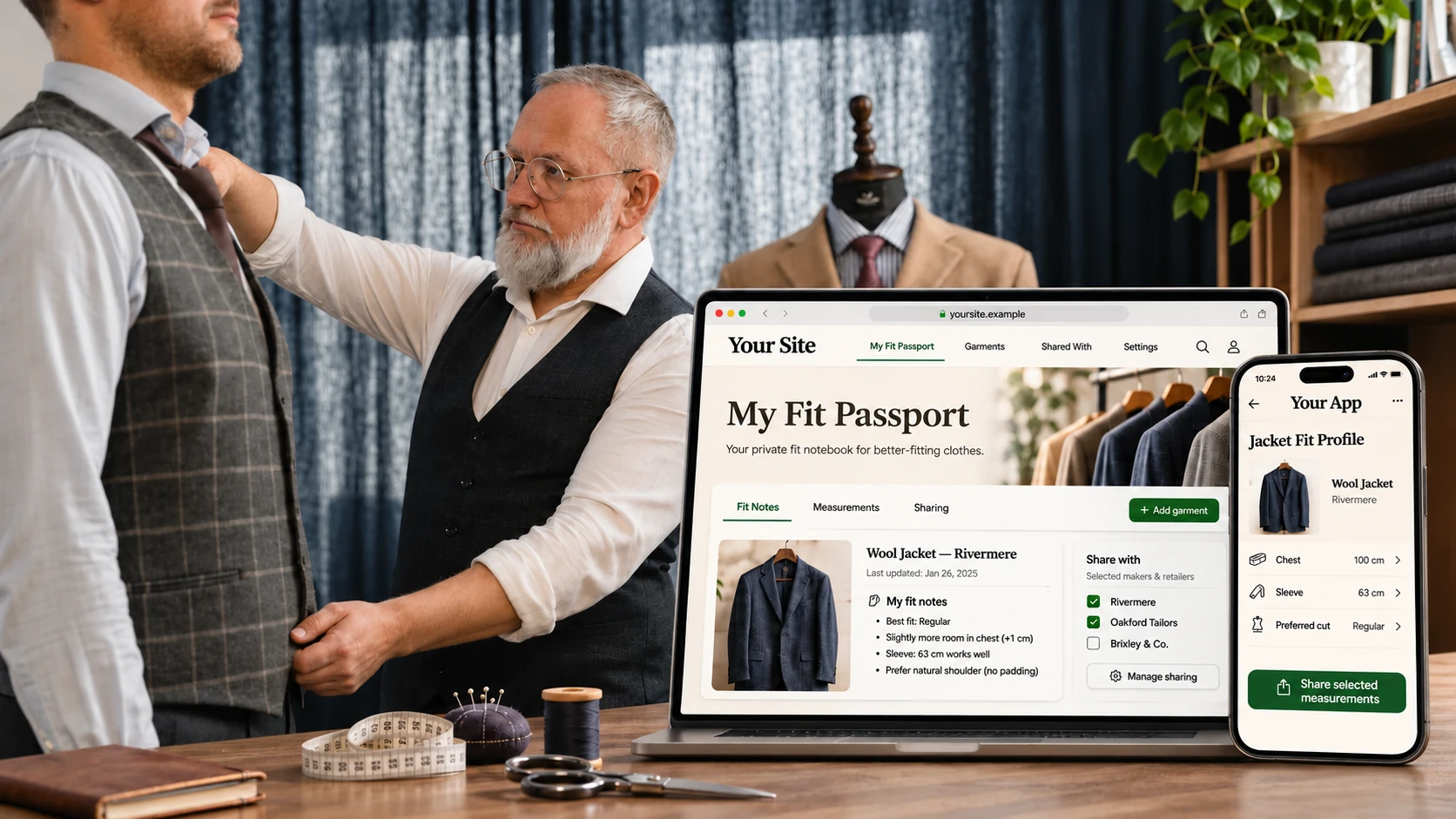
A customer knows that one item feels right, yet struggles to explain why the next one does not. You could create a private fit notebook that helps them remember useful measurements, preferences and alterations, then choose what to share when shopping with a participating business.

Make this fit me
You could also build this as a mobile app
Fit history shopping passport concept: Skilled tailor adjusting a custom suit with precision in a stylish atelier. A desktop website and matching phone show the digital business.Illustrative concept
IMAGINE THIS MOMENT

A shopper knows one jacket sits comfortably at the shoulders, yet the same size in another brand feels wrong. They can describe the frustration more easily than the measurements. Your service could help them keep the useful details of clothes and alterations they like, then share selected context with a participating retailer.

A business you can
picture.

Begin with one clothing category and a small retailer group. Shoppers record their own fit experience, compare it with published product information and authorise limited sharing with a seller.

Who would be glad
you built it?

Shoppers with recurring fit questions

A private history of preferences and useful measurements

Clothing retailers

Customer-approved context for a fit conversation

Alteration specialists

A record of changes the customer found comfortable

Where the money
could come from.

A retailer could pay for a customer-service workspace that uses shoppers’ voluntarily shared fit notes. The subscription supports storage, staff tools and support. A supported measurement session can be a separate paid service. Any recommendation commission should be disclosed, and the business should test actual usefulness rather than claiming that the notebook will eliminate returns.

The part you could
make your own.

Your possible difference is remembering the shopper’s experience across purchases. Notes about preferred sleeve length or an alteration that helped could support a more personal conversation than a size label alone.

An angle to test with the people you want to serve.

Start with something
worth using.

Begin with one clothing category. Let shoppers record a favourite item’s measurements, preferences and alterations, then choose which details to share for a particular enquiry. Keep recommendations explainable and optional.

  • Save customer-entered measurements and fit notes.
  • Compare relevant garment dimensions and preferences.
  • Let shoppers control which details a seller receives.

Give the promise
something to stand on.

WHAT YOU BRING

You need clothing-fit knowledge and dependable product measurements from partners. Body information requires careful privacy controls, correction options and plain explanations that do not imply a guaranteed fit.

Keep body information private, allow correction and avoid claiming a guaranteed fit. Sellers must provide dependable product measurements, and advice should remain understandable rather than a mysterious score.

Let a small beginning
teach you something.

Work with a retailer and willing shoppers on one recurring fit question. Record a familiar garment, compare it with correctly measured stock and ask whether the explanation makes the next choice easier to discuss.

THE QUESTION TO TEST

Does the shopper understand and control the information shared, and does it improve a specific fit conversation?

Look for these signs

  • Shoppers choose what each retailer sees
  • Product measurements have clear sources
  • Fit explanations refer to understandable details
WHEN THE FIRST VERSION HAS TAUGHT YOU MORE
Where you could take it next

Add alteration records, made-to-order briefs and permissioned recommendations. AI could help organise a customer's descriptions, while the customer confirms the interpretation.

A little more
clarity.

Can the profile guarantee the next item will fit?

No. Fabric, cut, movement and personal preference still matter. Use the record to support an informed conversation and explain uncertainty rather than presenting a mysterious certainty score.

Will retailers see the whole history?

They should see only the information the shopper knowingly shares for the relevant purpose. Provide clear access and deletion choices, and avoid making broad disclosure a hidden condition of using the notebook.

What should my first version focus on?

Start with the first test described here, then build around the part people actually use and would pay to keep.

WHAT COULD GO INSIDE

A few additions
to explore.

Customer accounts and preferencesMake a returning customer's next visit feel familiar, with the records they need and control over the details they share.Side-by-side comparisonsPut the differences that matter beside each other, so a customer can choose a suitable option without memorising several pages.Document and information collectionGive customers a clear preparation list and your team one place to see what has arrived, what is missing and what needs review.
MAKE ROOM FOR YOUR VERSION

Now picture it
with your name on it.

Your people. Your priorities. The version you keep thinking about. Answer a few questions and leave with a starting plan you can keep.

Free to explore. No account or email needed for your starting plan.
PICTURE THE MOBILE APPPersonal fit passport app

Remember the fit you loved when the label is not enough.

A size on a label does not tell the whole story of how something felt. You could build a private fit notebook that helps shoppers remember garments they already own, useful measurements they choose to record and the brands or cuts they liked. Give the next shopping decision some personal context.

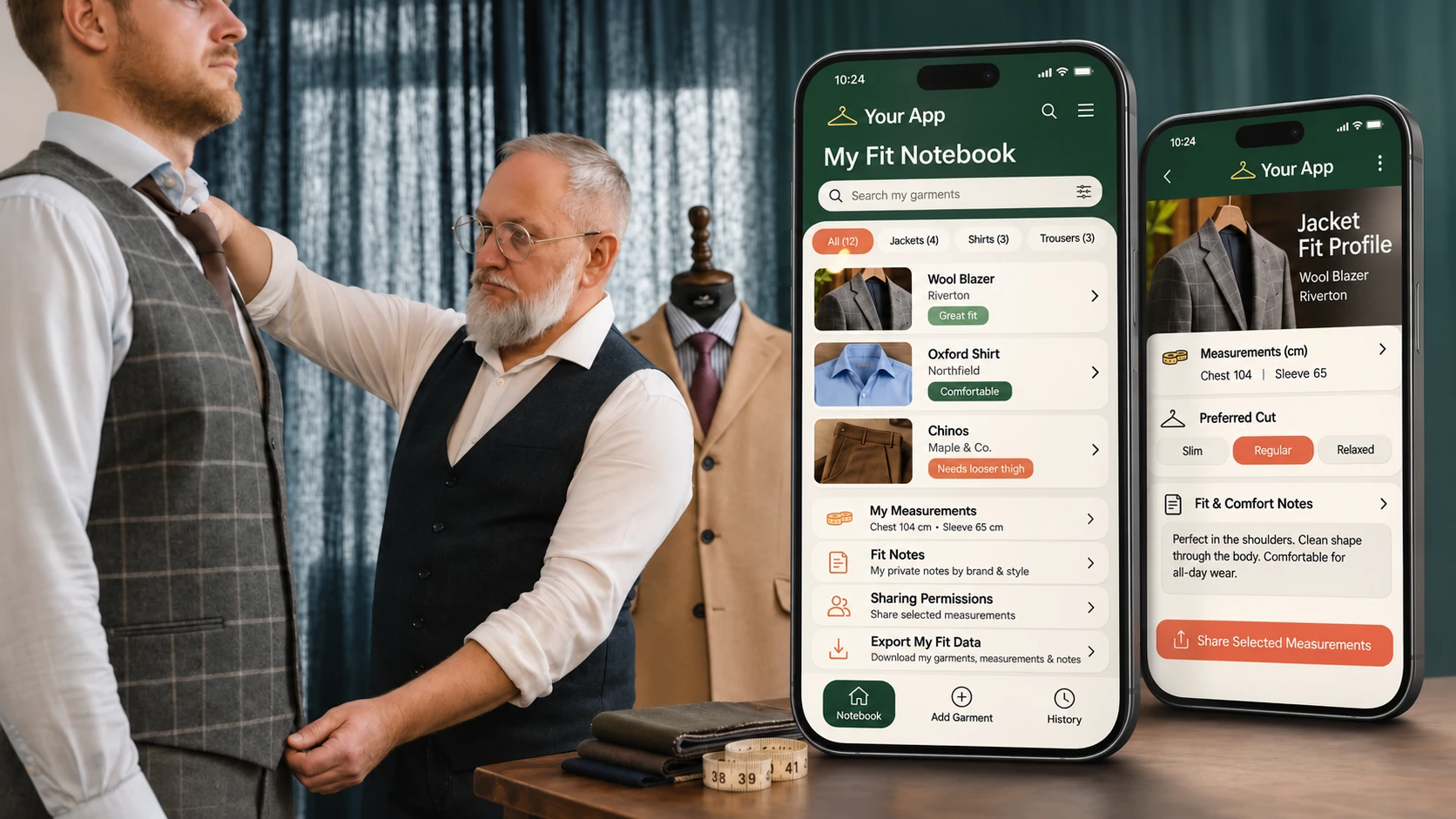
Skilled tailor adjusting a custom suit with precision in a stylish atelier. Two phone screens preview the Personal fit passport app, with no desktop view.App concept
IMAGINE THIS MOMENT

A shopper finds a favourite shirt but cannot remember the cut or measurements that made it comfortable. The next purchase starts from guesswork again. Your app could help them keep their own photographs, labels and notes, giving future choices some personal context without claiming to predict how every garment will fit.

One useful moment.
A reason to open it.

A shopper photographs a garment label, adds a note about fit and saves it under a useful category. The record is easy to find during the next shopping trip.

Who would be glad
you built it?

Frequent online shoppers

Remember useful details from clothes they own.

People between label sizes

Record fit in their own words.

Household organisers

Keep selected garment records separate and searchable.

A place in their life.
At the right moment.

Why it belongs on a phone

The useful observation happens in a fitting room, at home or beside a garment. Camera capture and quick private notes let the phone preserve details that are difficult to remember later.

A reason to come back

Shoppers return when comparing a new garment or reviewing what they already own. The value is remembering personal experience, not receiving a promise that an unseen item will fit.

Camera & scanningOn-the-go recordsPersonal routines

Where the money
could come from.

A personal subscription could cover syncing and a larger organised archive, while a useful small notebook helps people judge the fit. Storage, account support and privacy safeguards have ongoing costs. Retail referrals should be optional and disclosed if introduced, with no implication that a recommendation guarantees suitability.

The part you could
make your own.

Try a notebook that captures comfort and cut in ordinary language, not just numerical sizes. Test whether those personal notes are the part people return to before buying again.

An angle to test with the people you want to serve.

Start with something
worth using.

Start with garment photos, label details, optional measurements and fit notes. Offer search and export. Avoid retailer integrations or automatic size predictions until the personal notebook proves useful.

  • Private garment photos and label details
  • Optional user-entered measurements
  • Fit and comfort notes in the user’s words
  • Searchable history and personal export

Give the promise
something to stand on.

WHAT YOU BRING

You need empathy for the shopping decision and careful handling of private photographs or measurements. Let users decide what to record, and keep recommendations separate from any commercial referral interests.

Keep body information private, allow correction and avoid claiming a guaranteed fit. Sellers must provide dependable product measurements, and advice should remain understandable rather than a mysterious score.

Let a small beginning
teach you something.

Invite willing shoppers to record a few garments they already own, then revisit the records during a later choice. Ask which details helped and which felt unnecessary or too personal.

THE QUESTION TO TEST

Does the shopper consult a previous garment record when making a new decision, and can they explain what it clarified?

Look for these signs

  • Records include the user's useful fit details.
  • Shoppers retrieve relevant past garments.
  • Private measurements remain optional.
WHEN THE FIRST VERSION HAS TAUGHT YOU MORE
Where you could take it next

Add alteration records, made-to-order briefs and permissioned recommendations. AI could help organise a customer's descriptions, while the customer confirms the interpretation.

A little more
clarity.

Can it guarantee the right size?

No. Garments, brands and personal preferences vary. The first product provides a memory aid using the user's own records, rather than a universal sizing promise.

Do users have to upload body photos?

No. Garment photographs and written notes may be enough. Collect only what serves a clear purpose and give users straightforward control over deletion and export.

What should my first version focus on?

Start with the first test described here, then build around the part people actually use and would pay to keep.

WHAT COULD GO INSIDE

A few additions
to explore.

Customer accounts and preferencesMake a returning customer's next visit feel familiar, with the records they need and control over the details they share.Side-by-side comparisonsPut the differences that matter beside each other, so a customer can choose a suitable option without memorising several pages.Document and information collectionGive customers a clear preparation list and your team one place to see what has arrived, what is missing and what needs review.
MAKE ROOM FOR YOUR VERSION

Now picture it
with your name on it.

Your people. Your priorities. The version you keep thinking about. Answer a few questions and leave with a starting plan you can keep.

Free to explore. No account or email needed for your starting plan.
KEEP THE POSSIBILITIES OPEN

Something else
might speak to you.

CommerceFamiliar model

Online store

Give the products you believe in a shop of their own, where customers can understand the details and place an order confidently.

  • Product sales
  • Independent brands