A household opens a produce box and starts imagining the week’s meals. That small moment depends on work they never see: harvest decisions, packing, substitutions and the delivery route. You could build a direct produce business that makes the customer promise manageable while giving the harvest a clearer route to a buyer.
A business you can
picture.
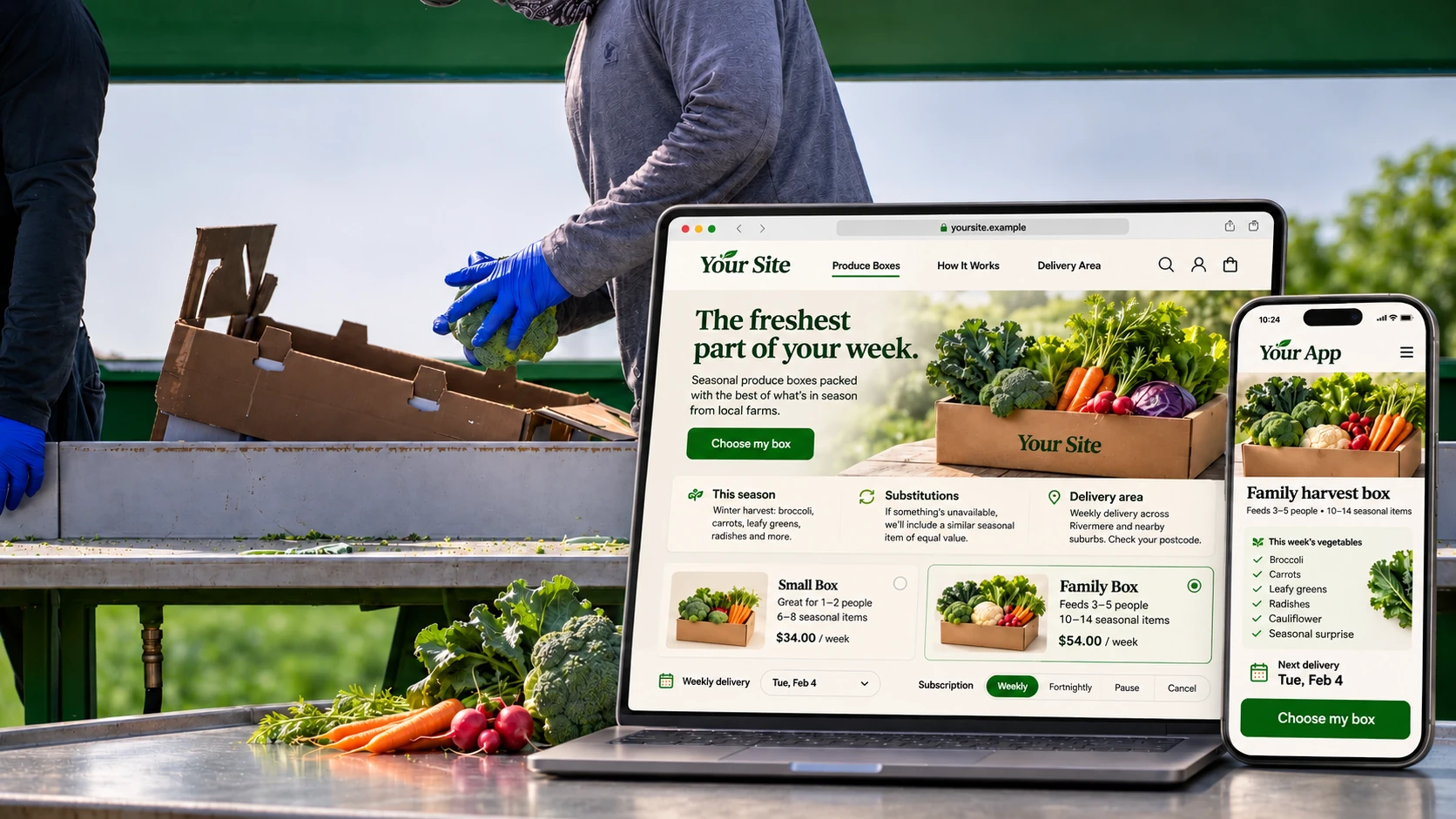
Create a produce box business for a defined delivery area. Explain the seasonal offer, box sizes and substitution arrangements, then let customers manage their upcoming deliveries.
Who would be glad
you built it?
Households wanting regular produce
A useful box with clear delivery expectations
Home cooks exploring seasonal food
Useful produce choices with practical guidance for unfamiliar ingredients
Neighbourhood collection groups
A shared pickup arrangement that fits local routines
Where the money
could come from.
Households pay for each agreed box or subscription period. Sales must cover produce, sorting, packing, storage, failed deliveries and support, not just what leaves the farm. A bounded first cycle helps you compare the full delivery cost with what customers will pay before offering many sizes, extras or distant routes.
The part you could
make your own.
Your version could connect the box to practical meal use, with clear guidance for unfamiliar produce and honest harvest updates. Test whether that helps households enjoy the contents and choose another cycle.
An angle to test with the people you want to serve.Start with something
worth using.
Start with one box size, a small delivery or pickup area and a limited subscription cycle. Show expected contents, substitution rules and pause options. Record packing and fulfilment costs from the beginning.
- Seasonal box plans and preferences
- Recurring orders and delivery windows
- Producer information and box updates
Give the promise
something to stand on.
You need reliable produce supply and a practical packing and delivery routine. Explain seasonal variation honestly, keep quality checks consistent and plan what happens when the harvest cannot support the expected box.
Food handling, harvest variation and last-mile delivery need active operations. Make pauses, missed deliveries and substitutions clear. Producer claims should be supported by actual information.
Let a small beginning
teach you something.
Offer a small trial cycle to households you can reliably reach. Ask them to record what they used, what went unused and whether the delivery or collection arrangement fits their week.
Do households use the produce they receive and choose another box at a price that covers the full delivery work?
Look for these signs
- Customers use and understand box contents
- Substitutions follow the stated promise
- Packing and delivery costs are recorded
A little more
clarity.
Must every box contain the same items?
No, if seasonal variation is explained before purchase. State how substitutions work and give customers a practical way to identify unsuitable items within the service you can actually provide.
Can customers pause a subscription?
A clear pause process can help, but set a cutoff that respects harvesting and packing decisions. Show it before signup so a customer knows when the next box becomes committed.
Harvie is a related reference for farm-to-table groceries.
Now picture it
with your name on it.
Your people. Your priorities. The version you keep thinking about. Answer a few questions and leave with a starting plan you can keep.
Free to explore. No account or email needed for your starting plan.