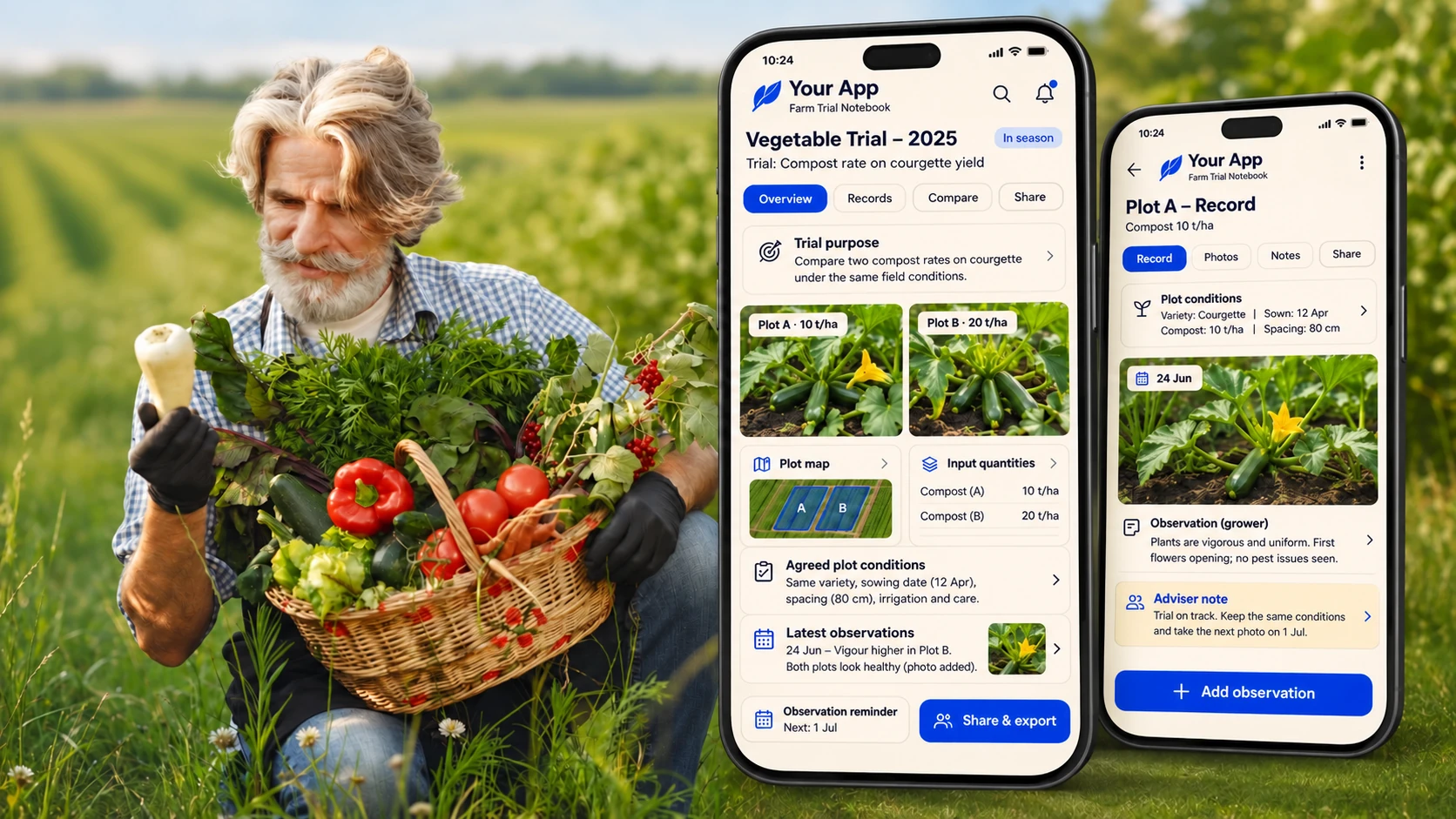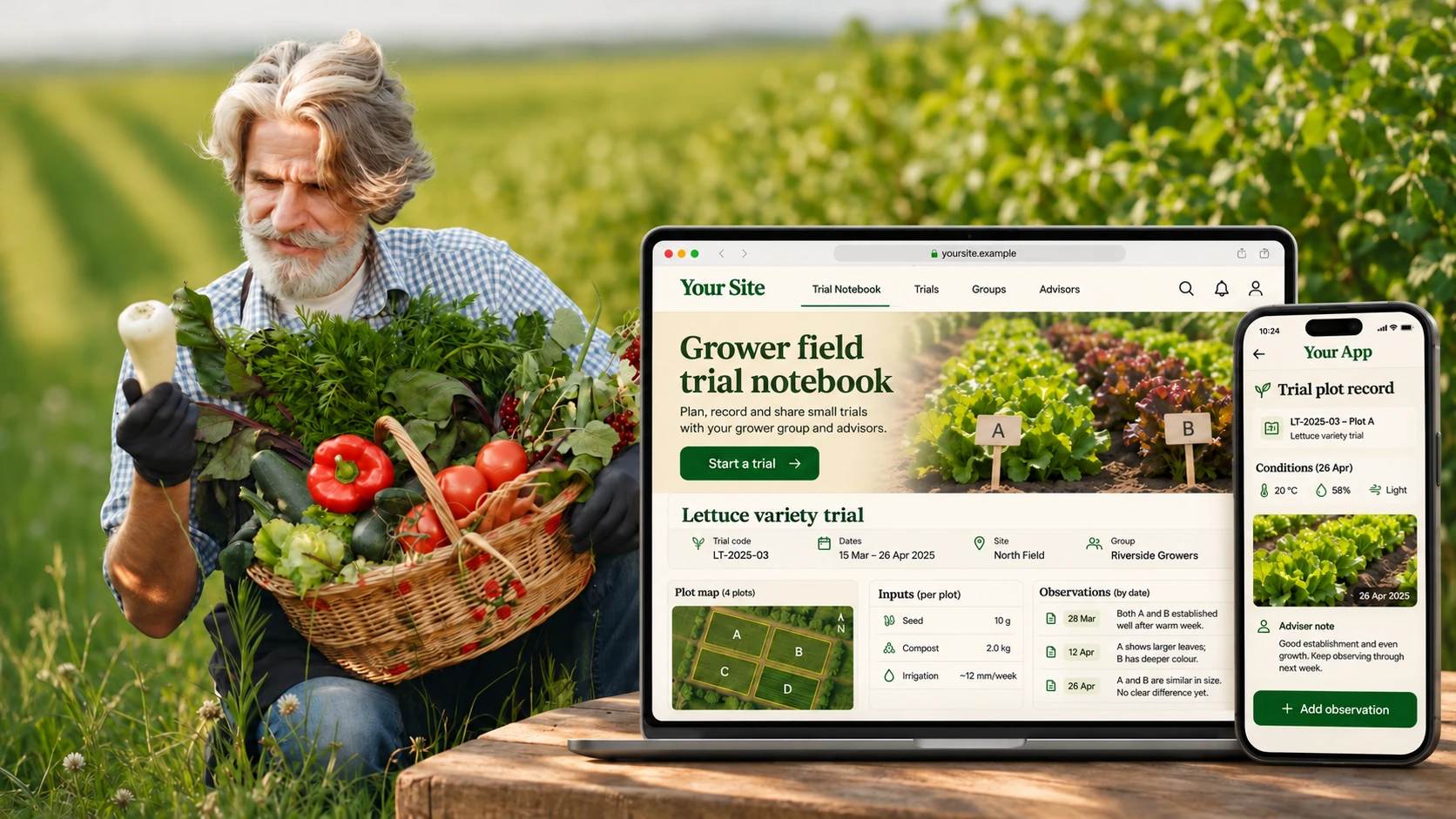
A grower tries a different method and notices a change, but the weather, timing and earlier field conditions are only partly remembered. A neighbour wants to copy the result. Your service could help record the question and observations while they are fresh, giving the group a better basis for discussion with qualified advisers.
A business you can
picture.
Work with a qualified advisor and one grower group. Each trial records its purpose, agreed method, conditions and observations, with the advisor helping participants interpret the limitations.
Who would be glad
you built it?
Grower groups exploring a question
A consistent record of trial conditions and observations
Agricultural advisers
Context for interpreting what a small trial may show
Cooperatives coordinating learning
A shared notebook with attributable entries
Where the money
could come from.
A cooperative could pay for the shared workspace and a defined facilitation package. Qualified data collection or review can be separately scoped. Fees cover setup, records and coordination, not a promised agronomic result. If a product supplier funds the trial, disclose that interest and keep the evidence and review process understandable to participants.
The part you could
make your own.
Your proposed edge is preserving enough local context to ask better questions. A result accompanied by conditions and uncertainty could be more useful than an enthusiastic before-and-after photograph with no explanation.
An angle to test with the people you want to serve.Start with something
worth using.
Choose one locally relevant question with qualified guidance. Record the plan, conditions, actions and dated observations, including unexpected events. Hold a review that identifies both possible lessons and the limits of the experience.
- Keep the question and method beside observations.
- Record relevant conditions and changes during the trial.
- Share reviewed notes with a defined participant group.
Give the promise
something to stand on.
You need qualified partners to define useful observations and support appropriate field decisions. Record commercial interests, distinguish observation from interpretation and avoid presenting a small trial as universal proof.
Field decisions require appropriate agronomic advice. Small trials should not be presented as proof of universal effectiveness, and commercial interests in products must be disclosed.
Let a small beginning
teach you something.
Work with a cooperative and qualified adviser on a modest, appropriate trial already under consideration. Test whether participating growers can keep the agreed observations and whether the review can distinguish recorded facts from later interpretation.
Can another grower understand what was tried, under which conditions and why the result may not transfer directly to their field?
Look for these signs
- Observations have dates and identifiable sources
- Unexpected conditions remain in the record
- Review notes state limits and commercial interests
A little more
clarity.
Does a positive trial prove a product works everywhere?
No. Conditions and methods affect what can be concluded. Use qualified interpretation and explain what further investigation would be needed before applying the result elsewhere.
Can growers enter informal observations?
Yes, if they are clearly attributed and distinguished from measured data. Useful notes can support discussion, but the interface should not make a casual impression look like a controlled result.
What should my first version focus on?
Start with the first test described here, then build around the part people actually use and would pay to keep.
Now picture it
with your name on it.
Your people. Your priorities. The version you keep thinking about. Answer a few questions and leave with a starting plan you can keep.
Free to explore. No account or email needed for your starting plan.