Health & wellnessNew concept
Family routine restart studio

Make a busy day feel more like your family's day.

A new school term, a changed job or a growing household can make familiar routines stop fitting. You could create a guided planning service that helps families choose a few things they want to make easier and try a small arrangement everyone understands.

Make this fit me
You could also build this as a mobile app
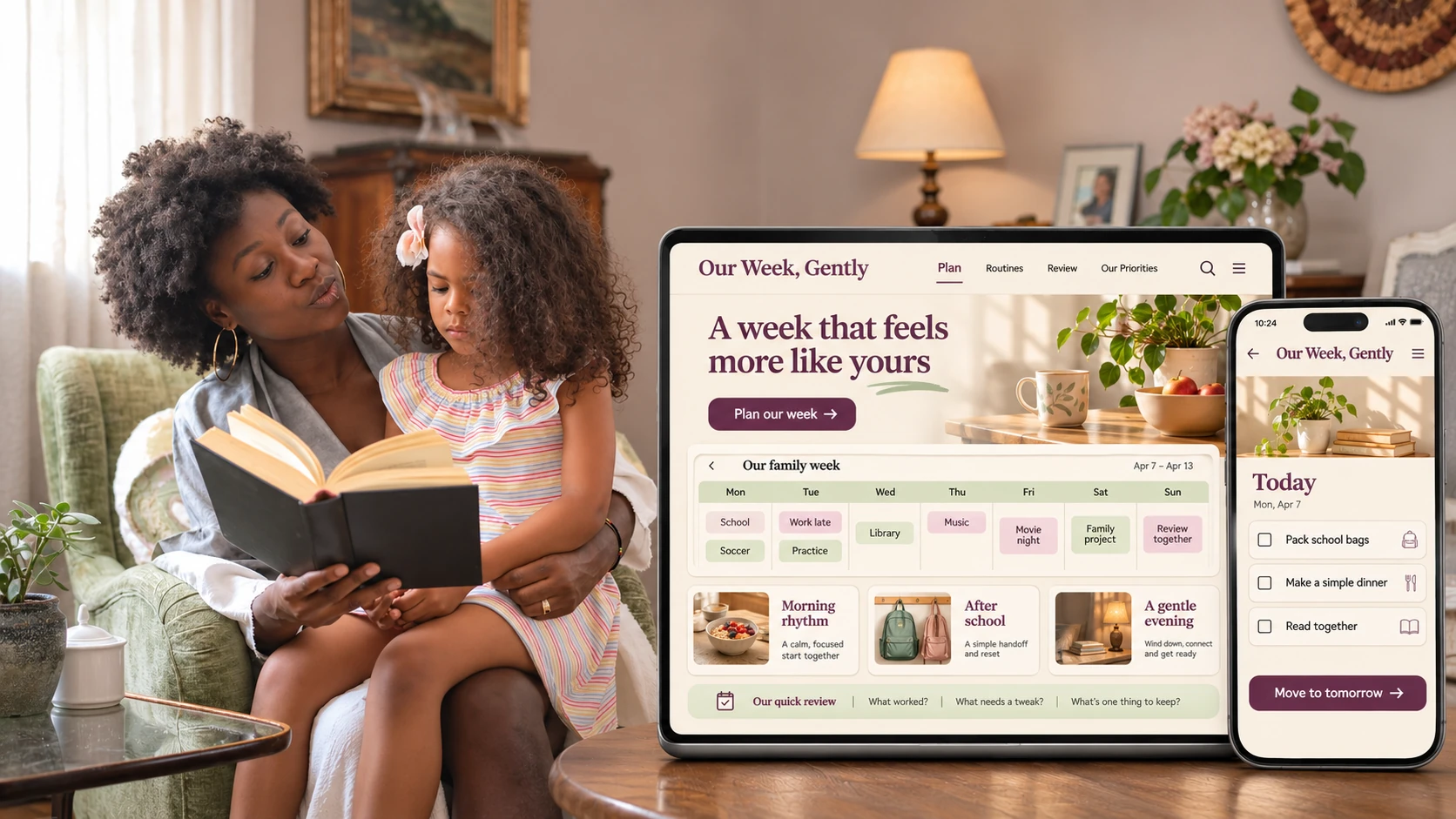
Concept for family routine restart studio, combining people engaged in the real activity with matching desktop and mobile interfaces.Illustrative concept
IMAGINE THIS MOMENT

A new school term changes pickup times and a parent’s shift changes again. The household keeps trying last term’s routine, then feels frustrated when it fails. Your service could help the family choose a few practical changes together, giving everyone a clearer part in a plan they can try and revise.

A business you can
picture.

Build around a short guided reset. The household describes its current day, chooses one repeated difficulty and agrees a simple plan with responsibilities suited to the people involved.

Who would be glad
you built it?

Households facing a schedule change

A manageable way to rethink everyday coordination

Families sharing care or household tasks

A chance for different needs to be heard

Family-support organisations

A clearly educational planning programme

Where the money
could come from.

Households could buy a fixed reset package containing a facilitated session, a shared plan and one review. The fee pays for preparation and facilitation rather than an indefinite subscription. Group programmes may be funded by support organisations later. Keep the offer within everyday planning; clinical or safeguarding concerns require appropriate support beyond the service.

The part you could
make your own.

Your possible edge is beginning with the family’s constraints and voices instead of an ideal timetable. A small agreed change may be more workable than a complete routine imposed by one enthusiastic planner.

An angle to test with the people you want to serve.

Start with something
worth using.

Offer one guided reset around a specific transition. Gather the household’s priorities, choose a few changes and agree a short trial and review. Keep the plan simple enough to use during an ordinary busy week.

  • Map the parts of the day that feel crowded.
  • Agree one manageable change at a time.
  • Review what helped and adjust the plan.

Give the promise
something to stand on.

WHAT YOU BRING

You need patient facilitation and respect for different household arrangements. Participation should be voluntary, information private and the process free from judgement scores or promises of an ideal family routine.

Keep participation voluntary, protect household information and avoid turning the service into a judgement score. Clinical or safeguarding concerns require appropriate professional support beyond routine planning.

Let a small beginning
teach you something.

Invite willing households undergoing a familiar transition, such as a new term. Trial a limited planning session and follow-up, then ask each participant which part felt useful and which arrangement needs changing.

THE QUESTION TO TEST

Can the household try the agreed changes and discuss what happened without treating a difficult week as personal failure?

Look for these signs

  • Participants can explain the agreed changes
  • The plan reflects real constraints
  • Reviews lead to practical adjustments
WHEN THE FIRST VERSION HAS TAUGHT YOU MORE
Where you could take it next

Add shared calendars, printable plans and language options. A simple assistant could help turn agreed choices into a draft schedule that the family can change.

A little more
clarity.

Does everyone need to follow the same schedule?

Not necessarily. The service can help coordinate shared responsibilities while respecting different routines. The goal is an understandable arrangement the household chooses, not uniform behaviour.

What if the family needs more than routine planning?

Keep the service’s scope clear and recognise when a concern needs appropriate professional help. A calendar exercise should not be presented as a solution to clinical or safeguarding issues.

What should my first version focus on?

Start with the first test described here, then build around the part people actually use and would pay to keep.

WHAT COULD GO INSIDE

A few additions
to explore.

Automatic reminders and updatesLet a timely update carry the routine reassurance, so your team can give more attention to the questions that need a person.Customer accounts and preferencesMake a returning customer's next visit feel familiar, with the records they need and control over the details they share.Paid memberships and private contentGive your continuing knowledge or community a clear paid home, with a promise members can understand before they join.
MAKE ROOM FOR YOUR VERSION

Now picture it
with your name on it.

Your people. Your priorities. The version you keep thinking about. Answer a few questions and leave with a starting plan you can keep.

Free to explore. No account or email needed for your starting plan.
PICTURE THE MOBILE APPFamily routine reset app

Make room for the week you actually have.

A routine that worked last month may stop fitting after a change in work, school or home life. You could build an app that helps a household redraw a few shared responsibilities and try a manageable week. Give people room to change the plan without turning every missed task into a failure.

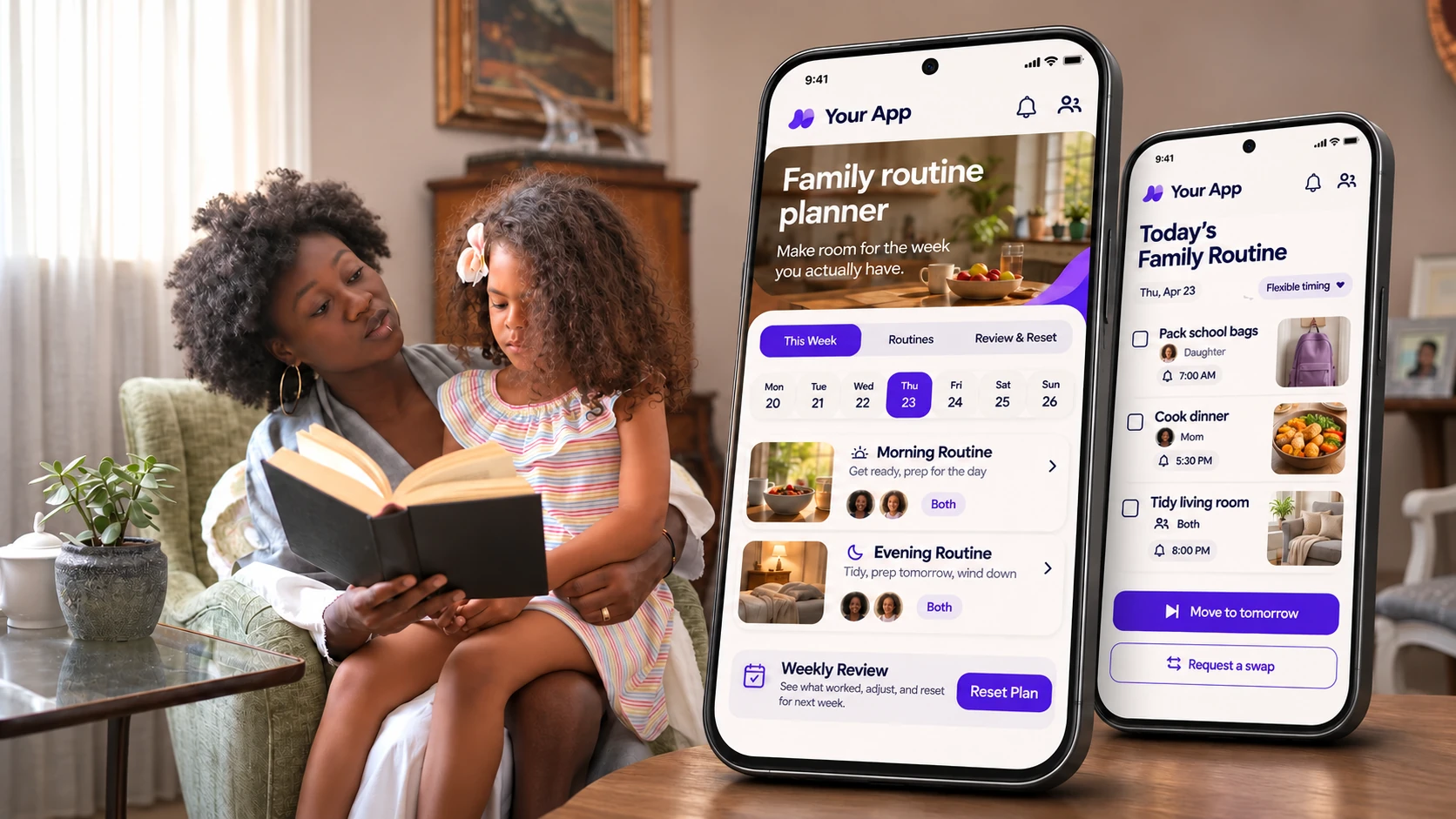
An African American mother reads a storybook to her daughter on a sofa, creating a warm bonding moment. Two phone screens preview the Family routine reset app, with no desktop view.App concept
IMAGINE THIS MOMENT

A new work schedule disrupts the household routine, but the shared list still assumes everyone is available at the old times. Missed tasks begin to feel personal. Your app could help a family agree a smaller workable week, with room to swap responsibilities and review what actually fitted.

One useful moment.
A reason to open it.

The household chooses a few routines, agrees who owns them and tries the coming week. A participant can request a swap without silently changing someone else's responsibility.

Who would be glad
you built it?

Households after a schedule change

Redraw a manageable shared routine.

Co-parents or partners

See agreed responsibilities without repeated reminders.

Family organisers

Make changes visible to the people involved.

A place in their life.
At the right moment.

Why it belongs on a phone

Family plans change while people are in different places. Shared updates, chosen reminders and quick responses let the phone support a practical conversation throughout the week rather than a fixed chart nobody revisits.

A reason to come back

Household members return for the next shared task and a brief weekly adjustment. The product should make coordination kinder and clearer rather than rewarding an impossible perfect streak.

Personal routinesTimely remindersLive coordination

Where the money
could come from.

A household subscription could fund syncing, collaboration and saved routine patterns. The fee buys an organising tool with clear account access, not a promise of family harmony. Support, account recovery and product maintenance have costs. Test ongoing use after the first reset before building a large content library.

The part you could
make your own.

Make restarting the central experience: reduce the plan, reassign what matters and begin again. Test whether households value this flexibility more than a demanding checklist they gradually stop opening.

An angle to test with the people you want to serve.

Start with something
worth using.

Start with a few routines, named owners and simple swap requests. Include a weekly reset that can remove unnecessary tasks. Keep scoring and public comparisons out of the initial experience.

  • A small set of shared routines and owners
  • Flexible timing and user-chosen reminders
  • Simple handover or swap requests
  • Weekly review with an easy reset

Give the promise
something to stand on.

WHAT YOU BRING

You need sensitivity to different household arrangements and a product that supports agreement rather than surveillance. Let people control notifications and avoid presenting one family pattern as the correct way to live.

Keep participation voluntary, protect household information and avoid turning the service into a judgement score. Clinical or safeguarding concerns require appropriate professional support beyond routine planning.

Let a small beginning
teach you something.

Invite willing households to plan one ordinary week using a small number of routines. Ask each participant whether the app made responsibilities clearer and whether changing the plan felt straightforward.

THE QUESTION TO TEST

Can the household adjust a routine together without the app turning a missed task into an argument or score?

Look for these signs

  • Responsibilities reflect a shared agreement.
  • Swaps are visible to those affected.
  • Families remove routines that no longer help.
WHEN THE FIRST VERSION HAS TAUGHT YOU MORE
Where you could take it next

Add shared calendars, printable plans and language options. A simple assistant could help turn agreed choices into a draft schedule that the family can change.

A little more
clarity.

Should parents assign everything?

Households differ. The app can support agreed roles and permissions, but the pilot should explore participation rather than assume a single decision-maker for every family.

Do we need streaks and rewards?

Only if the household finds them helpful. A simple reset and clear handover may better support people whose circumstances change from week to week.

What should my first version focus on?

Start with the first test described here, then build around the part people actually use and would pay to keep.

WHAT COULD GO INSIDE

A few additions
to explore.

Automatic reminders and updatesLet a timely update carry the routine reassurance, so your team can give more attention to the questions that need a person.Customer accounts and preferencesMake a returning customer's next visit feel familiar, with the records they need and control over the details they share.Paid memberships and private contentGive your continuing knowledge or community a clear paid home, with a promise members can understand before they join.
MAKE ROOM FOR YOUR VERSION

Now picture it
with your name on it.

Your people. Your priorities. The version you keep thinking about. Answer a few questions and leave with a starting plan you can keep.

Free to explore. No account or email needed for your starting plan.
KEEP THE POSSIBILITIES OPEN

Something else
might speak to you.