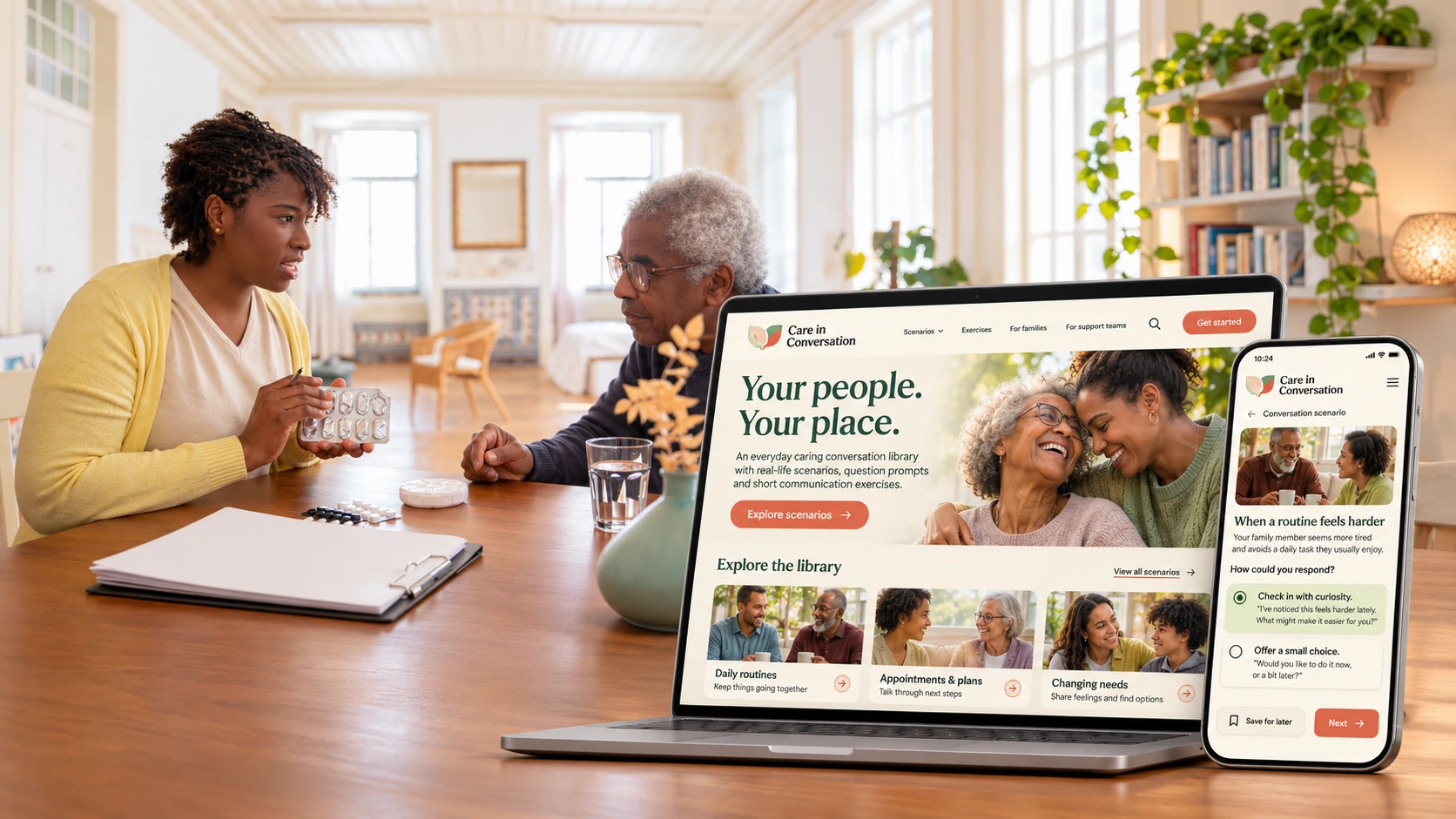
A family member wants to help with an ordinary routine but worries that every suggestion sounds like an instruction. They care deeply and still struggle to find the words. Your library could offer reviewed examples and reflection prompts, helping people rehearse a conversation while keeping the supported person’s preferences and voice central.
A business you can
picture.
Start with a narrow collection of nonclinical situations, such as discussing preferences or asking for help. Suitable reviewers develop scenarios, reflection prompts and guidance on when the topic needs professional input.
Who would be glad
you built it?
Families supporting another person
Thoughtful examples for everyday conversations
Support organisations
Reviewed educational material for team discussion
Facilitators running learning sessions
Clear scenarios that invite reflection rather than judgement
Where the money
could come from.
Families could buy a topic collection, while organisations may later purchase team access. Begin with one defined buyer and collection so the offer is clear. The fee covers writing, appropriate review, contributor permissions and updates. It buys learning material, not treatment, personalised clinical guidance or a guaranteed change in another person’s behaviour.
The part you could
make your own.
Your proposed difference is rehearsal without a single supposedly correct script. Showing how the same words can feel different in context may help users become more attentive to the person they are supporting.
An angle to test with the people you want to serve.Start with something
worth using.
Choose a narrow set of everyday situations. Provide short reviewed scenarios, alternative ways to ask a question and prompts about the other person’s preferences. Offer a facilitated discussion separately from the library.
- Choose a familiar conversation situation.
- Explore several respectful ways to respond.
- Save questions to discuss with a qualified person.
Give the promise
something to stand on.
You need appropriate reviewers and contributors who consent to how their experiences are used. The service should remain educational and nonclinical, with no promise that a script will resolve every difficult interaction.
Keep the scope educational and nonclinical, use appropriate reviewers and avoid presenting scripts as treatment or a guaranteed solution. Personal stories require consent and careful handling.
Let a small beginning
teach you something.
Work with suitable reviewers and a small voluntary group to test sample scenarios. Ask users which questions invite reflection and which feel patronising, then revise the material before expanding the collection.
Does the material help someone prepare a more respectful question while recognising that the other person may respond differently?
Look for these signs
- Examples preserve the supported person’s agency
- Users can explain the educational boundaries
- Feedback identifies language needing revision
A little more
clarity.
Are these scripts a form of treatment?
No. They are educational examples for reflection and discussion. Clinical or safeguarding concerns need appropriate professional support, and the library should make that boundary understandable.
Should users follow the wording exactly?
The examples should encourage listening, not mechanical recitation. People and circumstances differ, so users need to consider preferences and seek appropriate support when an everyday example does not fit.
What should my first version focus on?
Start with the first test described here, then build around the part people actually use and would pay to keep.
Now picture it
with your name on it.
Your people. Your priorities. The version you keep thinking about. Answer a few questions and leave with a starting plan you can keep.
Free to explore. No account or email needed for your starting plan.