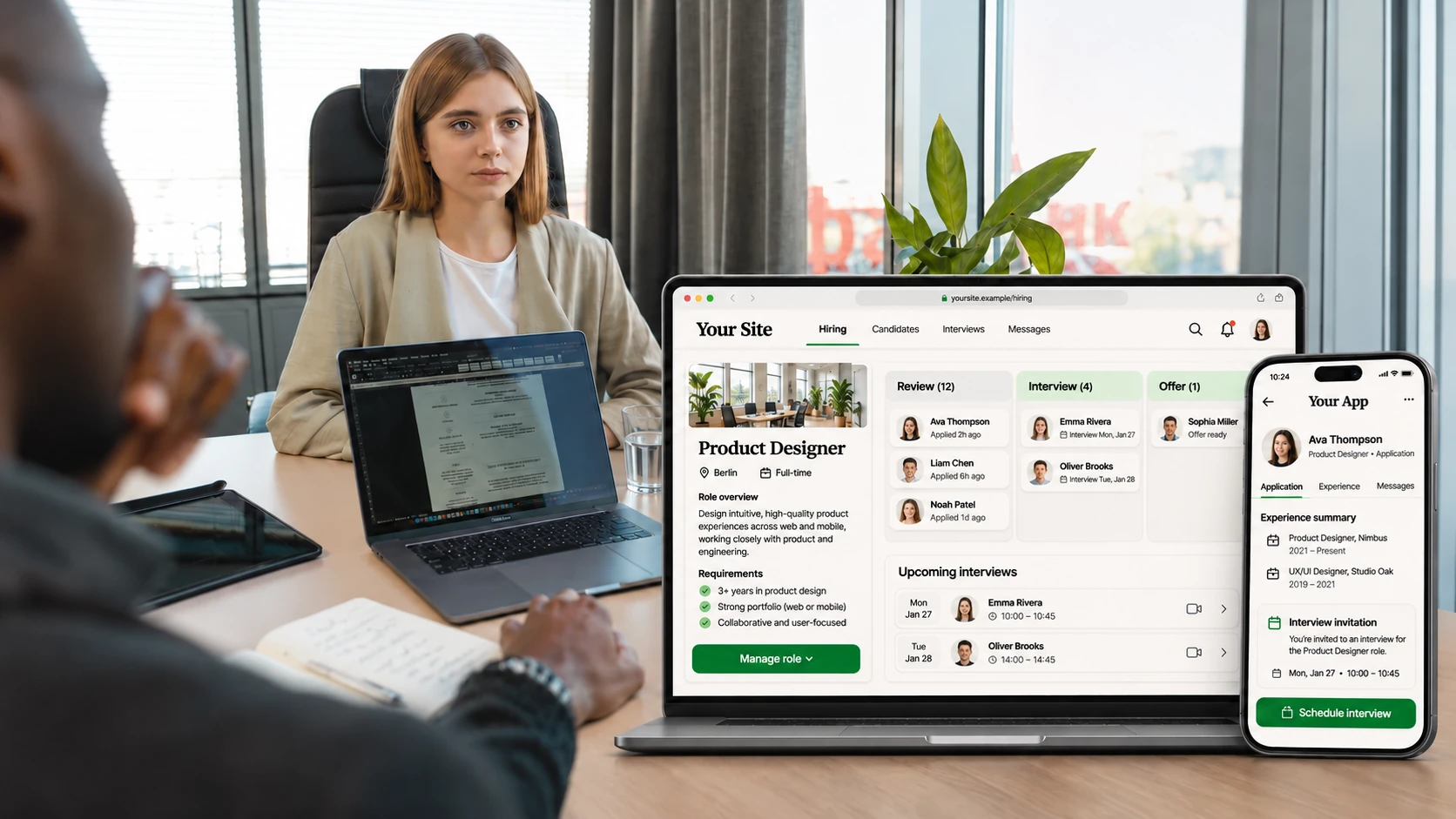
An employer has applications in an inbox, interview notes in a document and no clear record of who should reply. Candidates wait without knowing what comes next. Your workspace could connect the role requirements, review steps and communication so a hiring decision is easier to organise and explain.
A business you can
picture.
Offer an applicant-tracking workspace to a defined employer group. Keep job requirements, applications, interview decisions and candidate communication together with clear ownership of each step.
Who would be glad
you built it?
Small hiring teams
Coordinate application reviews and interviews.
Hiring managers
Assess evidence against agreed role requirements.
Job applicants
Receive clear process information and updates.
Where the money
could come from.
Employers could pay a subscription or a defined hiring-campaign fee for the workspace. The service funds organisation, records and communication, not a guaranteed hire. Setup, support and data handling require resources; any separate recruiting service should have its own scope rather than being implied by the software price.
The part you could
make your own.
Clarity for a small hiring team could distinguish the product. Agreed criteria, usable review notes and respectful candidate updates may solve more frustration than a complex ranking dashboard. Test the process through a completed hiring cycle.
An angle to test with the people you want to serve.Start with something
worth using.
Start with one hiring workflow: role description, application intake, review notes and interview scheduling. Agree evaluation criteria and communication owners. Keep decisions with people and make the applicant's next expected step visible.
- Job pages and application forms
- Review stages and interview scheduling
- Candidate messages and decision records
Give the promise
something to stand on.
You need an understanding of a defined employer's hiring workflow and careful handling of candidate information. Fair review, retention choices and clear human responsibility should shape the product before automated rankings are introduced.
Applicant privacy, access controls and employment rules need review. Any automated sorting must be checked for inappropriate exclusion and should not silently make consequential hiring decisions.
Let a small beginning
teach you something.
Pilot with a small employer recruiting for a real role using appropriately handled records. Observe whether reviewers apply the agreed criteria and whether applicants receive accurate updates when stages change or the role closes.
Can the team make a documented decision against the stated role requirements and communicate the next step accurately to applicants?
Look for these signs
- Review criteria are agreed in advance
- Applications have clear responsible reviewers
- Candidate updates match actual process status
A little more
clarity.
Should AI decide which applicants are rejected?
The initial product should support human review, not conceal it behind automatic scores. Any later assistance needs careful evaluation for accuracy and unfair effects, with responsible people able to inspect and challenge the basis of a decision.
Must every applicant create an account?
Only if the workflow benefits from it. A clear application and communication path may work with fewer steps; avoid collecting unnecessary information or adding friction that does not help the employer assess the role.
Workable is a reference for recruiting software.
Now picture it
with your name on it.
Your people. Your priorities. The version you keep thinking about. Answer a few questions and leave with a starting plan you can keep.
Free to explore. No account or email needed for your starting plan.