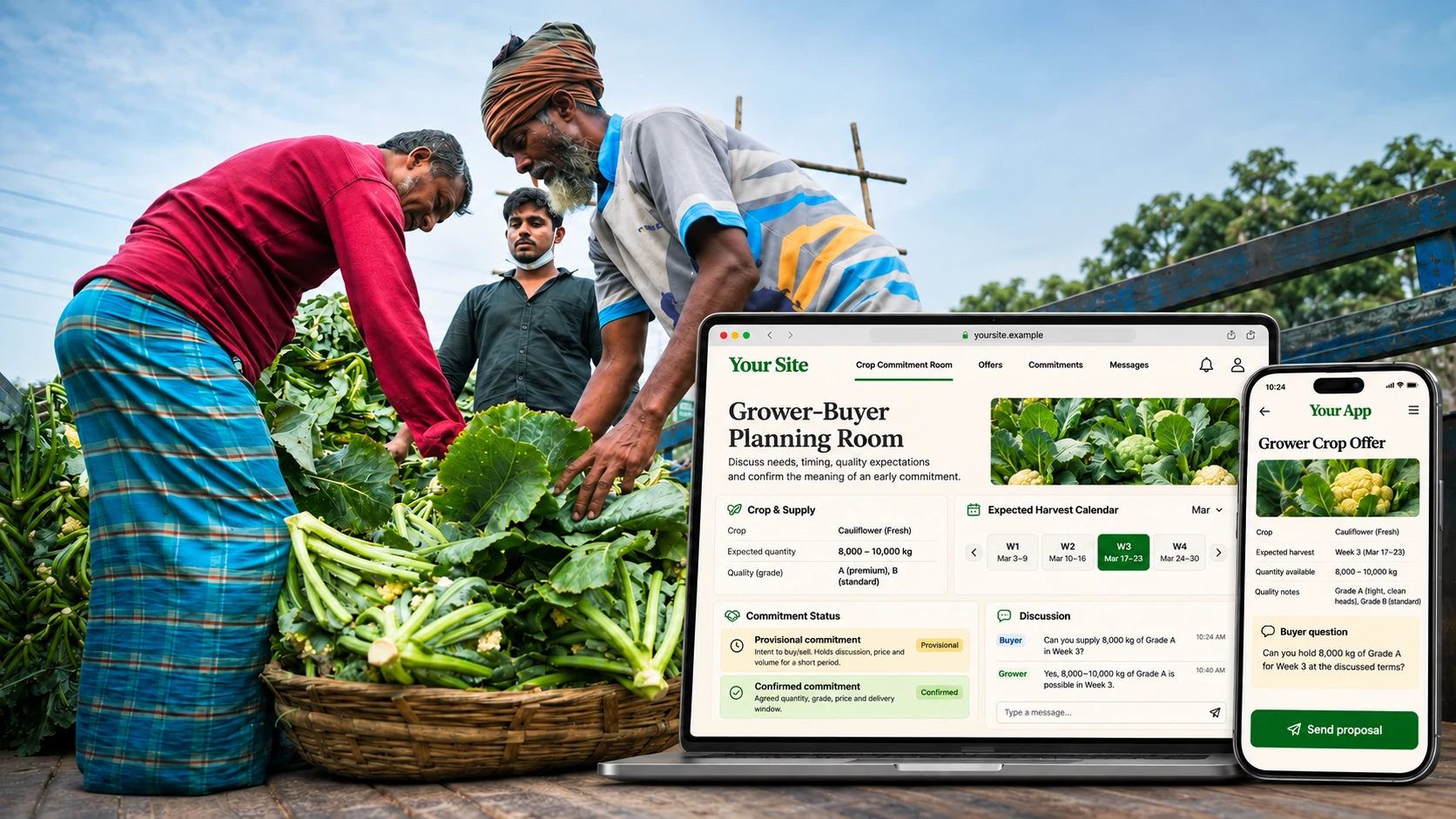
A grower hears that a buyer may need a particular crop and begins imagining the season around it. The buyer meant only an early indication. Your workspace could help both sides talk sooner while making confidence and conditions visible, so an encouraging conversation does not quietly become an assumed future sale.
A business you can
picture.
Focus on one crop and a manageable buyer network. Participants describe their requirements and plans, review questions together and keep the status of each discussion explicit.
Who would be glad
you built it?
Grower groups
A record of buyer interest and unresolved conditions
Agricultural buyers
Clear information about possible supply
Advisers supporting crop planning
Context for appropriate agronomic and commercial review
Where the money
could come from.
A grower group or buyer could pay for the workspace and a defined coordination programme. The fee covers brief preparation, follow-up and record maintenance. It should not be based on promising future yields, prices or purchases that no party has committed to. Specialist advisory or contracting work remains separately agreed with the appropriate professionals.
The part you could
make your own.
Your proposed difference is clarity before a transaction exists. A grower could see which buyer statement is exploratory and what must happen before it becomes something they can reasonably plan around.
An angle to test with the people you want to serve.Start with something
worth using.
Focus on one crop and a small buyer-grower group. Record indicative needs, possible supply, assumptions and next checks. Require explicit review before a discussion is labelled a firm arrangement, and keep seasonal changes visible.
- Separate expressions of interest from firm agreements.
- Record quantity, quality and timing assumptions.
- Track the next question each party must answer.
Give the promise
something to stand on.
You need experience in the crop chain and careful communication. Keep indications, proposals and agreements distinct, and involve suitable expertise for agronomic, contractual and commercial decisions.
Agronomic, commercial and contractual decisions need appropriate expertise. Do not promise yields, prices or buyer performance, and keep changes visible as conditions develop.
Let a small beginning
teach you something.
Invite a grower group and a buyer already discussing a future requirement. Record the current conversation and ask both sides to label its status independently, then resolve any difference in understanding before continuing.
Do the grower and buyer assign the same level of commitment to the conversation and understand its unresolved conditions?
Look for these signs
- Indications remain distinct from firm agreements
- Changes retain dates and responsible sources
- Participants understand the next required check
A little more
clarity.
Does recorded buyer interest guarantee a sale?
No. Interest, a proposal and a binding arrangement are different. Use clear status language and appropriate professional review before anyone relies on the conversation as a contractual commitment.
Can the platform recommend what the grower should plant?
It can organise the conversation and relevant records. Planting and commercial decisions require suitable expertise and the grower’s own circumstances, not an automatic recommendation from buyer interest alone.
What should my first version focus on?
Start with the first test described here, then build around the part people actually use and would pay to keep.
Now picture it
with your name on it.
Your people. Your priorities. The version you keep thinking about. Answer a few questions and leave with a starting plan you can keep.
Free to explore. No account or email needed for your starting plan.