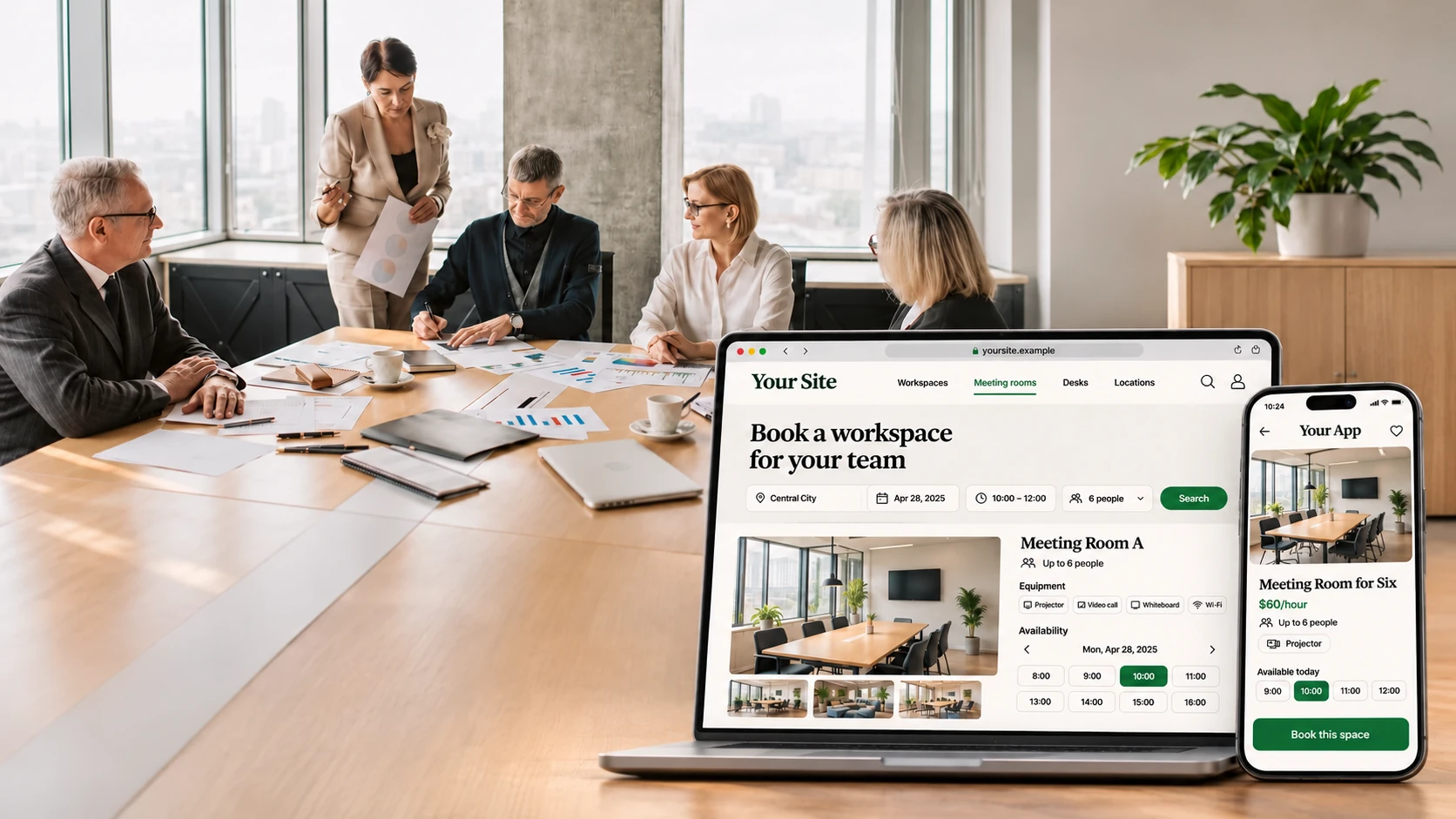
A small team needs a quiet room for a client call, but a listing's attractive photographs do not show the connection setup or access arrangements. Your platform could turn those practical details into a clear booking, helping the venue prepare and the team arrive ready to work.
A business you can
picture.
Create a booking platform for desks, meeting rooms or shared workspaces. Show capacity, equipment, access arrangements and actual availability for the type of work customers want to do.
Who would be glad
you built it?
Remote workers
Find a suitable desk for a defined period.
Small teams
Book equipped rooms for meetings.
Workspace operators
Manage availability and practical requirements.
Where the money
could come from.
A venue could share a disclosed fee from completed bookings, while customers see the full room or desk charge. The platform must fund venue onboarding, payment handling and booking support. Cleaning, equipment and overtime charges should be explained upfront, and the venue's own operating costs remain part of its business model.
The part you could
make your own.
Task-specific suitability could distinguish your service. A room ready for a confidential call needs different details from a casual coworking desk. Test whether clear use cases and practical confirmations improve booking decisions.
An angle to test with the people you want to serve.Start with something
worth using.
Choose one area and a focused set of desks or meeting rooms. Show availability, facilities, access, total charges and cancellation terms. Confirm equipment needs in the booking rather than relying on a generic amenities list.
- Workspace profiles and amenities
- Desk and room availability
- Booking, access and support instructions
Give the promise
something to stand on.
You need reliable venue information and a clear booking process. Capacity, equipment, access and overruns are ordinary operational issues; the platform should help hosts and customers agree them before the reservation begins.
Coordinate access with venue operators and prevent double bookings. Explain cancellation, visitor and equipment rules. A booking request should remain visibly unconfirmed until the venue has accepted it.
Let a small beginning
teach you something.
Invite a few venues to list spaces they can keep current. Ask working customers to book for an actual meeting or workday, then check whether the room and arrival process matched the task they described.
Can the customer arrive and begin the intended work without discovering a missing facility or unclear access arrangement?
Look for these signs
- Bookings reflect actual availability
- Equipment needs are confirmed
- Arrival and departure expectations are clear
A little more
clarity.
Can a room be booked by the hour?
It can if the venue can manage the turnaround and clearly defines minimum periods, overruns and access. Show the complete price and any setup or equipment charges before confirmation.
What if the internet or equipment fails?
Agree the venue's support and remedy process in advance. Avoid guaranteeing facilities the platform does not operate directly; customers should know what was confirmed and who can resolve a problem on site.
WeWork is a related reference for flexible workspace services.
Now picture it
with your name on it.
Your people. Your priorities. The version you keep thinking about. Answer a few questions and leave with a starting plan you can keep.
Free to explore. No account or email needed for your starting plan.