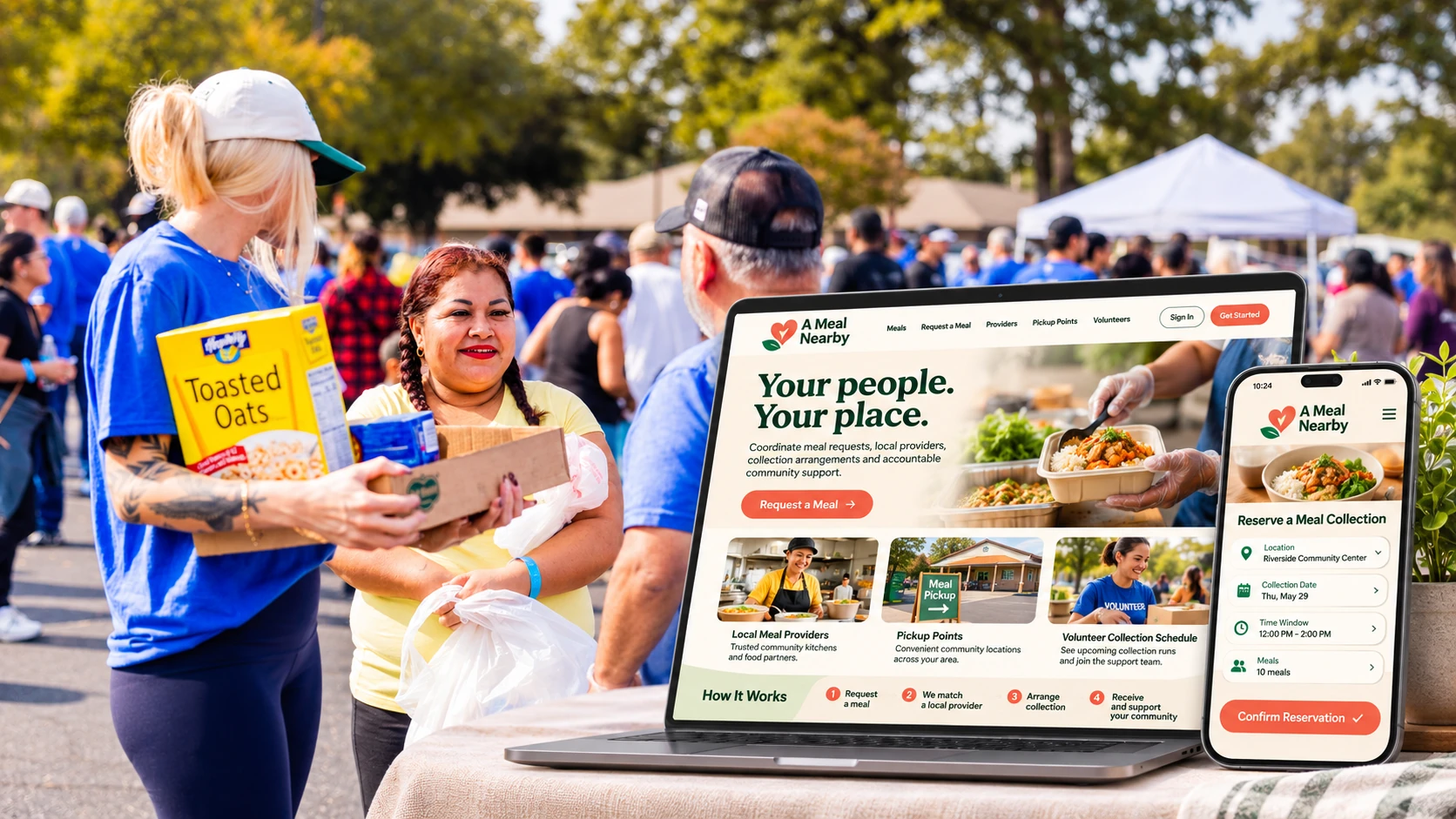
A participant has explained their situation to several volunteers and still does not know whether a meal is arranged or where to collect it. The organisers are trying hard, but their records are scattered. Your service could give the programme one clearer daily picture while preserving the dignity and privacy of the people it serves.
A business you can
picture.
Start with an accountable organisation and a small provider network. The workspace records requests, confirms available meals and assigns practical collection or delivery tasks.
Who would be glad
you built it?
Community meal organisers
A shared view of requests and confirmed provision
Programme participants
Clear collection or delivery information
Meal providers
Accurate quantities and agreed handover details
Where the money
could come from.
An organisation or programme sponsor could pay for the coordination workspace and defined onboarding. The fee covers access, administration and support, while meal provision and delivery costs remain explicit. Charge for work the service actually performs. The business model should not require participants to repeatedly disclose sensitive circumstances merely to receive a clear arrangement.
The part you could
make your own.
Your proposed difference is dependable information with less repeated explanation. A participant could receive a simple confirmation while organisers share only the details needed to fulfil the arrangement.
An angle to test with the people you want to serve.Start with something
worth using.
Start with one programme and a limited provider group. Record requests, confirmed meal quantities, collection details and responsible contacts. Restrict personal information and distinguish a request from an actual allocation.
- Keep requested and confirmed meals distinct.
- Share necessary details with the right coordinator.
- Record collection, delivery and unresolved issues.
Give the promise
something to stand on.
You need trusted programme partners and careful data handling. Provider responsibilities for food handling, descriptions and dietary questions must be clear, with confirmation from appropriate people rather than inferred suitability.
Protect personal information and confirm provider responsibilities for food handling and descriptions. Dietary or medical suitability needs appropriate expertise and direct confirmation; the platform should not infer it.
Let a small beginning
teach you something.
Work with an established programme on a small service window. Follow requests through provider confirmation and handover, then ask organisers and consenting participants where uncertainty or unnecessary repeated questions remain.
Does each participant receive a clear confirmed arrangement while the programme shares only the information needed to provide it?
Look for these signs
- Requests and confirmed allocations are distinct
- Providers receive accurate handover details
- Participant information is restricted appropriately
A little more
clarity.
Can the system infer dietary suitability?
No. Record stated needs carefully and require direct confirmation from responsible providers or appropriate professionals. A label or preference entry should not become an unsupported assurance about a meal.
What happens when meals run out?
Make availability and allocation status visible to authorised organisers. Provide an honest update process and the programme’s agreed next steps rather than leaving an unconfirmed request looking fulfilled.
What should my first version focus on?
Start with the first test described here, then build around the part people actually use and would pay to keep.
Now picture it
with your name on it.
Your people. Your priorities. The version you keep thinking about. Answer a few questions and leave with a starting plan you can keep.
Free to explore. No account or email needed for your starting plan.