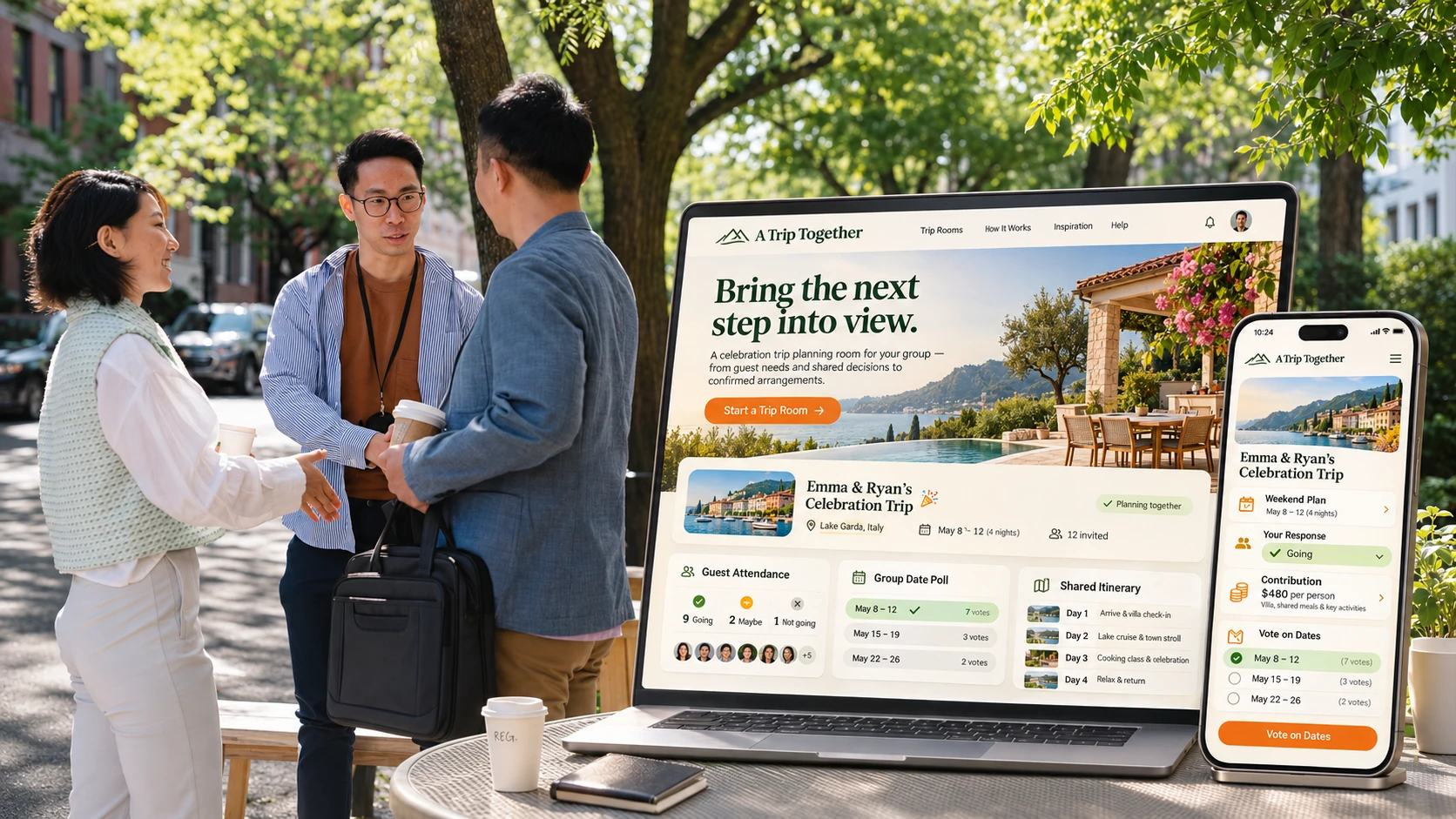
A milestone birthday trip begins with excitement, then the group chat fills with dates, prices and hesitant replies. Some guests do not want to explain a budget limit publicly. Your service could help an organiser gather those constraints privately and compare workable options, keeping the occasion’s meaning visible while the plan becomes real.
A business you can
picture.
Choose a defined occasion or group size. Participants share relevant preferences, the organiser reviews suitable options and providers confirm the arrangements before commitments are communicated.
Who would be glad
you built it?
Celebration trip organisers
Help coordinating a group without carrying every conversation
Invited guests
A private way to express practical constraints
Travel planners supporting groups
A clear brief and decision record
Where the money
could come from.
The group organiser or group could pay a fixed coordination fee for a defined planning stage. The fee covers interviews, option comparison and decision support. Supplier commissions must be disclosed separately, and travel purchases remain under clear provider terms. The service should not promise that every guest’s preferences can be met or that an unconfirmed option will remain available.
The part you could
make your own.
Your proposed difference is handling sensitive constraints with care. A guest could state a budget privately while the organiser receives the practical range needed to plan, avoiding unnecessary public negotiation.
An angle to test with the people you want to serve.Start with something
worth using.
Offer one group planning package. Gather private date and budget constraints, agree priorities and prepare a small set of feasible options. Record the group’s decision and hand confirmed booking work to the appropriate provider.
- Collect availability and preferences with appropriate privacy.
- Compare options using agreed group priorities.
- Keep confirmed bookings and individual responsibilities clear.
Give the promise
something to stand on.
You need thoughtful facilitation and suitable travel partners. Protect individual preferences, make booking ownership and payment responsibilities explicit and distinguish a group preference from an actual reservation.
Make cancellation terms, payment responsibilities and booking ownership explicit. Preferences are not bookings, and the service should not promise that every request can be met.
Let a small beginning
teach you something.
Trial the process with a group already organising a modest celebration trip. Agree how private information will be used, then assess whether the resulting options reflect the group’s real constraints and reduce unanswered decisions.
Can the group choose a workable direction while guests understand how their private constraints influenced the planning?
Look for these signs
- Guests control sensitive preference sharing
- Options reflect actual group constraints
- Bookings and preferences remain visibly different
A little more
clarity.
Can the organiser see every guest’s private answers?
Define that before collecting them. Share only what participants knowingly agree to, and use aggregated planning constraints when individual detail is unnecessary.
What if someone withdraws after a decision?
The planning and booking terms should explain responsibilities and possible costs. A group decision does not replace the cancellation conditions of the actual travel providers.
What should my first version focus on?
Start with the first test described here, then build around the part people actually use and would pay to keep.
Now picture it
with your name on it.
Your people. Your priorities. The version you keep thinking about. Answer a few questions and leave with a starting plan you can keep.
Free to explore. No account or email needed for your starting plan.