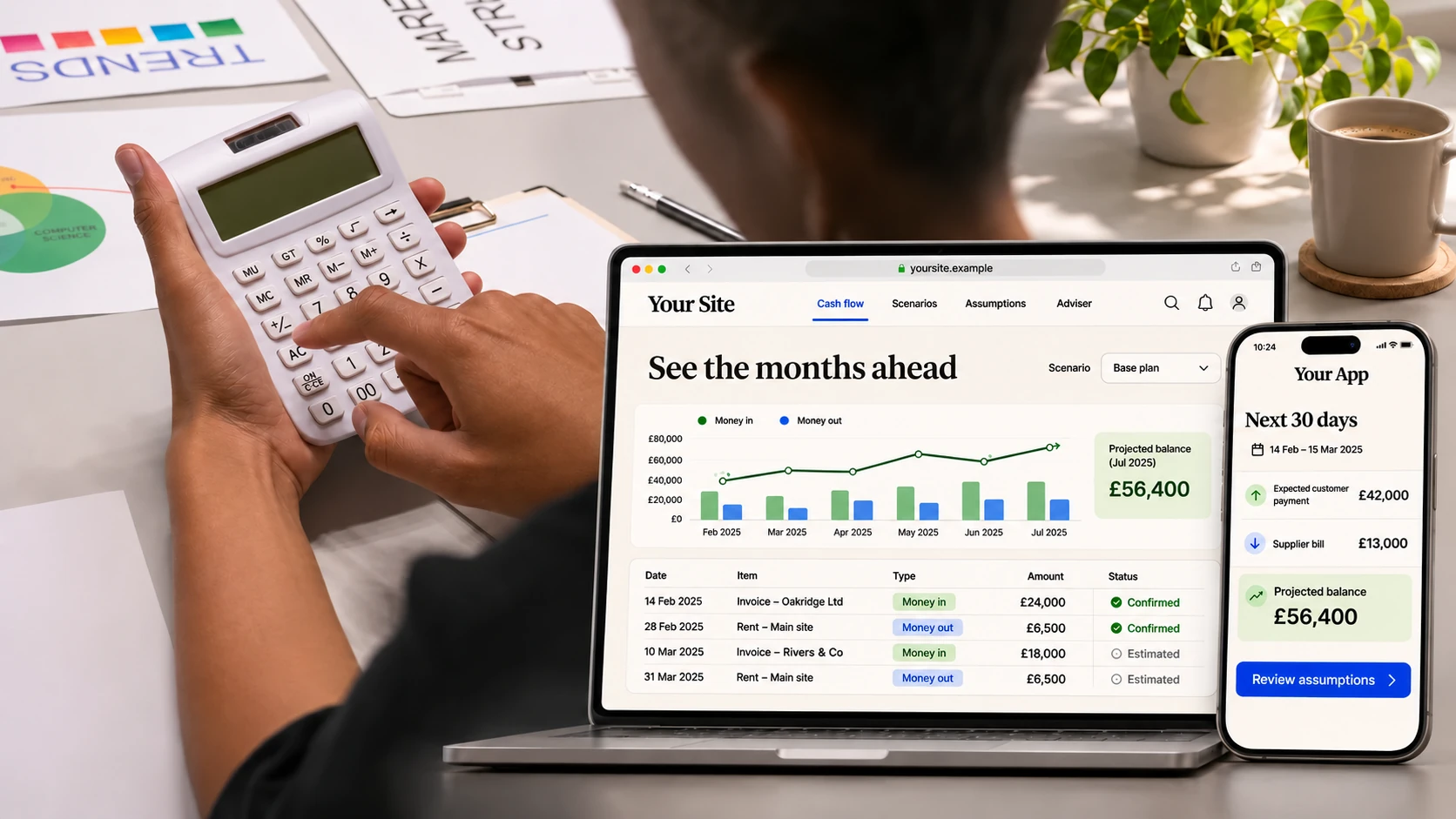
An agency has plenty of booked work, yet supplier bills arrive before a large client is expected to pay. The owner needs to see the timing, not another sales total. Your planning studio could make assumptions visible and let them explore what changes if a payment arrives later than hoped.
A business you can
picture.
Build a planning subscription around dated money-in and money-out assumptions. Let owners compare scenarios, see which figures are confirmed and decide what deserves a conversation with their adviser.
Who would be glad
you built it?
Project-based businesses
Plan around uneven receipt dates.
Bookkeepers and advisers
Review assumptions with clients.
Growing operators
Compare commitments before taking on work.
Where the money
could come from.
Businesses could pay monthly for a planning workspace, while advisory firms buy access for several clients. Optional setup can cover organising opening figures and assumptions. Support, secure records and keeping imports reliable are ongoing costs; the commercial value rests on useful planning conversations, not a claim to predict revenue.
The part you could
make your own.
A model tailored to one trading pattern could stand out. Project deposits, staged supplier bills and delayed balances might be more useful to an agency than generic monthly totals. Test that against the questions owners actually ask.
An angle to test with the people you want to serve.Start with something
worth using.
Start with expected receipts, planned payments and simple alternative scenarios. Mark confirmed and estimated figures separately. Let the owner export the plan and discuss it with an adviser before adding automated recommendations.
- Dated income and spending assumptions
- Alternative scenarios and notes
- Shared review with a trusted adviser
Give the promise
something to stand on.
You need to understand business cash timing and explain uncertainty clearly. A forecast is a working model, so the product should make dated assumptions and revisions easy to inspect rather than hide them behind a confident chart.
Keep source dates, permissions and calculations clear. Imported records need reconciliation. Forecasts depend on assumptions, so customers must be able to inspect and change them without losing earlier versions.
Let a small beginning
teach you something.
Use a willing business's anonymised recent period to compare planned and actual timing. Ask the owner to model a delayed receipt and observe whether they understand which assumptions changed and which decisions deserve attention.
Can the owner identify a timing concern and explain the assumptions behind it without treating the forecast as certainty?
Look for these signs
- Assumptions have visible dates and sources
- Owners revise plans when facts change
- Reviews lead to specific operating questions
A little more
clarity.
Can the forecast predict exactly what will happen?
It reflects the figures and assumptions entered. Show uncertainty and alternative timing clearly, and help users compare the plan with actual results. A precise-looking line should not be presented as a guaranteed future balance.
Does this replace accounting software?
The initial product focuses on forward-looking timing and scenarios. It can complement bookkeeping through imports or exports, but formal records and professional advice remain separate needs that the owner should understand.
Float is a reference for business cash-flow planning software.
Now picture it
with your name on it.
Your people. Your priorities. The version you keep thinking about. Answer a few questions and leave with a starting plan you can keep.
Free to explore. No account or email needed for your starting plan.