One person is already in the shop when another remembers the missing ingredient. A message arrives without a quantity, and the wrong version comes home. Your app could keep the shared request, useful details and collected status together, with an honest view of changes that have not yet synced.
One useful moment.
A reason to open it.
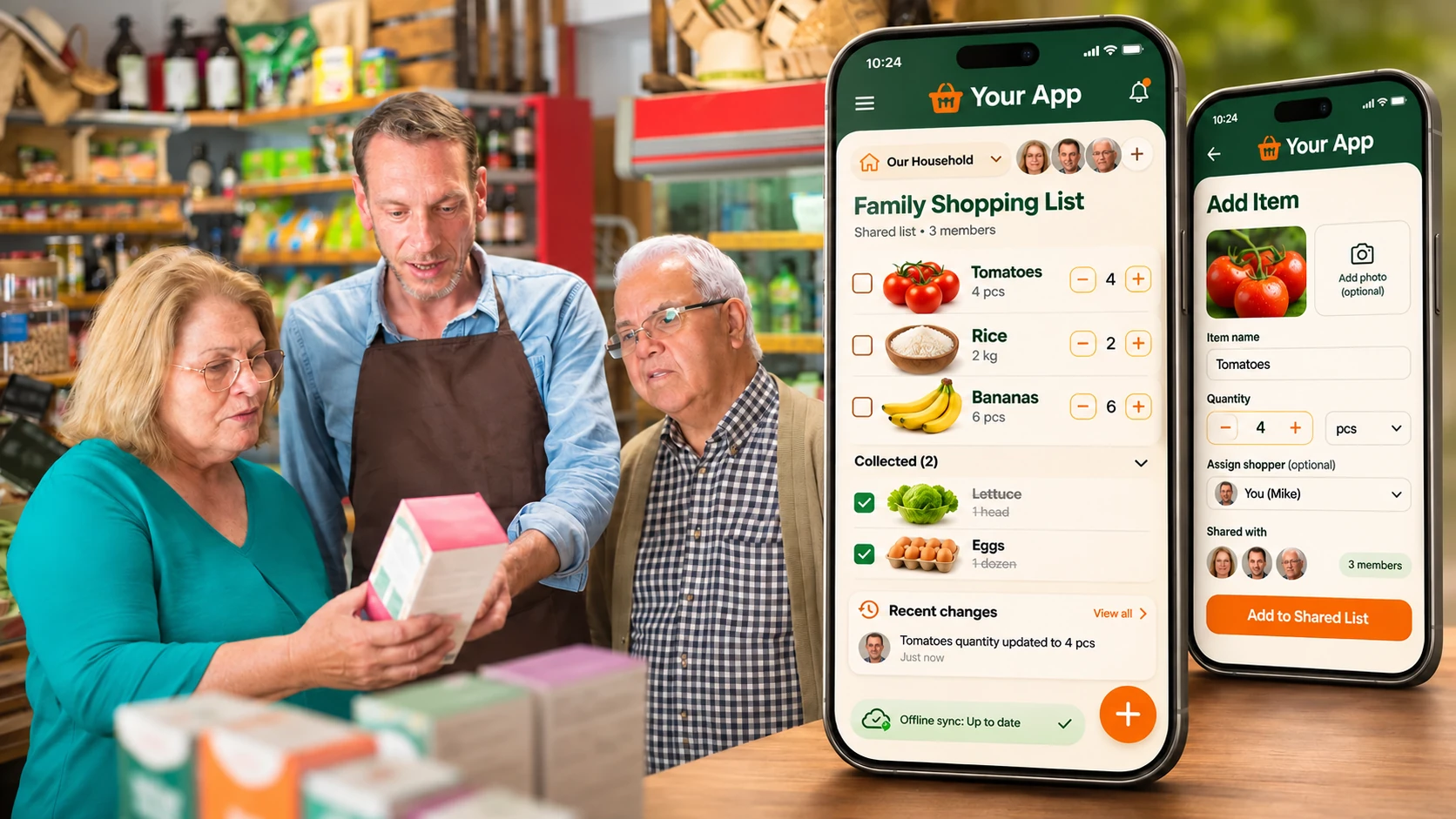
A household member adds an item with quantity and an optional photo. The shopper sees the update, marks it collected and can tell whether the change has synced.
Who would be glad
you built it?
Shared households
Keep one current list of requested items.
Family shoppers
See quantities and useful product details.
Small offices
Coordinate ordinary supplies with named participants.
A place in their life.
At the right moment.
Why it belongs on a phone
The list is available in the kitchen and at the shop. Changes can sync between phones, with clear status when a device is offline.
A reason to come back
Shopping comes around again. Reusing the household’s usual items can make each new list quicker to assemble and easier to trust.
Where the money
could come from.
A paid upgrade could offer reusable lists, multiple groups and useful history. Households pay for a clear convenience benefit beyond a basic shared note. Syncing, account support and maintenance have costs. A small-office plan may be a separate offer once its permissions and supply workflow are understood.
The part you could
make your own.
Focus on the ambiguity around the item: quantity, preferred variant and acceptable alternative. Testing those details may reveal a more useful distinction than decorative list themes or unsolicited deals.
An angle to test with the people you want to serve.Start with something
worth using.
Start with one shared group, quantities, optional item photos and collected status. Show recent changes and sync state. Add offers or recommendations only after the core list is dependable.
- Create a household and shared list
- Add quantities and an optional item photo
- Mark an item as collected
- Show recent changes and offline sync status
Give the promise
something to stand on.
You need a simple collaboration model and reliable change handling. Decide how conflicting edits and offline updates are shown, so a polished list does not hide uncertainty about what another person has seen.
Make conflicting edits and offline changes understandable. Explain group access and removal, and do not claim live store stock or prices without a maintained source.
Let a small beginning
teach you something.
Ask willing households to use the list during an ordinary shopping trip. Observe duplicate requests, uncertain quantities and offline changes, then ask whether the shared record reduced clarification messages.
Can the shopper understand the requested item and tell whether another person has already collected or changed it?
Look for these signs
- Quantities stay attached to the right item.
- Recent changes are visible.
- Offline updates show a clear sync state.
A little more
clarity.
Can two people shop at once?
Yes, if the design handles simultaneous changes clearly. The pilot should test duplicate collection and conflicting edits rather than assuming that syncing automatically resolves every household decision.
Should sponsored items enter the list?
Only through an explicit user choice. Keep promotions visibly separate from requested items so a commercial suggestion cannot be mistaken for something a household member asked for.
Is this a grocery delivery business?
No. This app helps people coordinate their own shopping. Delivery, store inventory and payment handling are separate services that need their own operating plan.
Bring! offers shared shopping lists. Explore its household coordination model as a familiar reference, then test the particular convenience customers would pay for in your version.
Now picture it
with your name on it.
Your people. Your priorities. The version you keep thinking about. Answer a few questions and leave with a starting plan you can keep.
Free to explore. No account or email needed for your starting plan.