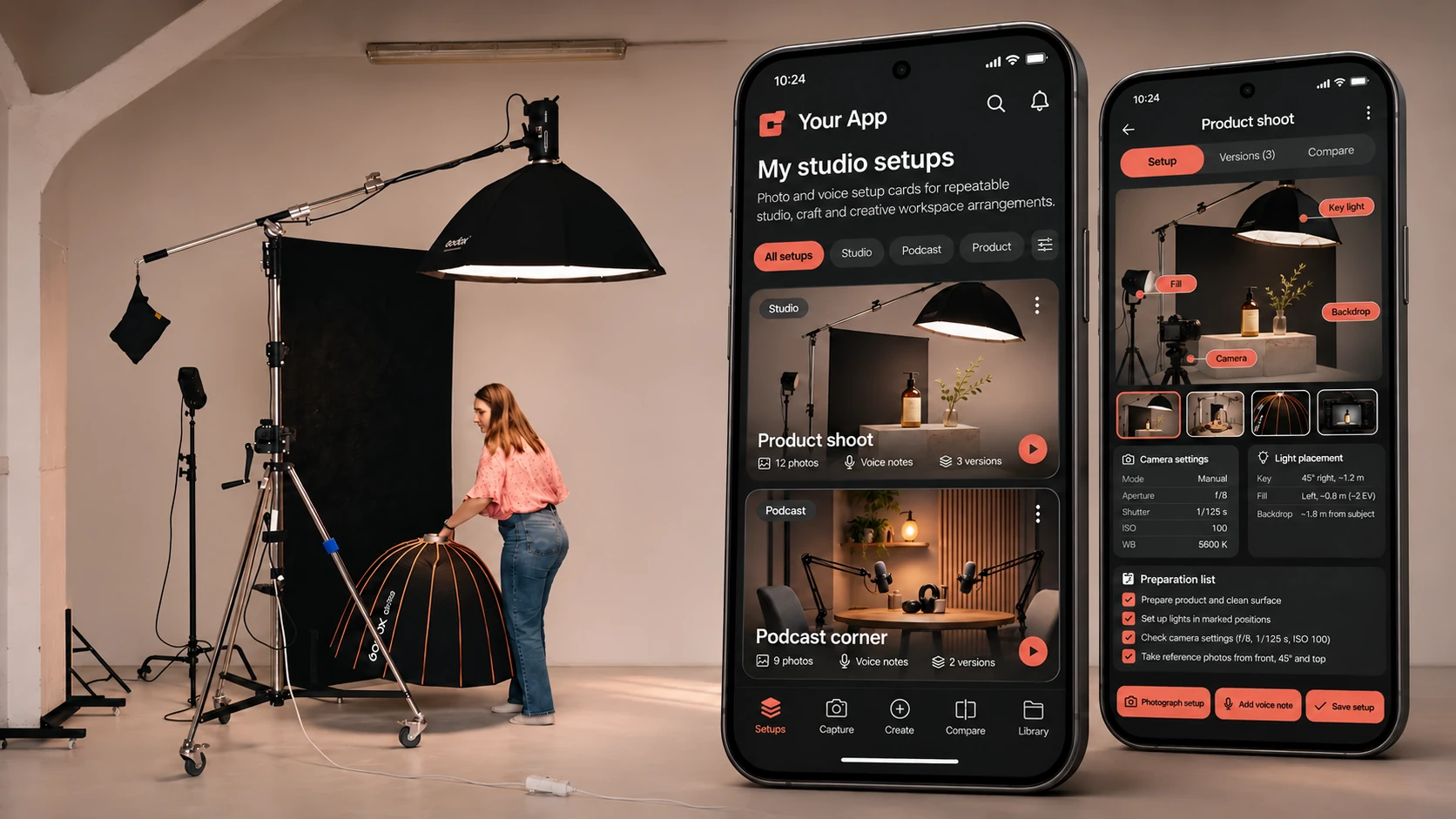
A product shoot finally looks right, but the next session begins with uncertain lamp positions and forgotten settings. Your app could preserve the creator's own successful setup from useful angles, with labels and a version history. It is a memory of their process, not a promise that identical settings always produce identical results.
One useful moment.
A reason to open it.
A creator photographs the setup from two useful angles, labels the key settings and saves the approved card. A later variation becomes a separate version for comparison.
Who would be glad
you built it?
Product photographers
Recreate an agreed shooting arrangement.
Small studio teams
Follow approved setup references.
Craft workshop hosts
Prepare a repeatable table or equipment layout.
A place in their life.
At the right moment.
Why it belongs on a phone
A creator photographs the real arrangement and speaks the settings while standing beside it. The same card can be opened offline next time.
A reason to come back
Every repeat session gives the saved setup a purpose. New variations add to a personal library of practical knowledge.
Where the money
could come from.
Creators could buy a larger private setup library, while studios may subscribe to shared approved cards. Storage, version history and team support affect costs. Test whether repeated setup work is frequent and valuable enough to support payment beyond a folder of photographs.
The part you could
make your own.
Focus on the details a colleague needs when the original creator is absent. Useful labels and a visible approved version could give the product a stronger purpose than a decorative inspiration board.
An angle to test with the people you want to serve.Start with something
worth using.
Start with photographs, labelled positions, settings and versions. Allow a variation to be saved without overwriting the approved card. Include export before building a public template marketplace.
- Photograph a setup from useful angles
- Label positions, settings and materials
- Save a reusable setup with versions
- Mark a variation and compare the notes
Give the promise
something to stand on.
You need an audience with recurring setups and a simple way to capture meaningful detail. Let the creator define what mattered, including conditions that may change between sessions.
Store user-supplied settings with clear dates and versions. Treat cards as personal reference; they do not certify electrical, structural or other safety-critical arrangements.
Let a small beginning
teach you something.
Ask willing creators to record a setup, dismantle it and recreate it later using the card. Observe the details they still need to ask about and the conditions that changed.
Can another authorised person recreate the intended arrangement from the card and recognise which details may need adjustment?
Look for these signs
- Cards show useful angles and labels.
- Variations retain their own version.
- Teams can identify the approved reference.
A little more
clarity.
Will the same setup guarantee the same result?
No. Light, materials, equipment and other conditions may differ. The card preserves a reference and should include relevant context rather than promise an identical outcome.
Can teams edit a shared card?
Yes, with clear ownership and version history. A first version can distinguish the approved setup from proposed changes so an experiment does not silently replace the working reference.
Is this a library of generic tutorials?
No. The first value comes from recording a person’s own working setup. Licensed teaching packs could be an optional later product.
Now picture it
with your name on it.
Your people. Your priorities. The version you keep thinking about. Answer a few questions and leave with a starting plan you can keep.
Free to explore. No account or email needed for your starting plan.