Media & creatorsNew concept
Small-language story club

Make room for stories that sound like home.

A reader may find endless content online and still rarely hear the language or perspective that feels close to home. You could create a publication where writers, translators and listeners bring that voice into a regular, carefully edited experience worth returning to.

Make this fit me
You could also build this as a mobile app
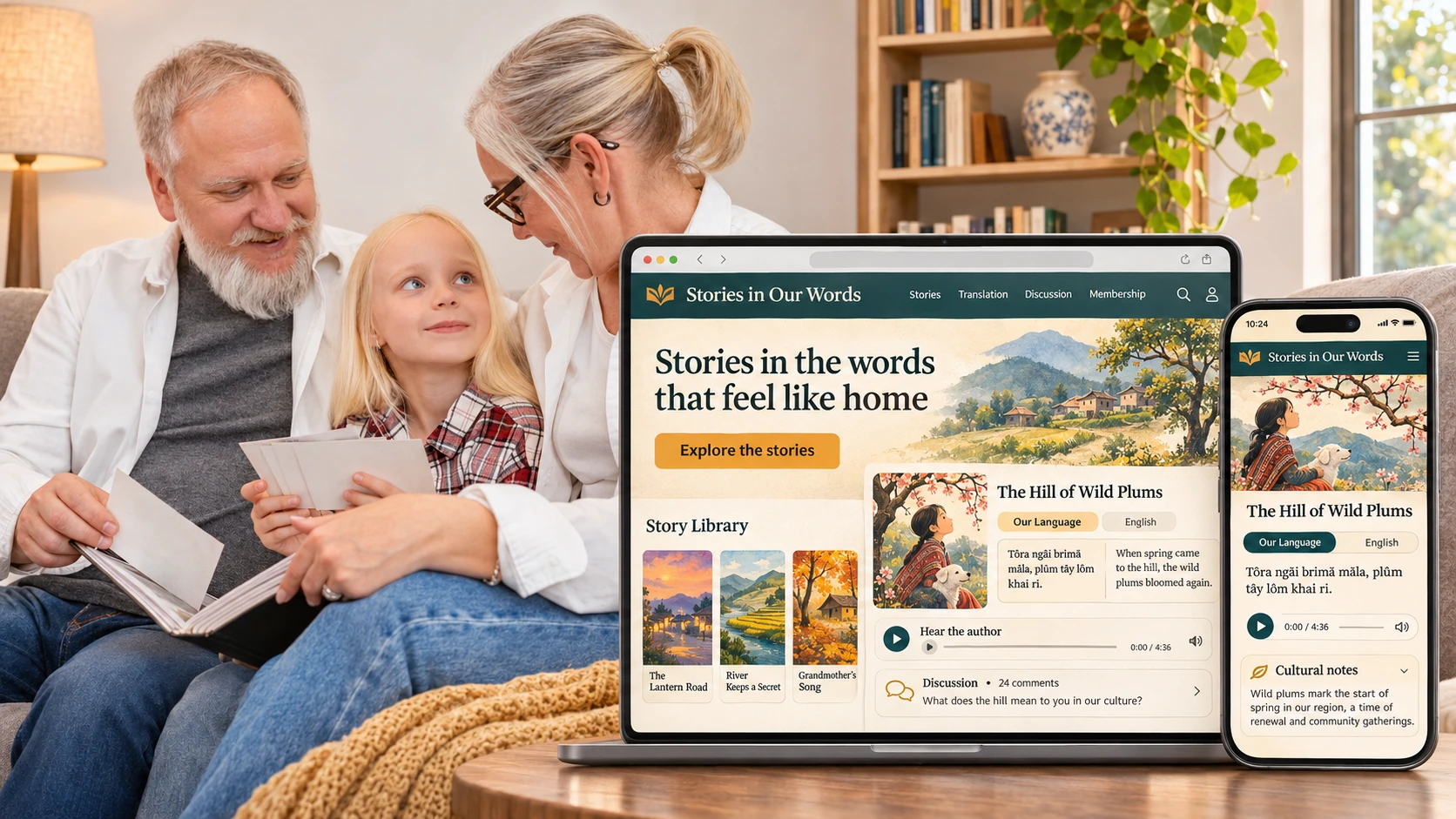
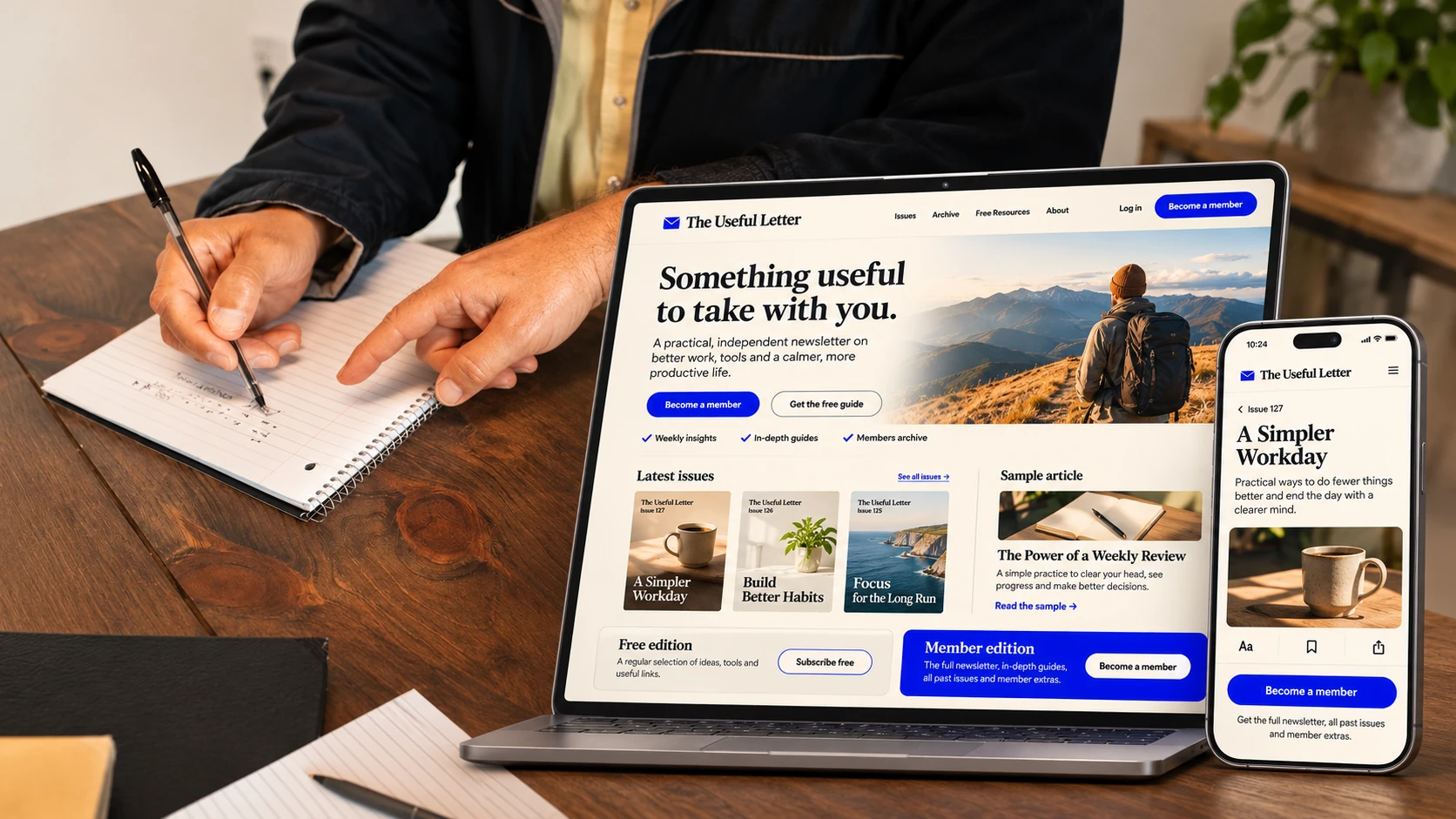
Concept for small-language story club, combining people engaged in the real activity with matching desktop and mobile interfaces.Illustrative concept
IMAGINE THIS MOMENT

A reader finds endless content online but rarely encounters the language that carries familiar humour, memories or everyday warmth. Your story club could bring writers, translators and listeners together around a considered publication, giving that audience a reason to return for more than a translated version of someone else’s interests.

A business you can
picture.

Begin with one language community and a focused editorial format. Commission original work, agree translation rights and publish text or audio with context readers can discuss.

Who would be glad
you built it?

Readers and listeners connected to the language

Stories with familiar voice and thoughtful context

Families sharing language across generations

Suitable material to enjoy together

Schools and cultural groups

Permissioned collections for defined activities

Where the money
could come from.

Readers could buy the first collection, with a subscription introduced once the publishing rhythm is workable. The price supports writing, editing, translation where used, audio and contributor payments. Schools or cultural organisations may later license defined uses. Keep those rights explicit and avoid assuming that a small-language audience automatically makes every cultural story available for commercial publication.

The part you could
make your own.

Your proposed difference is editorial care for the audience’s own interests and voice. Stories selected and reviewed by relevant contributors could feel more personal than unrelated material passed through automatic translation.

An angle to test with the people you want to serve.

Start with something
worth using.

Choose a defined audience and publish a complete small collection of text and optional audio. Provide contributor credits and a realistic release plan. Review language quality with suitable people before expanding translation or community features.

  • Publish a coherent collection on a dependable schedule.
  • Credit writers, translators and audio contributors.
  • Host moderated conversations around the work.

Give the promise
something to stand on.

WHAT YOU BRING

You need fluent contributors, appropriate editorial review and respect for differing community perspectives. Agree payment, credit and permissions, especially for personal stories or culturally sensitive material.

Pay and credit contributors as agreed, review translations and obtain permission for cultural or personal material. Community members may have different views, so moderation and editorial decisions need clarity.

Let a small beginning
teach you something.

Work with a small group of writers, reviewers and willing readers to produce a sample collection. Ask readers about language, relevance and accessibility, and let contributors review how their work is presented.

THE QUESTION TO TEST

Do readers recognise a voice and subject matter they want to return to, while contributors feel accurately represented?

Look for these signs

  • Language receives appropriate human review
  • Contributors receive agreed credit and payment
  • Readers identify stories they want more of
WHEN THE FIRST VERSION HAS TAUGHT YOU MORE
Where you could take it next

Add oral storytelling sessions, regional editions and collaboration between writers across locations. Translation tools can assist contributors when human review preserves meaning and voice.

A little more
clarity.

Can automatic translation create the whole library?

It may assist a draft in some cases, but language, meaning and cultural context need suitable human review. The publication’s value depends on a considered voice, not simply producing more text.

Can traditional stories be used freely?

Do not assume that. Check the relevant rights, permissions and community expectations for the material, and make attribution and commercial use part of the editorial process.

What should my first version focus on?

Start with the first test described here, then build around the part people actually use and would pay to keep.

WHAT COULD GO INSIDE

A few additions
to explore.

Multiple languages and local contentWelcome people in language they can comfortably use, carrying that clarity from the first page through the action they came to take.Paid memberships and private contentGive your continuing knowledge or community a clear paid home, with a promise members can understand before they join.Customer accounts and preferencesMake a returning customer's next visit feel familiar, with the records they need and control over the details they share.
MAKE ROOM FOR YOUR VERSION

Now picture it
with your name on it.

Your people. Your priorities. The version you keep thinking about. Answer a few questions and leave with a starting plan you can keep.

Free to explore. No account or email needed for your starting plan.
PICTURE THE MOBILE APPLocal-language story app

Keep a familiar voice part of everyday life.

A story can carry the sound and humour of a language in a way a word list cannot. You could build an app for a carefully produced collection of local-language audio stories, with useful listening tools and optional text. Begin with creators and a community whose material you have permission to share.

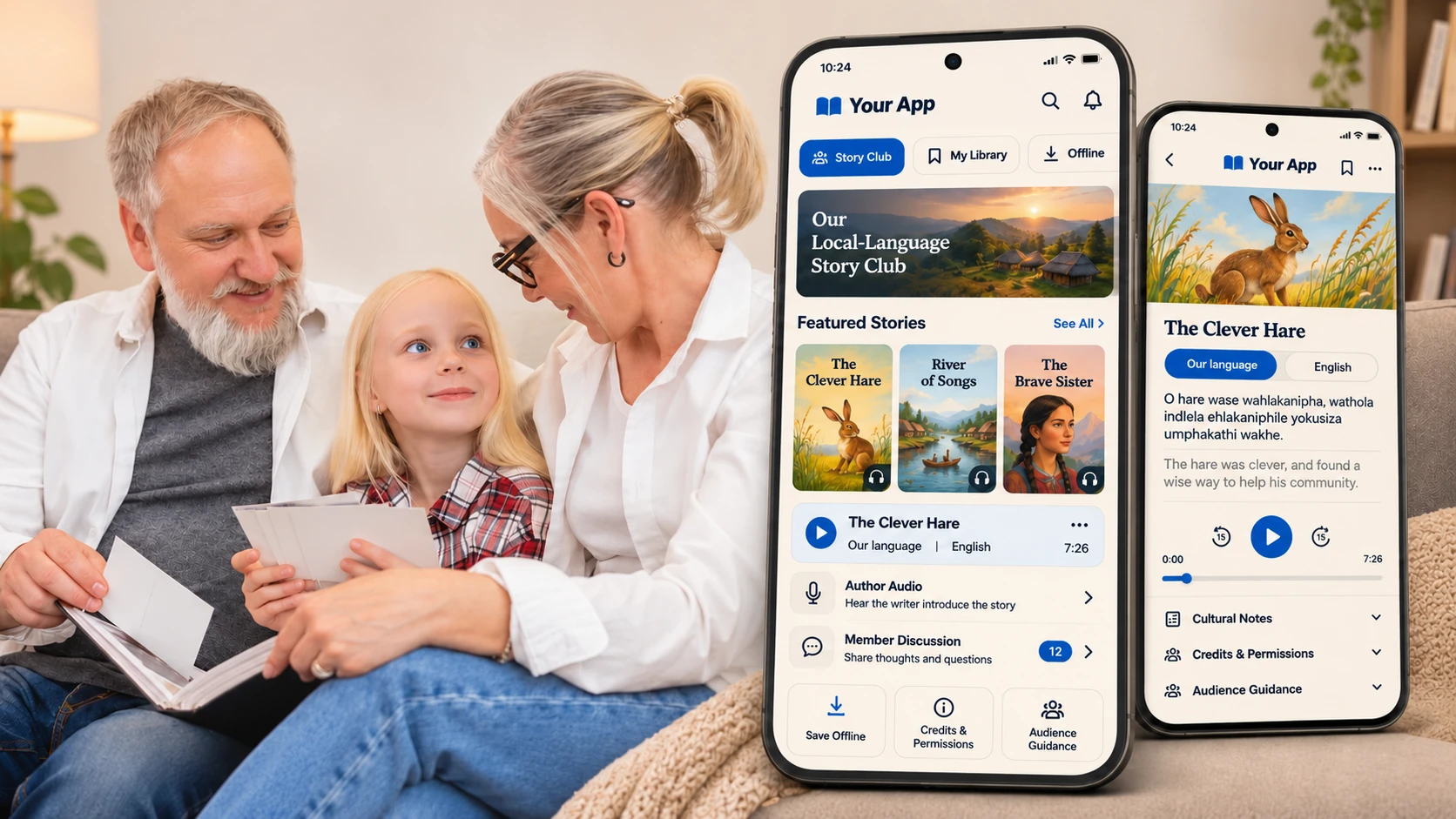
A happy family moment featuring grandparents sharing a photo album with their granddaughter indoors. Two phone screens preview the Local-language story app, with no desktop view.App concept
IMAGINE THIS MOMENT

A parent wants a child to hear a family language in more than isolated vocabulary lessons. A storyteller has a recording worth sharing but no clear distribution home. Your app could bring a carefully chosen collection together, with creator permission, thoughtful audience guidance and listening tools that keep the voice central.

One useful moment.
A reason to open it.

A listener chooses a story, sees its creator and audience guidance, and plays the recording. Optional text follows the approved version, and listening can resume later.

Who would be glad
you built it?

Families using a local language

Find stories appropriate for shared listening.

Adult language reconnectors

Hear familiar speech with optional text support.

Story creators

Reach listeners under clear rights and payment terms.

A place in their life.
At the right moment.

Why it belongs on a phone

Stories can travel through ordinary moments at home or on the move. Portable audio, downloaded episodes and saved listening progress give the phone a direct role in the experience.

A reason to come back

Listeners return for another story, a familiar voice or a shared listening routine. The product should respect different audiences and make the next suitable story easy to find.

Audio & voiceWorks offlinePersonal routines

Where the money
could come from.

Listeners could purchase a defined story pack with clear access terms. A portion can fund creators under agreed arrangements. Recording, editing, language review, rights and hosting cost money. A subscription should follow a publishing rhythm you can maintain and an audience that values continuing access.

The part you could
make your own.

Try a small collection with strong voices and carefully reviewed text in one language variety. Depth and respectful presentation could matter more than claiming a huge multilingual library.

An angle to test with the people you want to serve.

Start with something
worth using.

Start with one language collection, reviewed audio and optional text. Include offline listening and saved progress. Keep translations clearly labelled and reviewed rather than automatically presenting them as authoritative.

  • Creator-approved audio story collection
  • Optional reviewed text and translations
  • Offline listening and saved progress
  • Clear credits, permissions and audience guidance

Give the promise
something to stand on.

WHAT YOU BRING

You need trusted creators, language reviewers and a clear audience. Agree rights, payment, credits and withdrawal arrangements. Cultural context and dialect choices should be discussed with the people producing the material.

Pay and credit contributors as agreed, review translations and obtain permission for cultural or personal material. Community members may have different views, so moderation and editorial decisions need clarity.

Let a small beginning
teach you something.

Share a small pilot collection with willing listeners from the intended community. Ask which voices, formats and text aids support listening, and whether they would return for another carefully produced story.

THE QUESTION TO TEST

Do listeners choose to return to the collection, and do creators feel their work and language are represented accurately?

Look for these signs

  • Credits and permissions are clear.
  • Listeners use the intended story format.
  • Language corrections reach an editor.
WHEN THE FIRST VERSION HAS TAUGHT YOU MORE
Where you could take it next

Add oral storytelling sessions, regional editions and collaboration between writers across locations. Translation tools can assist contributors when human review preserves meaning and voice.

A little more
clarity.

Must every story have a translation?

Not necessarily. Some audiences prefer immersion; others need reviewed support. Test the format with the intended listeners and distinguish a translation from the creator's original words.

Can we collect any traditional story?

Traditional material can still involve performers, recordings, community expectations and rights. Agree the use with appropriate contributors instead of assuming that a familiar story is free of responsibilities.

What should my first version focus on?

Start with the first test described here, then build around the part people actually use and would pay to keep.

WHAT COULD GO INSIDE

A few additions
to explore.

Multiple languages and local contentWelcome people in language they can comfortably use, carrying that clarity from the first page through the action they came to take.Paid memberships and private contentGive your continuing knowledge or community a clear paid home, with a promise members can understand before they join.Customer accounts and preferencesMake a returning customer's next visit feel familiar, with the records they need and control over the details they share.
MAKE ROOM FOR YOUR VERSION

Now picture it
with your name on it.

Your people. Your priorities. The version you keep thinking about. Answer a few questions and leave with a starting plan you can keep.

Free to explore. No account or email needed for your starting plan.
KEEP THE POSSIBILITIES OPEN

Something else
might speak to you.