An appliance needs attention months after purchase, and the owner cannot find the receipt or remember which shop supplied it. Your app could gather those documents while they are still easy to locate, creating a practical record to take into a later repair or seller conversation without promising that a claim will succeed.
One useful moment.
A reason to open it.
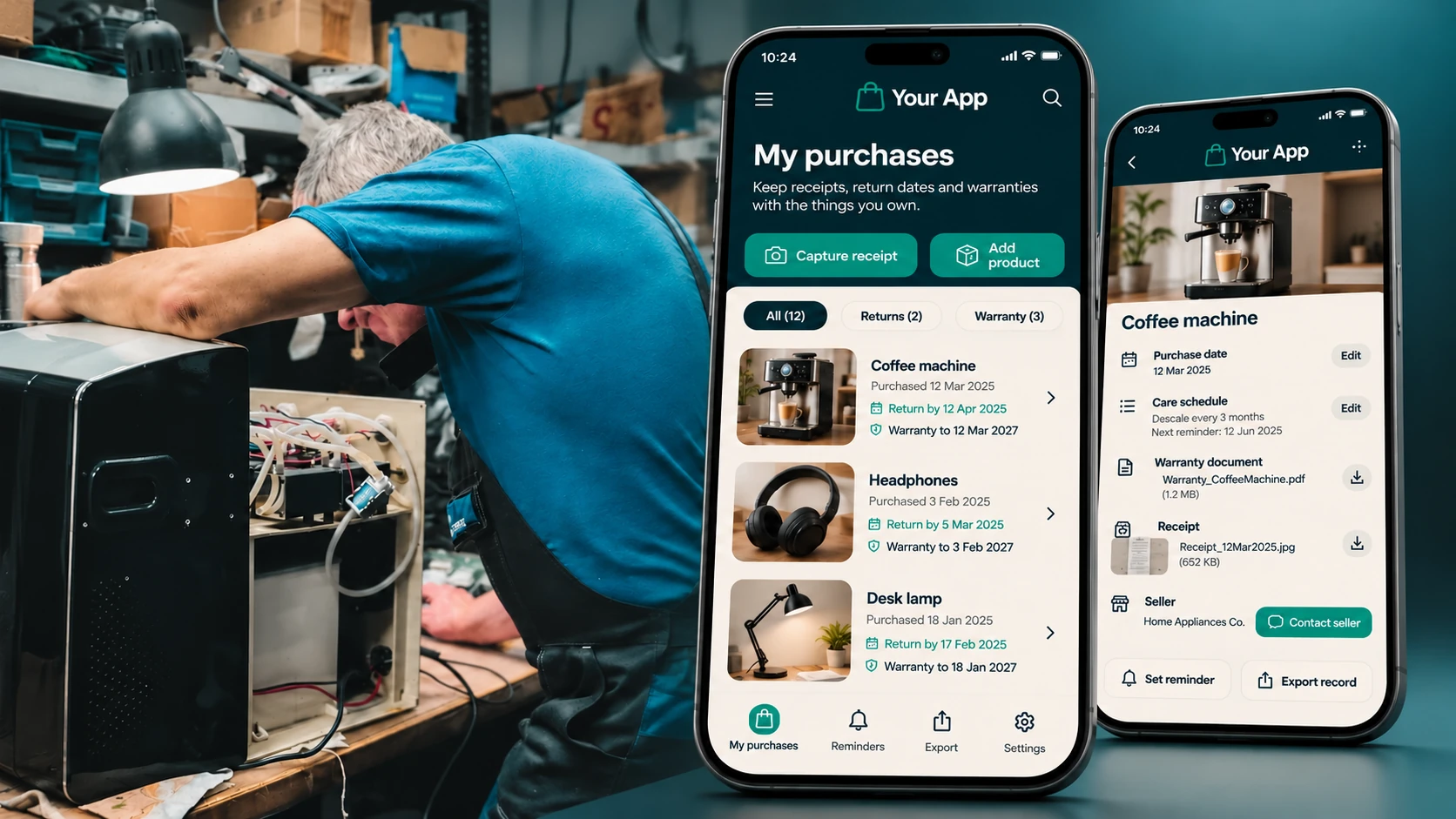
A buyer photographs the product label and receipt, attaches the supplied terms and checks the important dates. The complete record can later be exported for a specific enquiry.
Who would be glad
you built it?
Households with appliances
Find purchase and care documents later.
Small offices
Keep equipment records beyond the original buyer.
Retailers offering handovers
Provide organised documents with permission.
A place in their life.
At the right moment.
Why it belongs on a phone
A phone can capture the receipt and product label at purchase. A chosen reminder brings a recorded deadline back before it is forgotten.
A reason to come back
Each new purchase adds a record. A repair, return or support question brings people back to the details they kept.
Where the money
could come from.
Households could purchase a larger purchase-record collection, with a separate backup or shared-office plan where useful. The fee covers organisation and access. Storage, document processing and support have costs. The commercial test is whether complete records are worth paying for beyond an ordinary photo folder.
The part you could
make your own.
Focus on the handover into a repair conversation: one export with the model, receipt and relevant notes. That practical completeness could matter more than a dashboard of approaching dates.
An angle to test with the people you want to serve.Start with something
worth using.
Start with product photos, receipts, seller details and attachments. Let the user confirm important dates and export one complete record. Keep automated claim submission outside the first version.
- Capture a receipt and product photo
- Attach seller and warranty documents
- Confirm dates and set personal reminders
- Export a selected purchase record
Give the promise
something to stand on.
You need a clear document model and careful handling of personal purchase information. Dates and terms should come from the actual supplied documents, with user review rather than invented eligibility rules.
Users must check seller terms, dates and documents. This is a records wallet, with no money custody; it does not decide legal rights or guarantee acceptance of claims.
Let a small beginning
teach you something.
Ask willing households to organise a few non-sensitive purchase examples. Later, simulate a repair enquiry and check whether they can retrieve the model, receipt and relevant terms together.
Can the owner produce the documents needed for a seller or repair conversation without mistaking a reminder for guaranteed eligibility?
Look for these signs
- Product identifiers are readable.
- Important dates are user-confirmed.
- Exports include the selected supporting documents.
A little more
clarity.
Does a reminder guarantee a warranty claim?
No. Eligibility depends on the actual terms and circumstances. The app can help retain and retrieve information, while the responsible seller or provider decides the claim under the applicable arrangement.
Can we read dates from receipts automatically?
Optional extraction can assist, but users should check important dates and identifiers against the original. Keep the source document available and distinguish suggested fields from confirmed ones.
Does the app decide whether a warranty is valid?
No. It stores documents and dates the user confirms. The seller, manufacturer and applicable terms determine what support is available.
Now picture it
with your name on it.
Your people. Your priorities. The version you keep thinking about. Answer a few questions and leave with a starting plan you can keep.
Free to explore. No account or email needed for your starting plan.