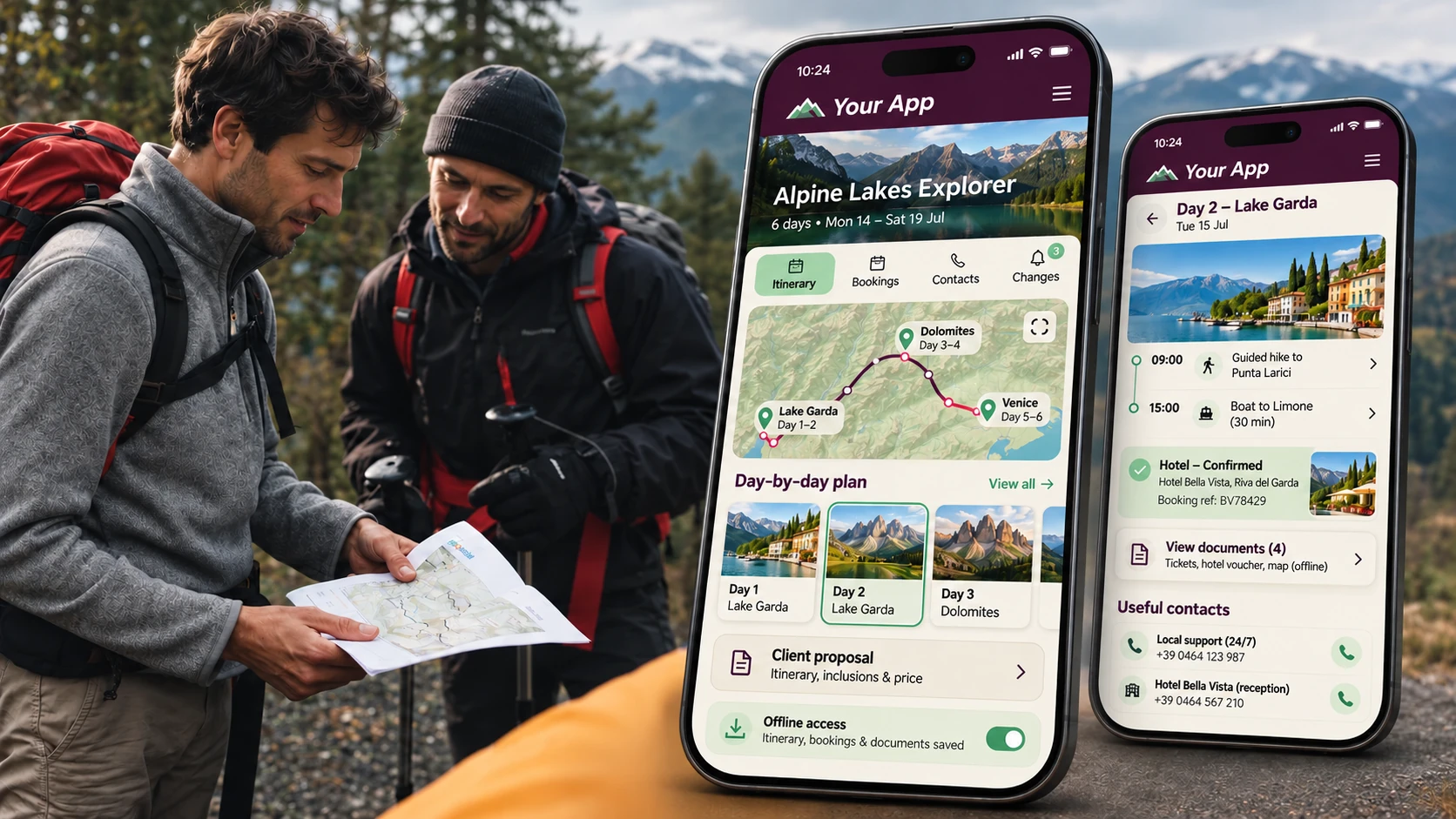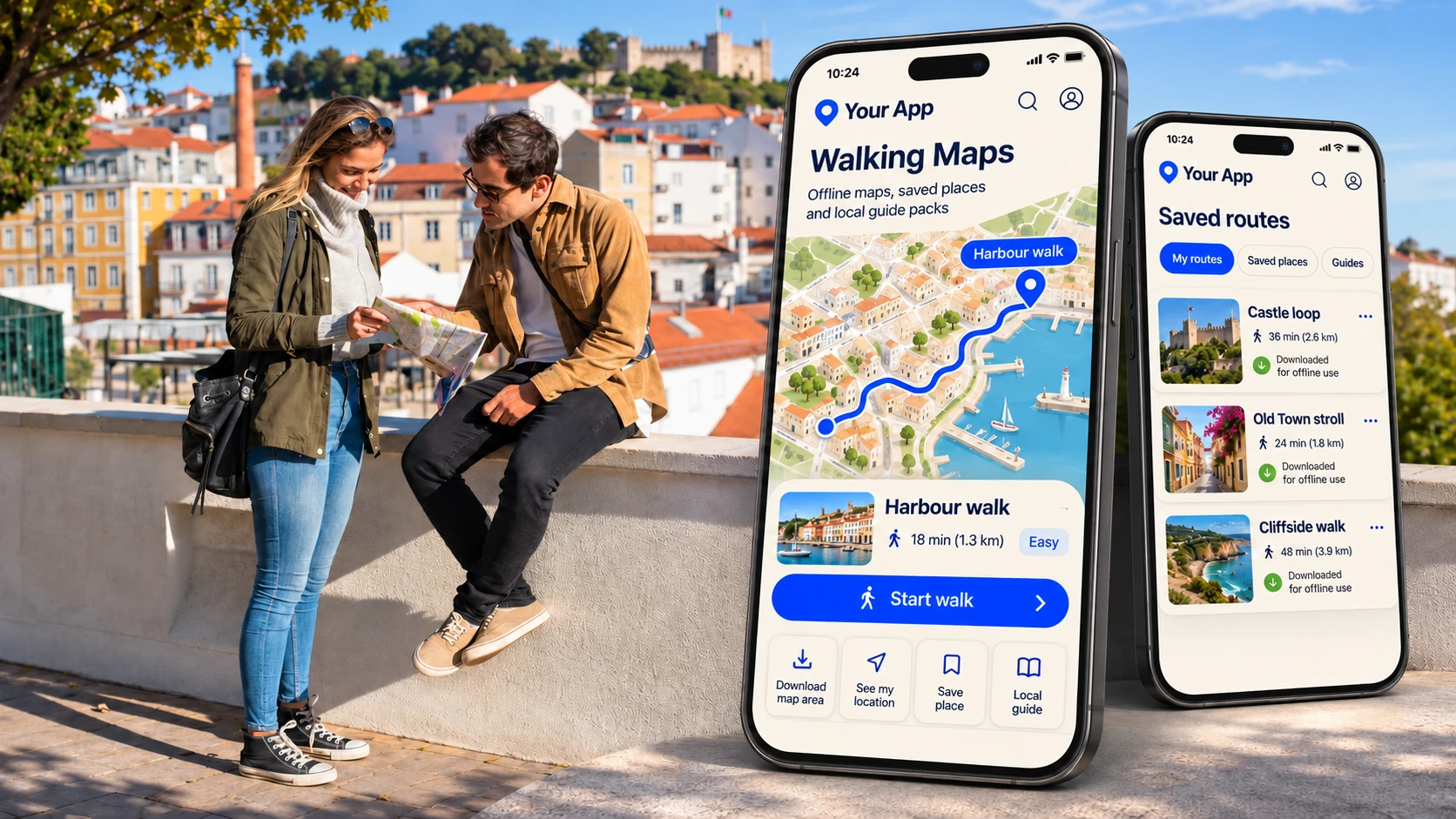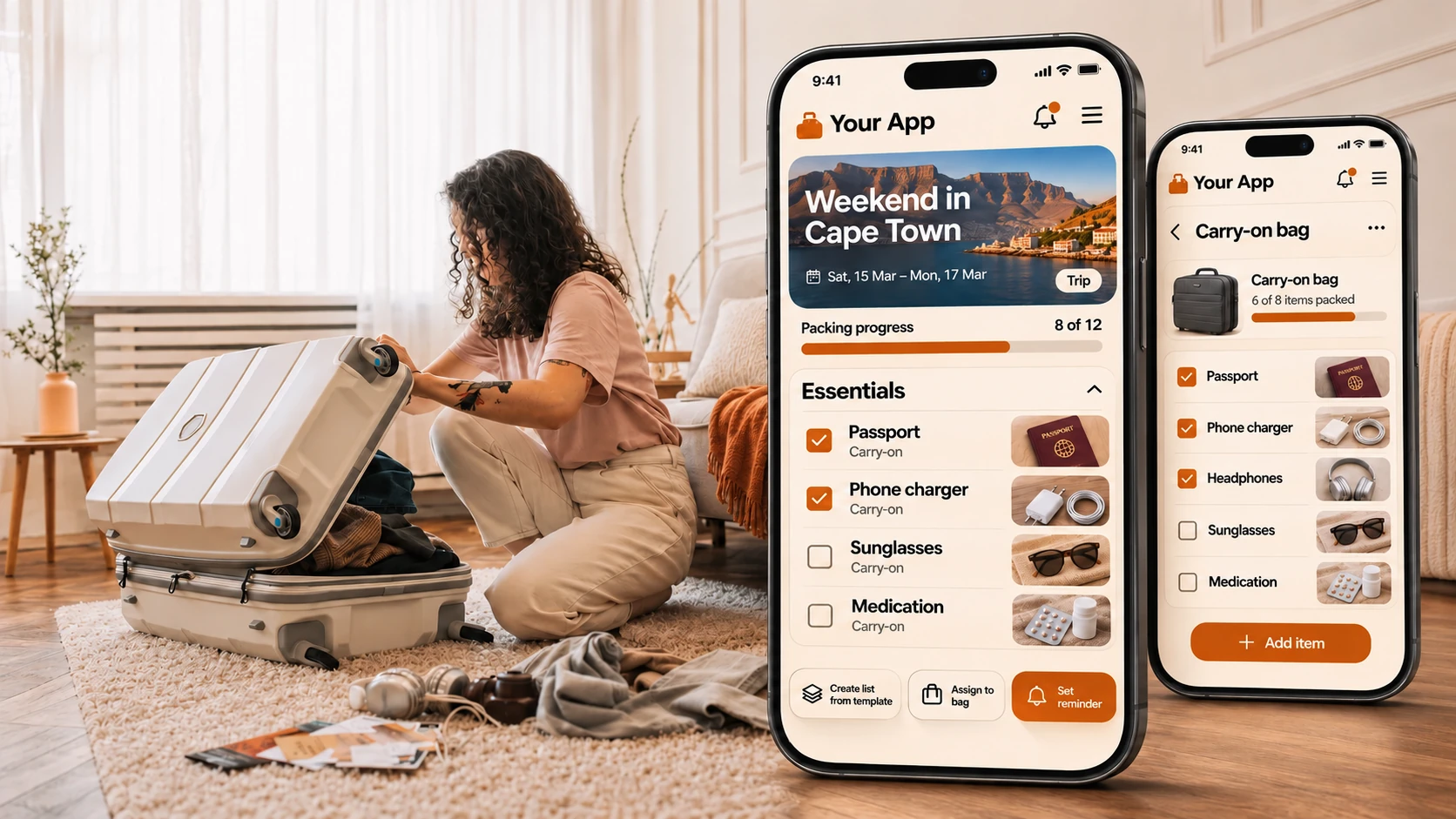
A traveller packs the main bag early, then forgets the charger still plugged in beside the bed. Your app could distinguish packed items from last-minute essentials and keep a useful list for the next similar journey. The opportunity is a calmer departure routine for a specific kind of travel.
One useful moment.
A reason to open it.
A traveller starts from a familiar template, assigns items to bags and marks what is packed. Essentials still in use remain on a separate departure check.
Who would be glad
you built it?
Frequent work travellers
Reuse a familiar essentials list.
Families packing together
Assign items to people and bags.
Organised trip leaders
Share a suitable preparation template.
A place in their life.
At the right moment.
Why it belongs on a phone
People tick items beside the suitcase and photograph what goes into each bag. Offline lists remain useful during travel.
A reason to come back
Every trip reuses a familiar list. A note about what was forgotten or unnecessary can improve the next departure.
Where the money
could come from.
Travellers could buy a focused toolkit or a reviewed specialist template pack. The purchase should describe the reusable features and content included. Template maintenance, support and optional syncing cost money. Group licences may suit organisers who have a defined preparation routine to share.
The part you could
make your own.
Focus on the final departure check: items still charging, documents in use and things added at the last moment. Test whether that distinction makes the list more useful than a static checklist.
An angle to test with the people you want to serve.Start with something
worth using.
Begin with reusable trips, bags, item assignment and last-minute reminders. Keep packed and still-needed states distinct. Add specialist templates only with relevant review and clear scope.
- Create a list from a trip template
- Assign items to particular bags
- Tick packed items and add exceptions
- Set a reminder for last-minute essentials
Give the promise
something to stand on.
You need insight into a travel routine and carefully reviewed templates. Let users adapt the list; no template can guarantee every personal, destination or carrier requirement is covered.
Let users edit every suggestion and keep travel rules separate from personal lists. Never imply that a checklist verifies documents, baggage restrictions or permission to travel.
Let a small beginning
teach you something.
Ask willing travellers to use a list for an upcoming ordinary trip. Review what they added, ignored or remembered late, and whether the list is useful enough to reuse afterwards.
Does the list help the traveller identify what is still missing at departure without creating a new organisational burden?
Look for these signs
- Last-minute items remain visible.
- Bag assignments are understandable.
- Travellers reuse and improve their own list.
A little more
clarity.
Can a template cover every destination rule?
No. The app should prompt users to check current travel, carrier and destination requirements through appropriate sources. A packing list is not a guarantee of permission to carry an item.
Does a travel app need daily use?
No. This product's value may appear around occasional departures. Judge it by usefulness and return at the next relevant trip, not by forcing daily engagement.
Does it need flight or hotel integrations?
No. A useful first version can start with a date, a destination label and reusable packing lists entered by the traveller.
PackPoint organises packing lists around trip details and planned activities. Explore the familiar checklist pattern while testing a more specific travel routine of your own.
Now picture it
with your name on it.
Your people. Your priorities. The version you keep thinking about. Answer a few questions and leave with a starting plan you can keep.
Free to explore. No account or email needed for your starting plan.