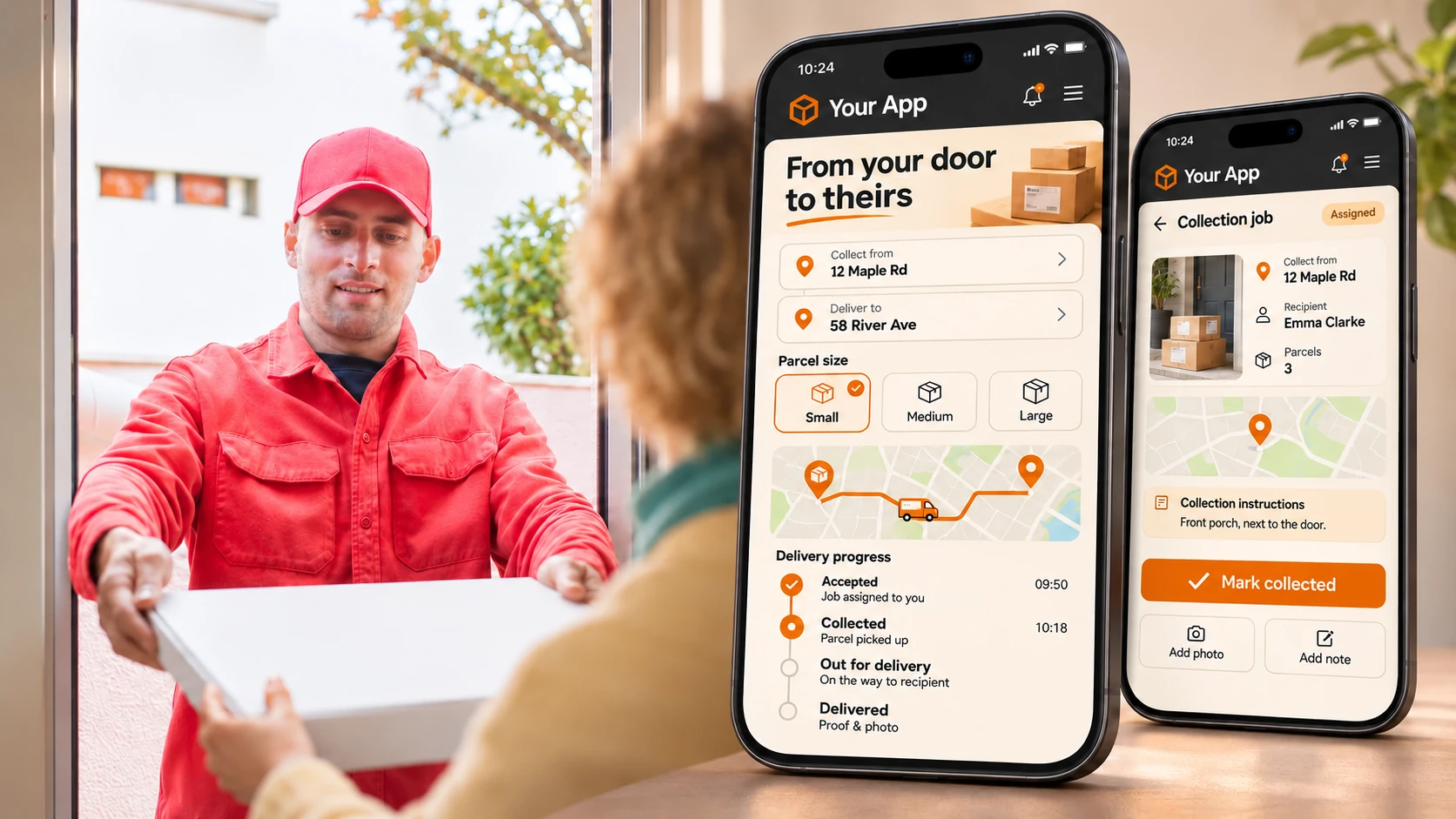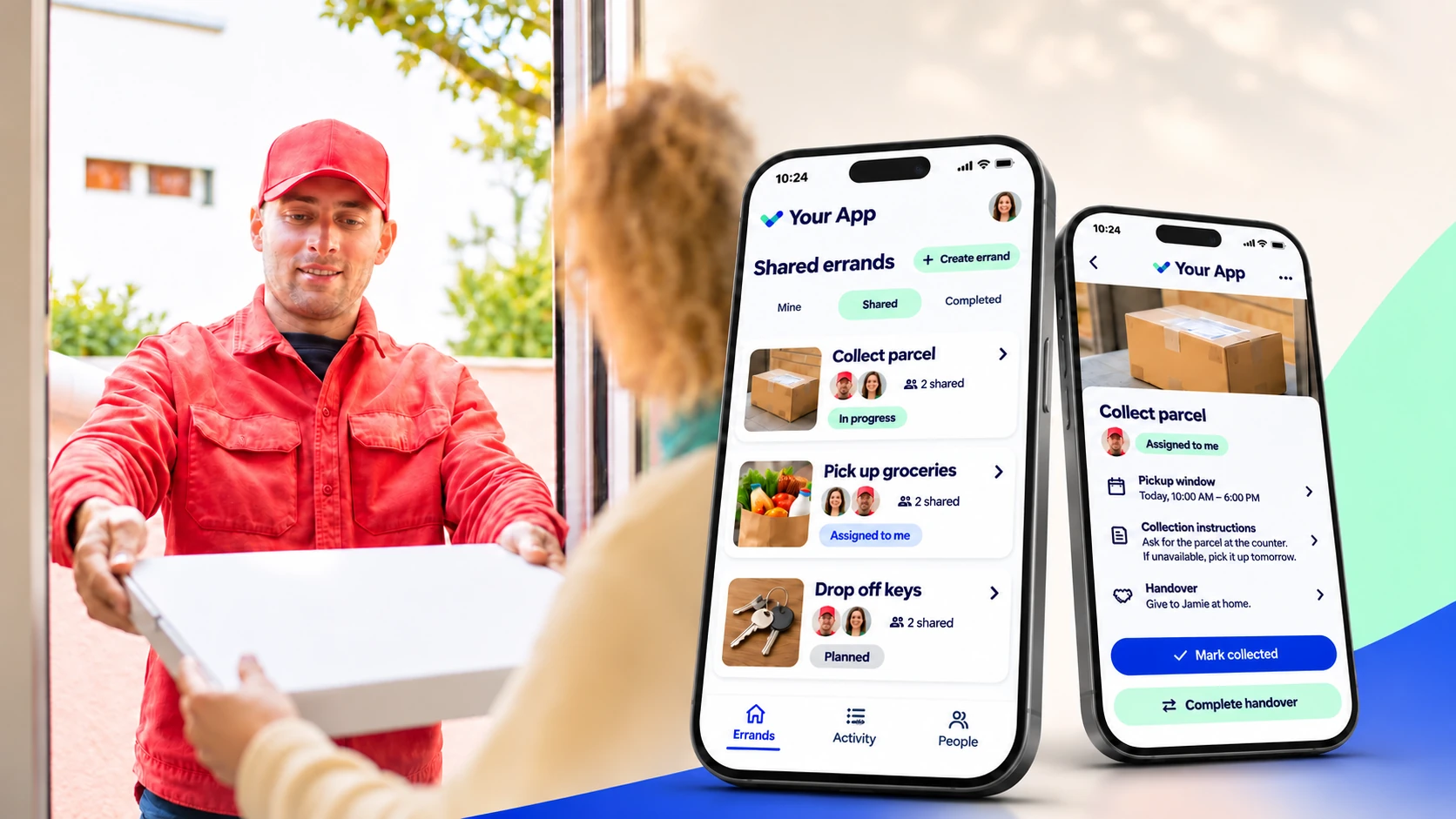
Someone agrees to collect a repaired item, then reaches the shop without the reference number or a clear answer about payment. Your app could attach those practical details to the favour before anyone leaves, with an agreed fallback when the item is not ready. The first product coordinates known people rather than hiring strangers.
One useful moment.
A reason to open it.
A requester creates an errand with collection details and a fallback. A helper accepts, records the pickup and later confirms the item reached the intended person.
Who would be glad
you built it?
Households sharing errands
Pass on complete collection instructions.
Small office teams
Assign internal pickups with context.
Community organisers
Coordinate agreed tasks among known helpers.
A place in their life.
At the right moment.
Why it belongs on a phone
The person doing the errand carries the instructions, photos and destination. Updates can reach the person waiting for the handover.
A reason to come back
A household or small team has another errand to share. Reusable instructions make the next handoff easier to trust.
Where the money
could come from.
Households could purchase reusable errand templates and history, while offices may pay for a shared coordination workspace. The fee supports known-person handoffs, not delivery labour. Syncing, access controls and support have costs. Test whether the saved clarification effort justifies a paid offer.
The part you could
make your own.
Make the fallback part of the original request: what to do if the item is unavailable, different or unpaid. That detail could make the handoff more useful than a basic task assignment.
An angle to test with the people you want to serve.Start with something
worth using.
Start with destination, item photo, instructions, acceptance and final handover. Include an unavailable-item option. Keep paid courier recruitment and public task marketplaces outside the initial scope.
- Create an errand with a destination
- Attach item photos and collection instructions
- Agree who takes it and what to do if unavailable
- Confirm collection and the final handover
Give the promise
something to stand on.
You need a simple consent and assignment model. Protect collection codes and personal details, and make it clear who has accepted an errand rather than assuming that a shared task is automatically owned.
Share collection details only with authorised participants. Keep live location optional, and distinguish an app update from confirmation by a shop or parcel provider.
Let a small beginning
teach you something.
Ask willing households or a small office to try a few ordinary errands. Review the points where the helper still needed to call and whether the final handover was recorded clearly.
Can the helper complete the agreed collection or follow the fallback without reconstructing the instructions through messages?
Look for these signs
- Errands have an accepted owner.
- Collection details are complete.
- Final handover is distinct from pickup.
A little more
clarity.
Does assigning an errand mean it is accepted?
No. Show an explicit acceptance or decline so the requester knows whether someone is actually taking responsibility. A silent shared list can leave both people waiting.
Can we add paid runners later?
That would be a different service model with recruitment, payment, support and operating responsibilities. Evaluate it separately rather than treating it as a small extra button.
Will the app supply someone to run the errand?
No. The first version coordinates people who already know each other. A public courier marketplace would need a different operating plan.
Now picture it
with your name on it.
Your people. Your priorities. The version you keep thinking about. Answer a few questions and leave with a starting plan you can keep.
Free to explore. No account or email needed for your starting plan.