An attractive item catches a person's attention, but they are not ready to decide. Later, the saved screenshot says nothing about what they hoped it would do. Your app could hold that reason, the price and alternatives already owned, giving the person a quieter moment to revisit the choice without pushing a purchase.
One useful moment.
A reason to open it.
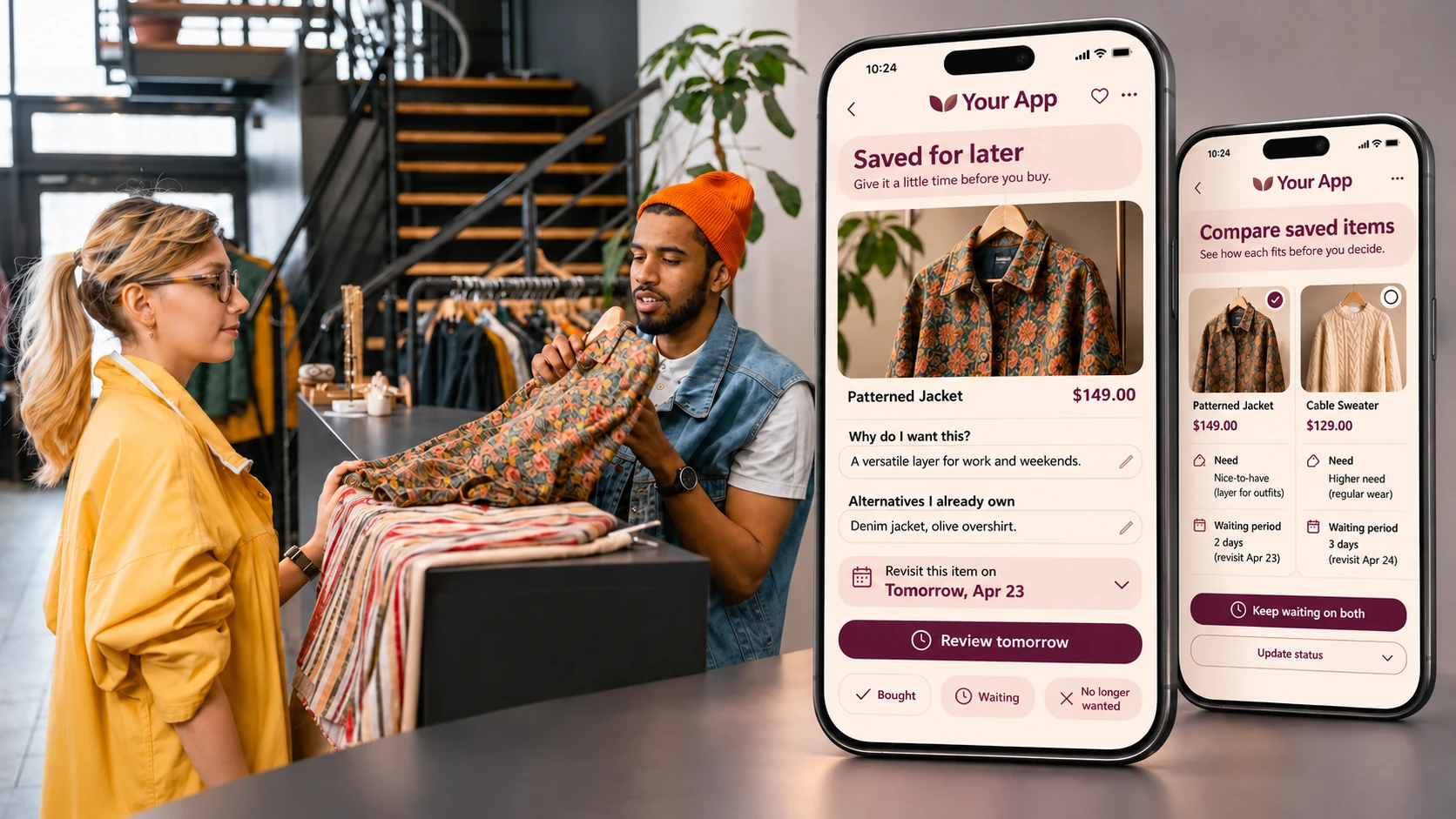
A user saves an item, writes what they would use it for and notes alternatives they already own. At their chosen date, they revisit and record their decision.
Who would be glad
you built it?
Reflective shoppers
Keep the intended use beside a saved item.
People planning larger purchases
Compare a wish with existing alternatives.
Minimalist households
Review what still feels useful after waiting.
A place in their life.
At the right moment.
Why it belongs on a phone
A phone captures the tempting item in the moment. A chosen reminder brings the decision back when the first rush has passed.
A reason to come back
Each tempting item creates a possible pause. Revisiting earlier decisions can make the collection feel useful rather than becoming another endless wishlist.
Where the money
could come from.
A one-time purchase could unlock private decision history, useful prompts and export. Occasional use may not justify a subscription. Development, support and optional backup have costs. Test willingness to pay for clearer reflection without using pressure or promised savings to sell the tool.
The part you could
make your own.
Treat no purchase as an equally complete decision. A product that preserves the user's reason without pushing a retailer could offer a distinctive experience to test with a focused audience.
An angle to test with the people you want to serve.Start with something
worth using.
Start with an item, price, intended use, owned alternatives and a revisit date. Allow bought, waiting and no-longer-wanted outcomes. Keep recommendations and retailer integrations out of the first test.
- Save an item photo with its price
- Record the intended use and alternatives already owned
- Choose a personal revisit date
- Mark bought, waiting or no longer wanted
Give the promise
something to stand on.
You need an incentive model aligned with thoughtful decisions. Keep records private and avoid advertising arrangements that reward nudging the user towards purchases they had chosen to pause.
Let users choose reminders and delete records easily. Avoid judgemental messages, financial advice or guaranteed savings; the final purchase decision stays with the person.
Let a small beginning
teach you something.
Invite willing users to save a few non-sensitive purchase considerations. Revisit them at the chosen time and ask whether the original reason helped clarify the decision, regardless of whether they bought.
Does the saved reason help the person make a clearer decision, including choosing to wait or buy nothing?
Look for these signs
- Items retain their intended purpose.
- Revisit dates remain user-controlled.
- Choosing not to buy is treated as a valid outcome.
A little more
clarity.
Will this stop impulse buying?
The app gives someone a pause and a record of their reasons. They can return with a clearer view of the choice, while the decision to buy, wait or leave it remains theirs.
Would affiliate commissions fit the idea?
They may create a tension if revenue rises when users buy. Consider a direct paid product first, and make any later commercial links explicit and optional.
Will it tell people what they can afford?
No. The first product helps people reflect on their own purchase decisions. It does not assess finances or recommend financial products.
Now picture it
with your name on it.
Your people. Your priorities. The version you keep thinking about. Answer a few questions and leave with a starting plan you can keep.
Free to explore. No account or email needed for your starting plan.