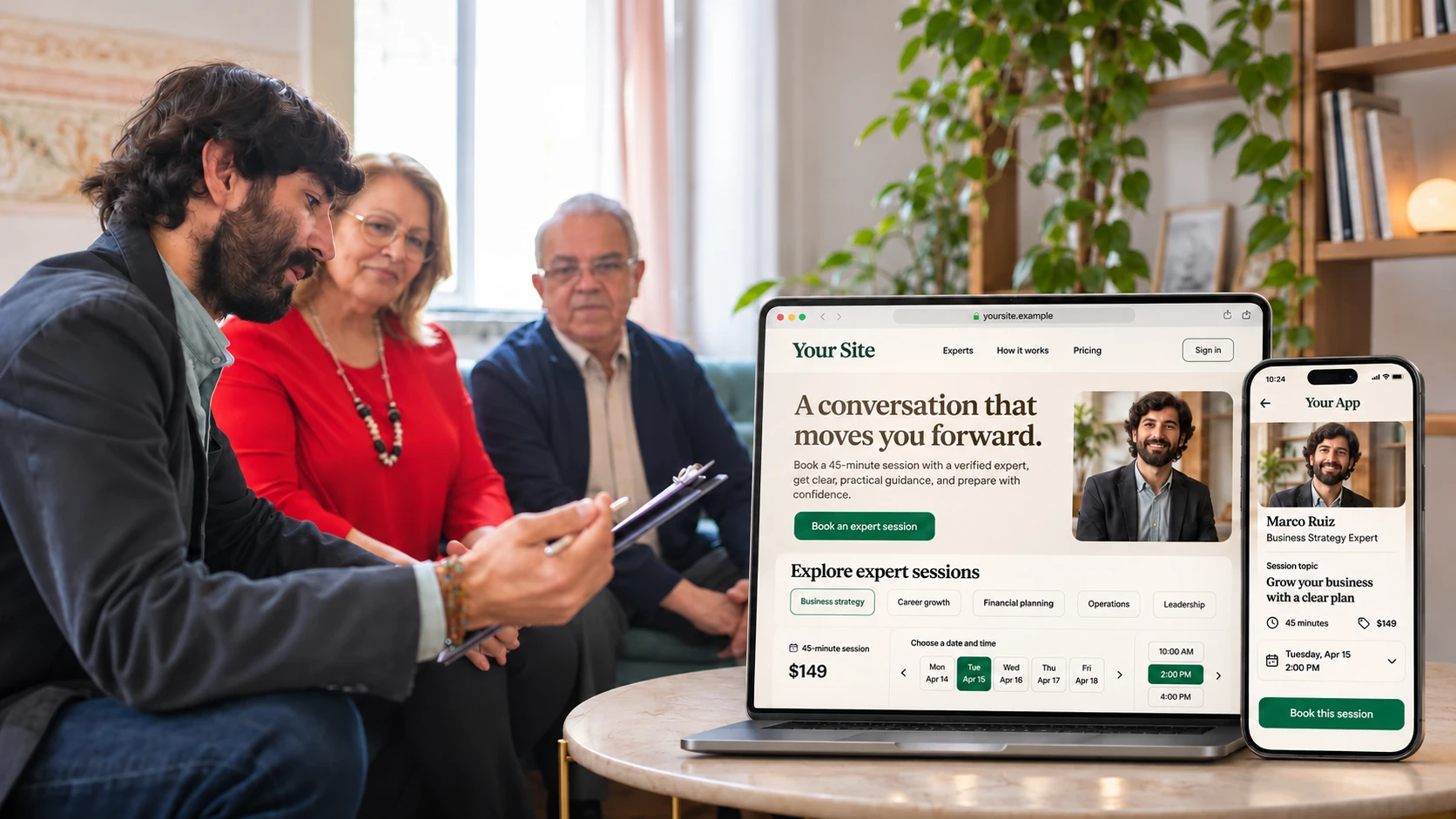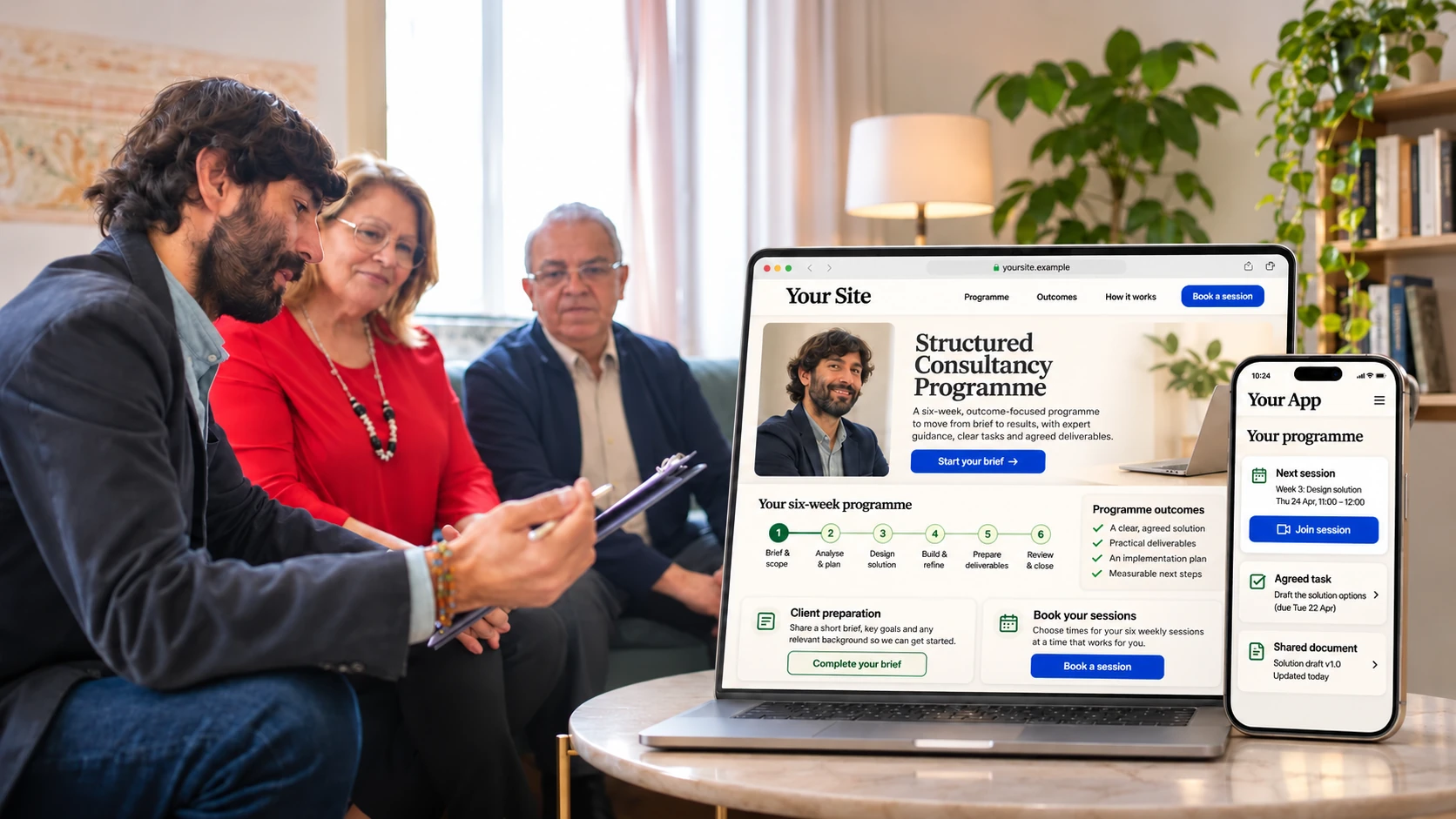
A business owner knows they need help improving an operation but cannot tell what a consultancy retainer will actually deliver. Your programme could make the engagement tangible: the starting question, sessions, client tasks and practical outputs, giving both sides a shared path beyond an encouraging first conversation.
A business you can
picture.
Create an online service business around a defined consulting outcome. Present the programme, gather a starting brief and guide clients through agreed sessions, tasks and deliverables.
Who would be glad
you built it?
Business owners facing a defined challenge
Understand a structured consulting engagement.
Managers leading change
Coordinate decisions and agreed tasks.
Small teams implementing improvements
Work through clear milestones with support.
Where the money
could come from.
Clients could pay a fixed programme fee or agreed milestone payments for a defined engagement. Preparation, delivery, review and follow-up all belong in the price. Additional implementation or ongoing support can be separately scoped so a clear programme does not become an unlimited retainer by accident.
The part you could
make your own.
A visible path from diagnosis to action could distinguish your offer. Concrete outputs and clear client responsibilities may make your expertise easier to buy than broad promises of transformation. Test whether the programme helps clients make the intended decisions.
An angle to test with the people you want to serve.Start with something
worth using.
Offer one programme around a bounded business outcome. Define intake, sessions, tasks, deliverables and revision or support limits. Include a fit conversation before purchase when the client's situation could make the standard programme unsuitable.
- Programme pages and fit enquiries
- Session booking and shared milestones
- Client documents and approved outputs
Give the promise
something to stand on.
You bring proven subject experience and a method you can adapt responsibly. The client's participation, access to information and capacity to act are part of the programme, so explain what you need from them as clearly as your own deliverables.
Professional scope, confidentiality and realistic capacity matter. Keep responsibility for client decisions clear and use examples only with permission. A polished portal should support good service rather than hide unclear deliverables.
Let a small beginning
teach you something.
Review recurring client problems you already understand, then pilot the structured offer with a suitable client. Ask whether each milestone supports an actual decision or action, and revise parts that feel like meetings without useful progress.
Can the client understand and complete their part of the programme while seeing how each milestone supports the agreed objective?
Look for these signs
- Deliverables connect to real client decisions
- Responsibilities are agreed on both sides
- Scope changes are discussed before extra work
A little more
clarity.
Can one programme fit every business?
Define the audience and conditions where your method is useful. Some clients need a different scope or provider, so a clear fit assessment can be part of delivering the service responsibly.
Should the programme guarantee a revenue increase?
Promise the work, support and deliverables you can control. Business results depend on implementation and wider conditions; evaluate progress with the client without converting an ambitious goal into an unsupported financial guarantee.
HoneyBook is a related reference for managing client service businesses.
Now picture it
with your name on it.
Your people. Your priorities. The version you keep thinking about. Answer a few questions and leave with a starting plan you can keep.
Free to explore. No account or email needed for your starting plan.