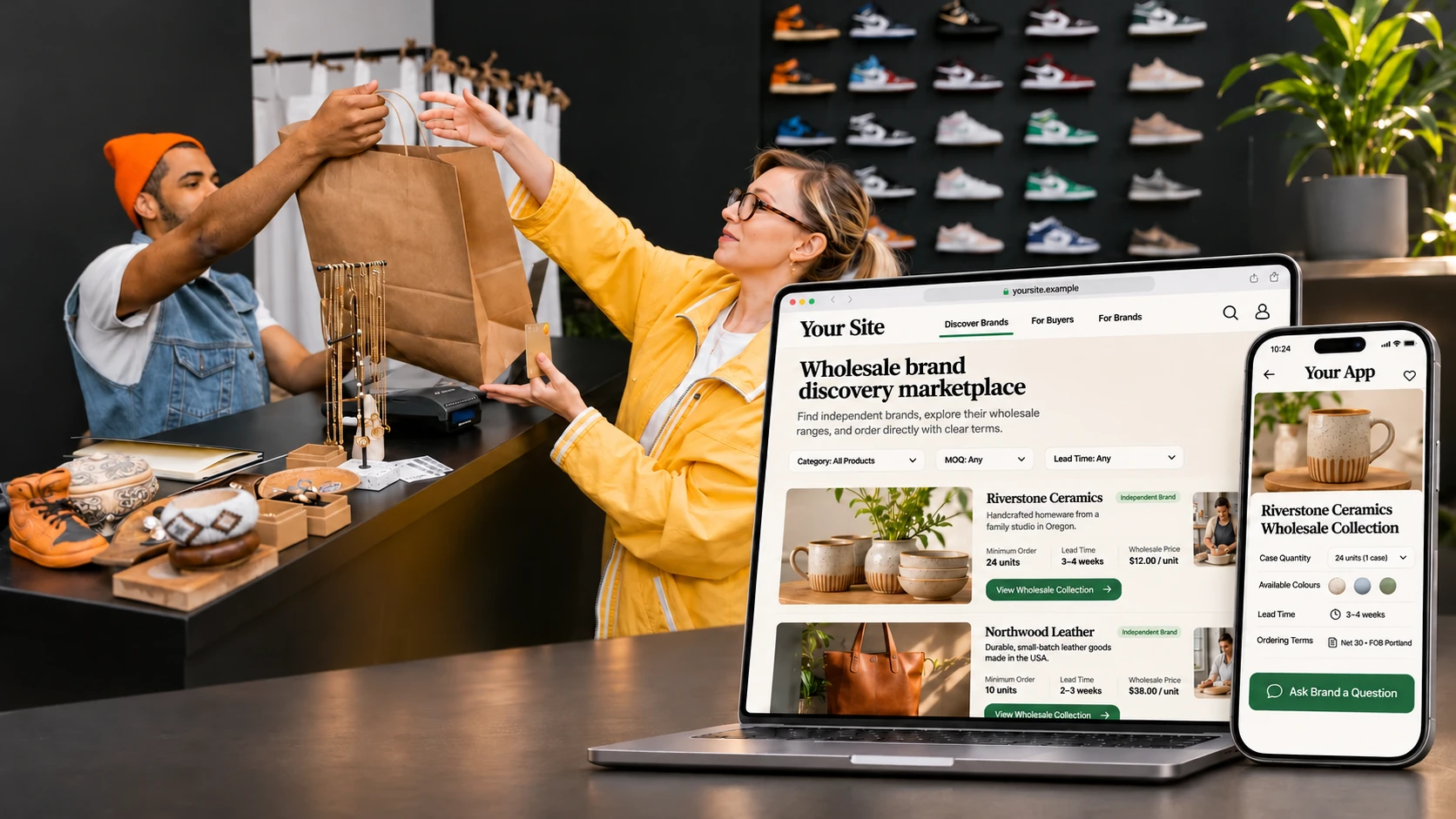
CommerceEstablished model
Online resale marketplace

Help good equipment find its next owner.

A useful piece of equipment is sitting idle. Somewhere else, someone needs exactly that item but is unsure whom to trust. You could build a marketplace for a category you understand, giving buyers the details they need and sellers a better way to present what they have.

Make this fit me
You could also build this as a mobile app
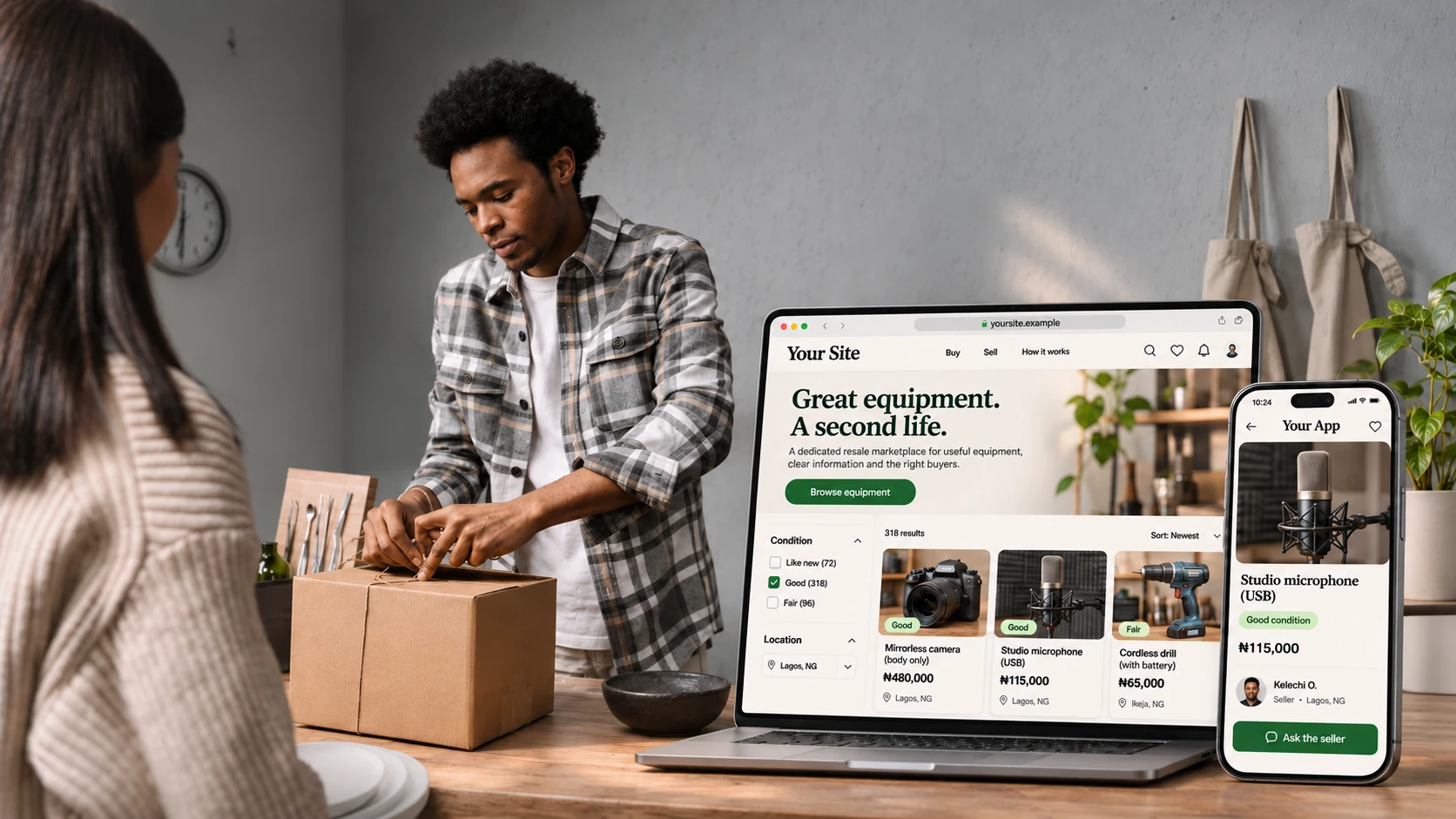
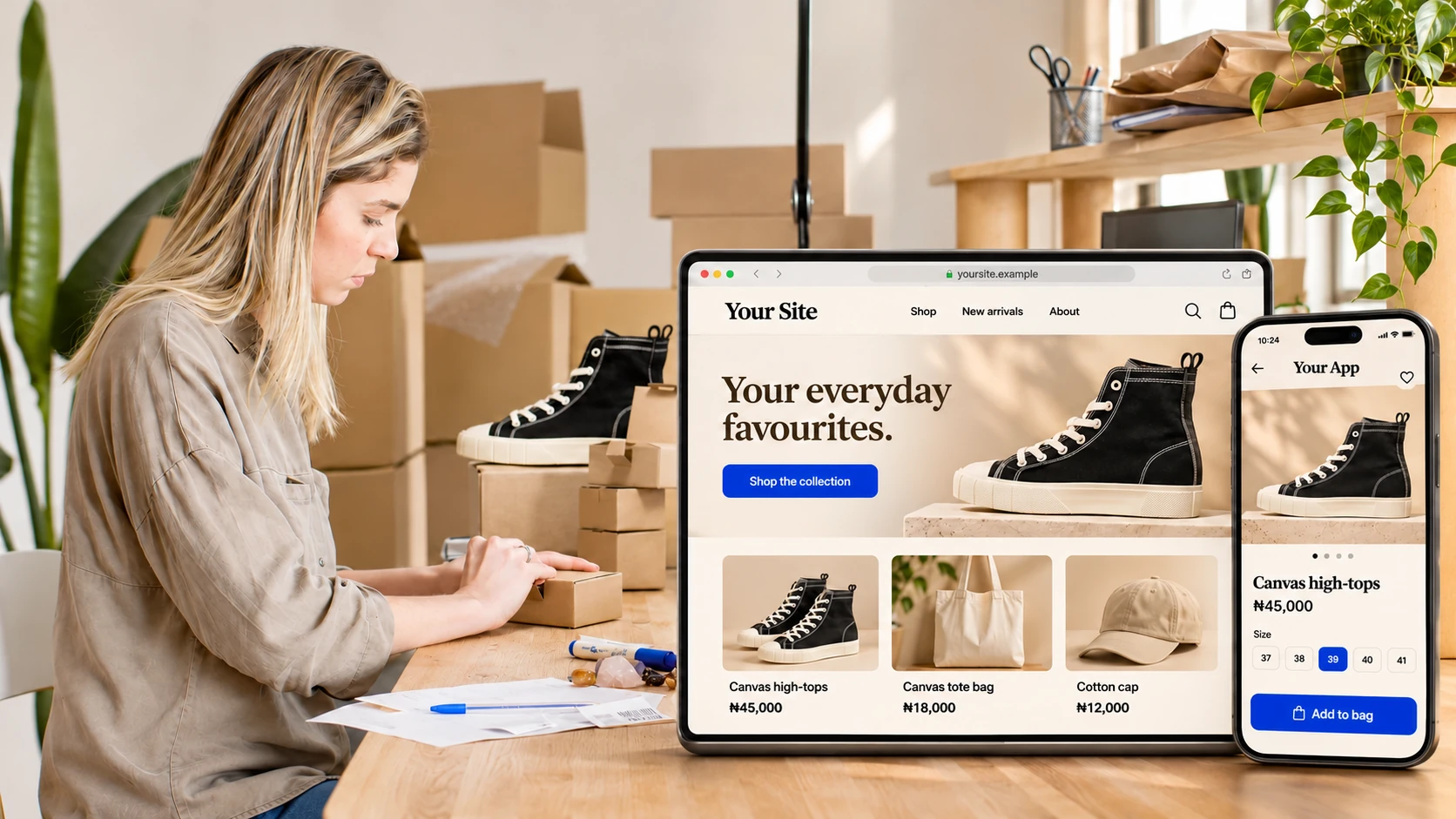
Online resale marketplace concept: A man carefully packs a box in a retail setting, preparing goods for a customer. A desktop website and matching phone show the digital business.Illustrative concept
IMAGINE THIS MOMENT

A baker needs another mixer, while a nearby kitchen has one sitting unused. A blurry photograph and a vague description leave too much to guess. Your marketplace could make the decision clearer through consistent condition notes, practical specifications and a sensible route to ask questions or arrange inspection.

A business you can
picture.

Start with one category and service area: photography equipment, commercial kitchen tools or another trade you know.

Who would be glad
you built it?

Growing small businesses

Find equipment suited to their next step.

Owners with idle stock

Present used items with useful detail.

Specialist dealers

Manage repeat listings in one category.

Where the money
could come from.

A seller could pay a disclosed fee when a transaction completes through your marketplace. Keep the first pricing route simple enough to understand before listing. Payment processing, support, disputes and any inspection coordination must fit within the fee; the value depends on helping suitable buyers and sellers complete real deals.

The part you could
make your own.

Deep category detail could be your edge: capacity, power requirements, service history or compatibility. Test whether a buyer values that clarity enough to choose your marketplace over a general listing with fewer relevant questions.

An angle to test with the people you want to serve.

Start with something
worth using.

Begin with one equipment category and a manageable service area. Support detailed listings, seller contact, offers and an agreed transaction process. Make condition and collection expectations visible before adding shipping or multiple categories.

  • Guide sellers through condition and specification details.
  • Let buyers inspect photos, ask questions and save searches.
  • Show collection or delivery arrangements before purchase.
  • Keep order records and a clear route for reporting problems.

Give the promise
something to stand on.

WHAT YOU BRING

Knowledge of the equipment category can help you ask the questions buyers would otherwise discover too late. You also need a fair process for inaccurate listings, failed collection and disagreements over condition.

A marketplace needs support for fraud reports, disputes, delivery problems and refunds. Describe inspections precisely. Use words such as verified or guaranteed only when a real process supports that specific claim.

Let a small beginning
teach you something.

Recruit a few sellers with actual available items, then invite likely buyers to assess the listings. Record which unanswered questions delay a decision and test whether better descriptions or independent inspections resolve them.

THE QUESTION TO TEST

Can a buyer decide whether an item is worth inspecting without repeating the same basic questions?

Look for these signs

  • Listings contain complete condition notes
  • Buyers ask more specific questions
  • Completed deals match stated expectations
WHEN THE FIRST VERSION HAS TAUGHT YOU MORE
Where you could take it next

Inspection bookings, saved compatibility checks and documented service histories could make the marketplace more useful over time. Keep a seller’s description distinct from information someone has independently checked.

A useful role for AI

The job it could help with

Turn a seller’s completed equipment checklist into a readable listing draft, keeping specifications and disclosed defects easy to find.

What stays in human hands

The seller confirms condition and specifications; AI must not infer authenticity, working condition or inspection results from a photograph.

A little more
clarity.

Will you inspect every item?

Only promise inspections you can arrange and document. You can begin with structured seller disclosures and optional independent checks, clearly showing who supplied each statement and which parts remain unverified.

What happens if an item differs from its listing?

Set the transaction, complaint and refund rules before taking bookings or payment. Keep listing evidence and agreed condition details available so the parties have something concrete to refer to when a problem arises.

Do I have to buy all the stock?

No. You can connect independent sellers and buyers, with everyone’s responsibilities clear before a purchase.

What should I know about the category?

Enough to understand the questions buyers ask and to find people who can assess the details you cannot.

SOMETHING TO LEARN FROM

Reverb is a marketplace for musical instruments and gear. It offers a reference for specialist resale. Your chosen category still needs enough willing buyers and sellers to make the exchange work.

WHAT COULD GO INSIDE

A few additions
to explore.

Selling through multiple vendorsBring trusted sellers into one shopping experience, with clear ownership of every order and someone responsible when a buyer needs help.Useful search and filtersHelp a visitor find the right possibility in a growing collection without making them learn your internal catalogue language first.Side-by-side comparisonsPut the differences that matter beside each other, so a customer can choose a suitable option without memorising several pages.
MAKE ROOM FOR YOUR VERSION

Now picture it
with your name on it.

Your people. Your priorities. The version you keep thinking about. Answer a few questions and leave with a starting plan you can keep.

Free to explore. No account or email needed for your starting plan.
PICTURE THE MOBILE APPResale marketplace app

Help a useful thing find its next owner.

The item is still useful. Its next owner just has not found it yet. You could build a resale app for a category you understand, making it easy to photograph an item, describe its condition and speak with a suitable buyer. Give people enough clarity to decide whether to take the next step.

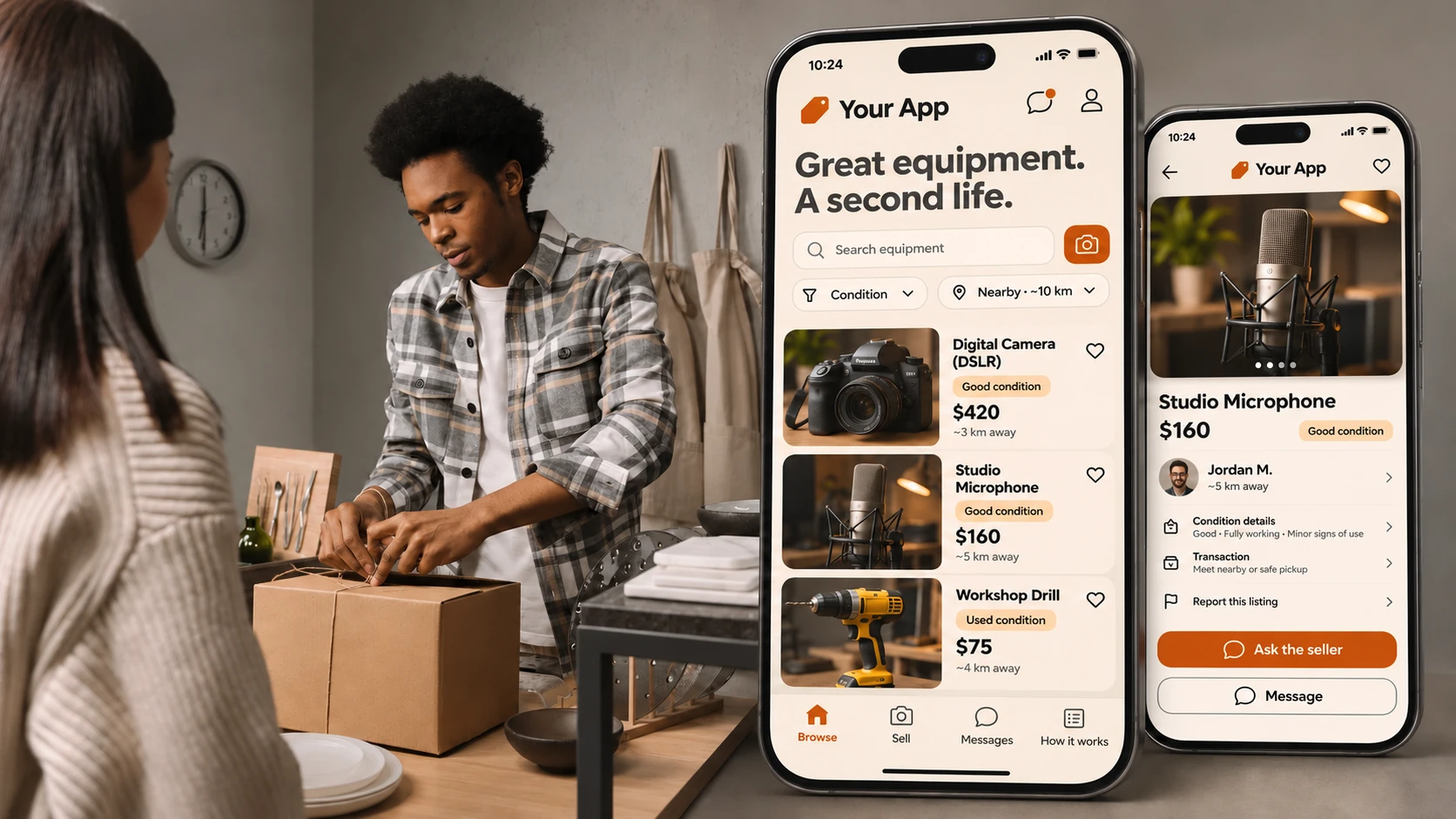
A man carefully packs a box in a retail setting, preparing goods for a customer. Two phone screens preview the resale marketplace app, with no desktop view.App concept
IMAGINE THIS MOMENT

Picture a parent clearing a room after a child outgrows it. The furniture still has years left, but vague listings make every conversation hard. Your app could help that seller show the marks, measurements and collection details that let another family decide with confidence.

One useful moment.
A reason to open it.

A seller photographs an item, adds its measurements and previews the listing. A buyer can immediately see what is included and ask one focused question.

Who would be glad
you built it?

Occasional sellers

Show condition without repeating the same explanation.

Careful buyers

Check suitability before arranging a visit.

Specialist resellers

Keep a small changing collection organised.

A place in their life.
At the right moment.

Why it belongs on a phone

The phone can photograph an item where it is stored and handle enquiries as they arrive. Optional location-based discovery also helps people consider collection arrangements without exposing their exact home address publicly.

A reason to come back

Sellers return to respond to enquiries and list another item. Buyers return for relevant new listings, so alerts should follow the category and preferences they actually chose.

Camera & scanningLocation & mapsTimely reminders

Where the money
could come from.

Start with a disclosed fee on completed transactions that your app can actually support and record. Sellers pay for a useful route to a buyer, not a promise of a sale. Payment handling, disputed descriptions, moderation and support all affect what remains from that fee.

The part you could
make your own.

Try building trust through unusually clear condition records for one category. Ask buyers whether those details change their decision; the advantage remains a hypothesis until real transactions show it helps.

An angle to test with the people you want to serve.

Start with something
worth using.

Begin with one category and a manageable area. Let sellers photograph items, record useful condition details and answer enquiries. Decide how an agreed sale is confirmed before charging a transaction fee.

  • Photo listings with category-specific condition fields
  • Search and approximate-area filters
  • Buyer and seller messaging controls
  • Clear reporting and transaction guidance

Give the promise
something to stand on.

WHAT YOU BRING

You bring knowledge of one resale category and the judgement to recognise incomplete or misleading listings. A clear way to handle reports matters as much as an attractive browsing screen.

A marketplace needs support for fraud reports, disputes, delivery problems and refunds. Describe inspections precisely. Use words such as verified or guaranteed only when a real process supports that specific claim.

Let a small beginning
teach you something.

Invite a small group already trading that category, with permission from any community organiser. Help them list real items and observe where buyers still need clarification before arranging collection.

THE QUESTION TO TEST

Can buyers reach a confident decision from the listing without a long round of repeated questions?

Look for these signs

  • Listings include useful condition details.
  • Enquiries reach an agreed next step.
  • Completed transactions produce understandable records.
WHEN THE FIRST VERSION HAS TAUGHT YOU MORE
Where you could take it next

Inspection bookings, saved compatibility checks and documented service histories could make the marketplace more useful over time. Keep a seller’s description distinct from information someone has independently checked.

A little more
clarity.

Must we handle delivery?

Only if that is part of your service. Collection can be the first model, with clear meeting arrangements and boundaries. Delivery introduces scheduling, damage handling and additional support responsibilities.

How do we stand apart from general marketplaces?

Choose a category where your understanding changes the information shown. For furniture, measurements and access requirements may matter more than adding another general feed of attractive photographs.

Do I have to buy all the stock?

No. You can connect independent sellers and buyers, with everyone’s responsibilities clear before a purchase.

What should I know about the category?

Enough to understand the questions buyers ask and to find people who can assess the details you cannot.

SOMETHING TO LEARN FROM

Reverb is a marketplace for musical instruments and gear. It offers a reference for specialist resale. Your chosen category still needs enough willing buyers and sellers to make the exchange work.

WHAT COULD GO INSIDE

A few additions
to explore.

Selling through multiple vendorsBring trusted sellers into one shopping experience, with clear ownership of every order and someone responsible when a buyer needs help.Useful search and filtersHelp a visitor find the right possibility in a growing collection without making them learn your internal catalogue language first.Side-by-side comparisonsPut the differences that matter beside each other, so a customer can choose a suitable option without memorising several pages.
MAKE ROOM FOR YOUR VERSION

Now picture it
with your name on it.

Your people. Your priorities. The version you keep thinking about. Answer a few questions and leave with a starting plan you can keep.

Free to explore. No account or email needed for your starting plan.
KEEP THE POSSIBILITIES OPEN

Something else
might speak to you.

CommerceFamiliar model

Online store

Give the products you believe in a shop of their own, where customers can understand the details and place an order confidently.

  • Product sales
  • Independent brands