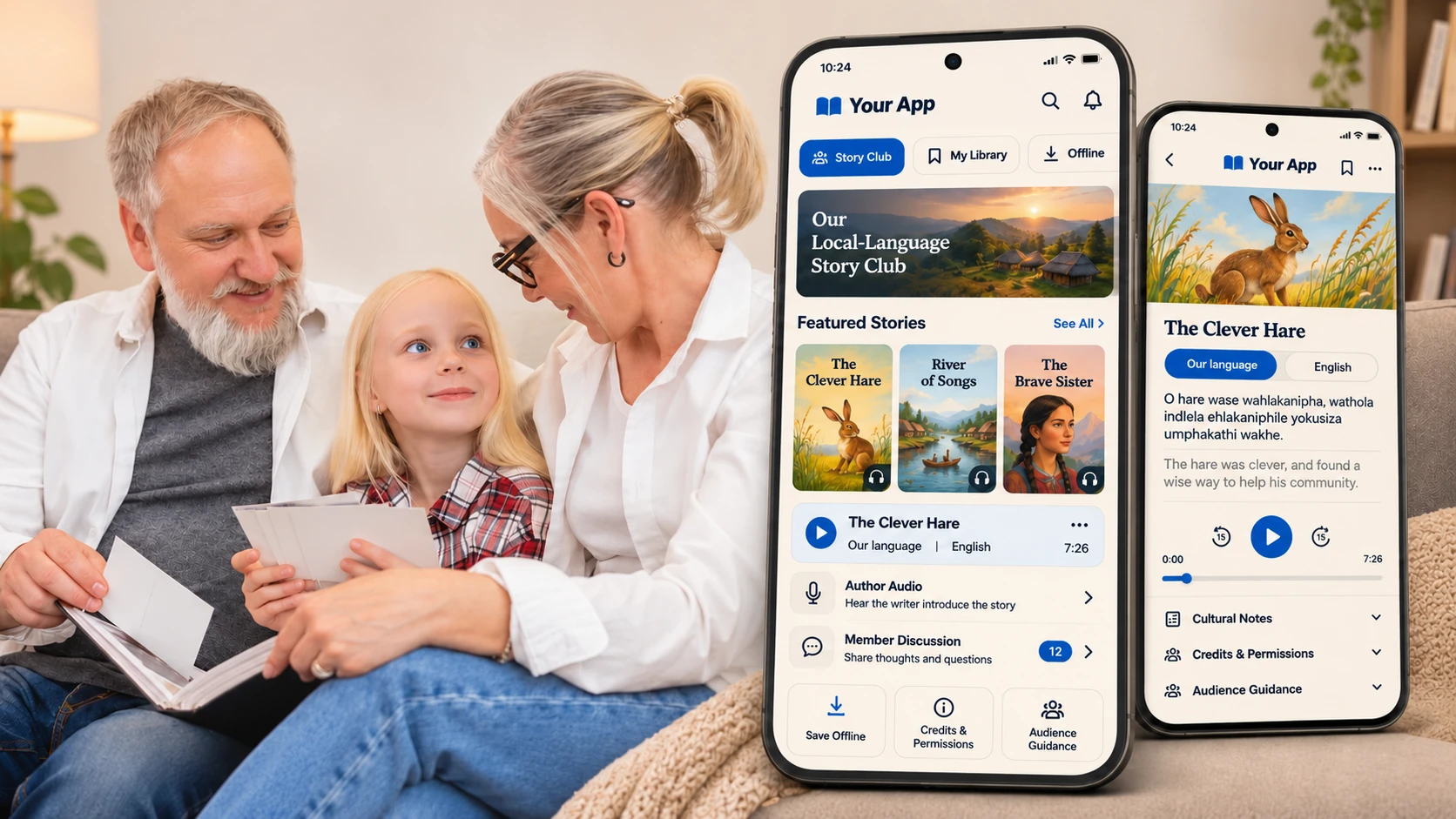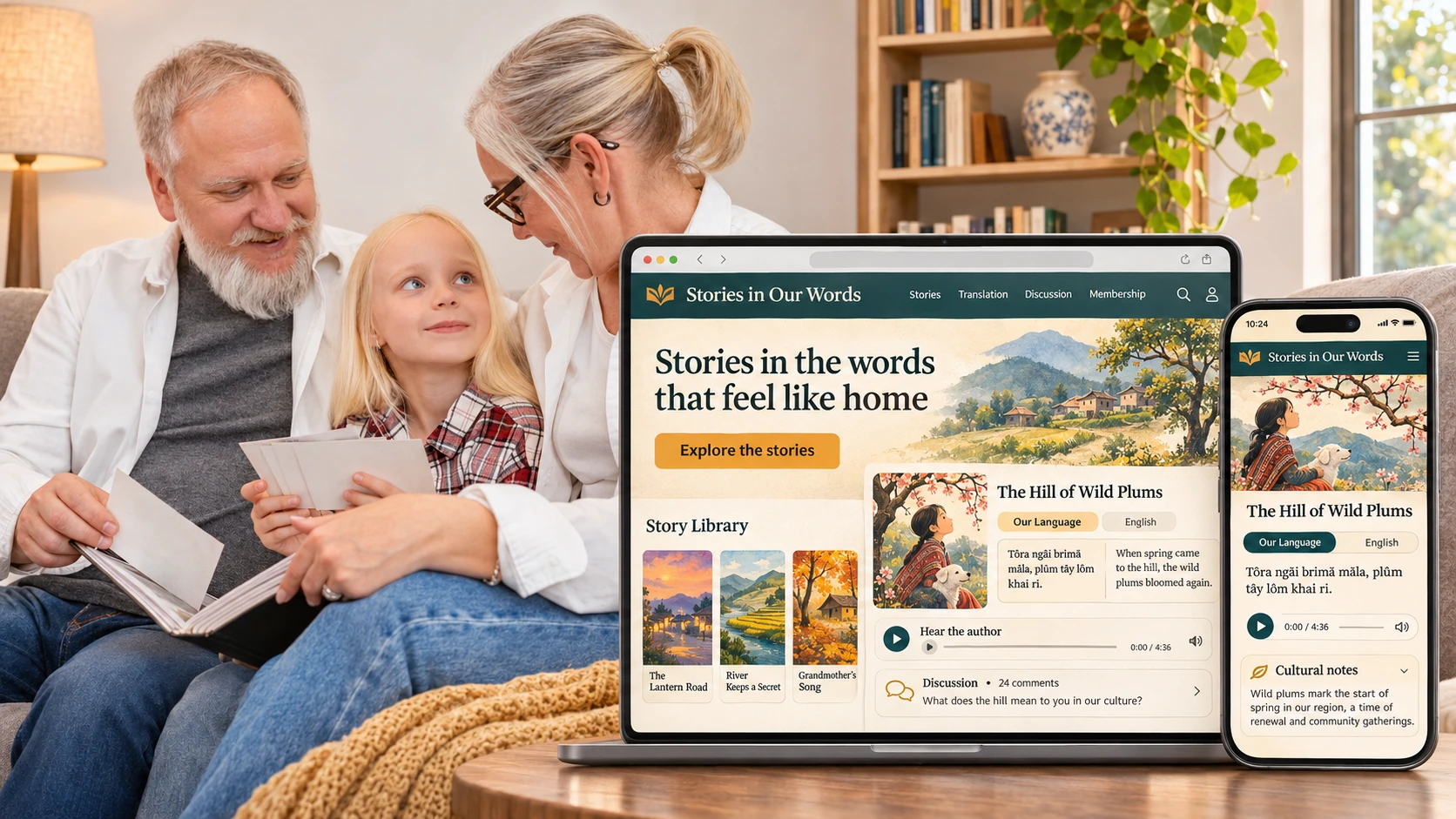
A reader finds endless content online but rarely encounters the language that carries familiar humour, memories or everyday warmth. Your story club could bring writers, translators and listeners together around a considered publication, giving that audience a reason to return for more than a translated version of someone else’s interests.
A business you can
picture.
Begin with one language community and a focused editorial format. Commission original work, agree translation rights and publish text or audio with context readers can discuss.
Who would be glad
you built it?
Readers and listeners connected to the language
Stories with familiar voice and thoughtful context
Families sharing language across generations
Suitable material to enjoy together
Schools and cultural groups
Permissioned collections for defined activities
Where the money
could come from.
Readers could buy the first collection, with a subscription introduced once the publishing rhythm is workable. The price supports writing, editing, translation where used, audio and contributor payments. Schools or cultural organisations may later license defined uses. Keep those rights explicit and avoid assuming that a small-language audience automatically makes every cultural story available for commercial publication.
The part you could
make your own.
Your proposed difference is editorial care for the audience’s own interests and voice. Stories selected and reviewed by relevant contributors could feel more personal than unrelated material passed through automatic translation.
An angle to test with the people you want to serve.Start with something
worth using.
Choose a defined audience and publish a complete small collection of text and optional audio. Provide contributor credits and a realistic release plan. Review language quality with suitable people before expanding translation or community features.
- Publish a coherent collection on a dependable schedule.
- Credit writers, translators and audio contributors.
- Host moderated conversations around the work.
Give the promise
something to stand on.
You need fluent contributors, appropriate editorial review and respect for differing community perspectives. Agree payment, credit and permissions, especially for personal stories or culturally sensitive material.
Pay and credit contributors as agreed, review translations and obtain permission for cultural or personal material. Community members may have different views, so moderation and editorial decisions need clarity.
Let a small beginning
teach you something.
Work with a small group of writers, reviewers and willing readers to produce a sample collection. Ask readers about language, relevance and accessibility, and let contributors review how their work is presented.
Do readers recognise a voice and subject matter they want to return to, while contributors feel accurately represented?
Look for these signs
- Language receives appropriate human review
- Contributors receive agreed credit and payment
- Readers identify stories they want more of
A little more
clarity.
Can automatic translation create the whole library?
It may assist a draft in some cases, but language, meaning and cultural context need suitable human review. The publication’s value depends on a considered voice, not simply producing more text.
Can traditional stories be used freely?
Do not assume that. Check the relevant rights, permissions and community expectations for the material, and make attribution and commercial use part of the editorial process.
What should my first version focus on?
Start with the first test described here, then build around the part people actually use and would pay to keep.
Now picture it
with your name on it.
Your people. Your priorities. The version you keep thinking about. Answer a few questions and leave with a starting plan you can keep.
Free to explore. No account or email needed for your starting plan.