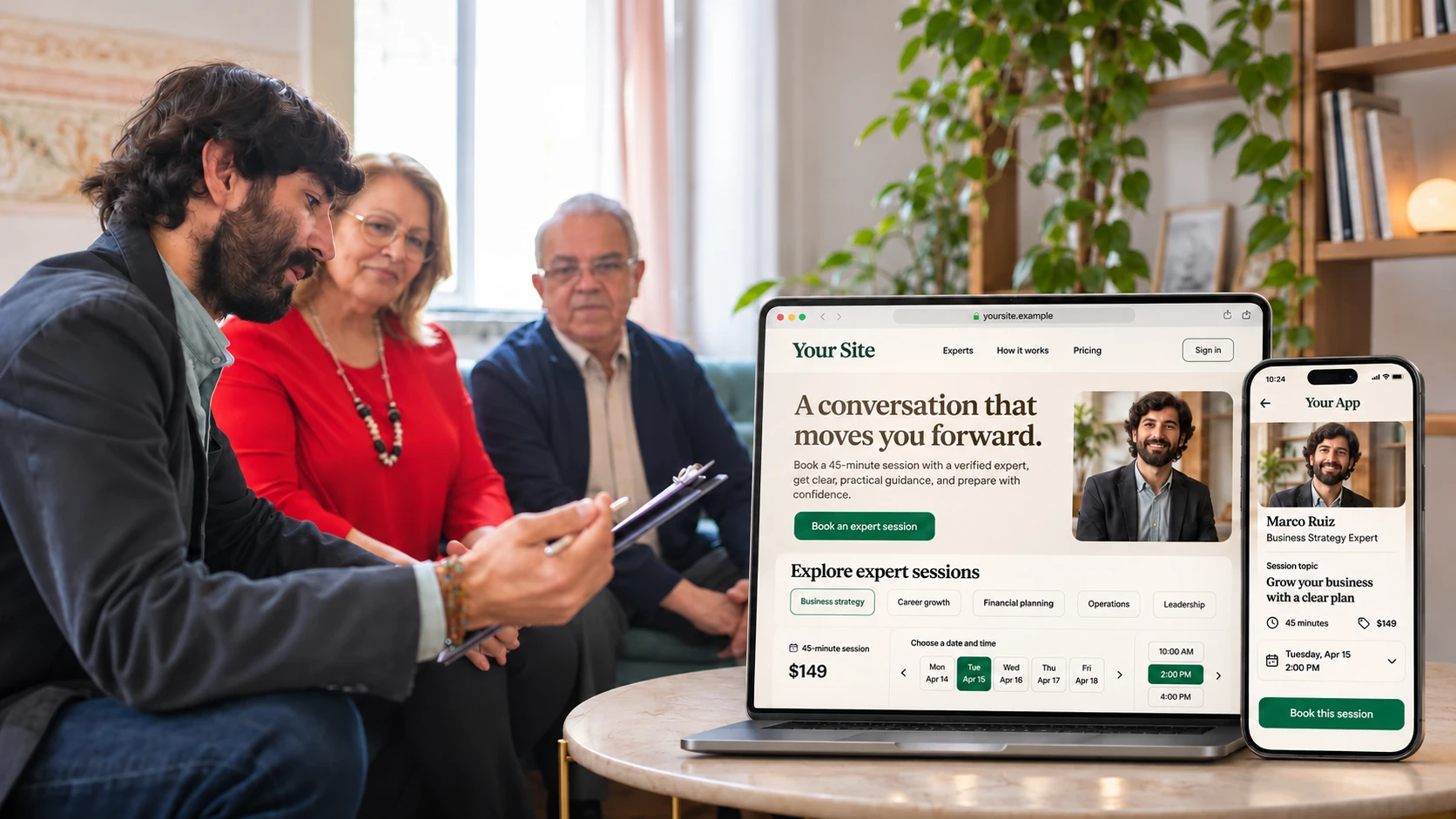
An owner is weighing a new service, a partnership or a change in operations. Friends offer encouragement, but the decision needs a few informed challenges. Your service could create a small recurring conversation with relevant experience, helping the owner leave with clearer questions and next actions while keeping authority over the choice.
A business you can
picture.
Choose a defined business stage or industry. Members prepare a short decision brief, the host assembles suitable contributors and the session ends with a record of options and agreed next checks.
Who would be glad
you built it?
Owner-managed businesses
A structured conversation around real decisions
Independent founders
Relevant perspectives beyond their immediate circle
Business-support organisations
A defined discussion programme for members
Where the money
could come from.
Owners could pay for a stated number of sessions within a membership or a single scoped discussion first. Fees cover preparation, contributor time and coordination. The offer should make attendance and follow-up clear, without implying a guaranteed business result. If a contributor later sells a service, disclose that interest before it influences the discussion.
The part you could
make your own.
Your proposed difference is continuity around the owner’s actual business. Returning contributors could remember the reasoning behind earlier decisions and ask more useful questions than a one-off motivational event.
An angle to test with the people you want to serve.Start with something
worth using.
Choose one type of business owner. Offer a prepared decision session with a small relevant panel, a clear question and a short follow-up record. Keep any specialist work separate from the initial conversation.
- Frame one decision and its known constraints.
- Select contributors with relevant, disclosed experience.
- Record options without pretending they are guarantees.
Give the promise
something to stand on.
You need capable contributors, careful matching and strong confidentiality. Define the scope of general discussion, disclose conflicts and refer specialist questions to appropriate professionals rather than stretching a session beyond its competence.
Match scope to expertise, protect confidential information and avoid using general sessions for regulated advice. Clear expectations about preparation, follow-up and specialist referrals keep the service useful.
Let a small beginning
teach you something.
Invite a small group of owners with concrete upcoming decisions. Run a bounded session format and follow up on the questions they chose to investigate, asking whether the conversation improved clarity rather than whether everyone agreed.
Does the owner leave with specific questions or actions that reflect the decision and the limits of the contributors’ expertise?
Look for these signs
- Sessions begin with a defined decision
- Contributors disclose relevant interests
- Owners retain control of their chosen next steps
A little more
clarity.
Will the council tell owners what to do?
It can offer perspectives and questions within its competence, but the owner keeps the decision. Clearly distinguish general discussion from regulated or specialist advice that needs a separate engagement.
Can a contributor pitch their services?
Any commercial interest should be disclosed and managed. The paid session should remain useful on its own, without turning a difficult decision into pressure to buy another service.
What should my first version focus on?
Start with the first test described here, then build around the part people actually use and would pay to keep.
Now picture it
with your name on it.
Your people. Your priorities. The version you keep thinking about. Answer a few questions and leave with a starting plan you can keep.
Free to explore. No account or email needed for your starting plan.