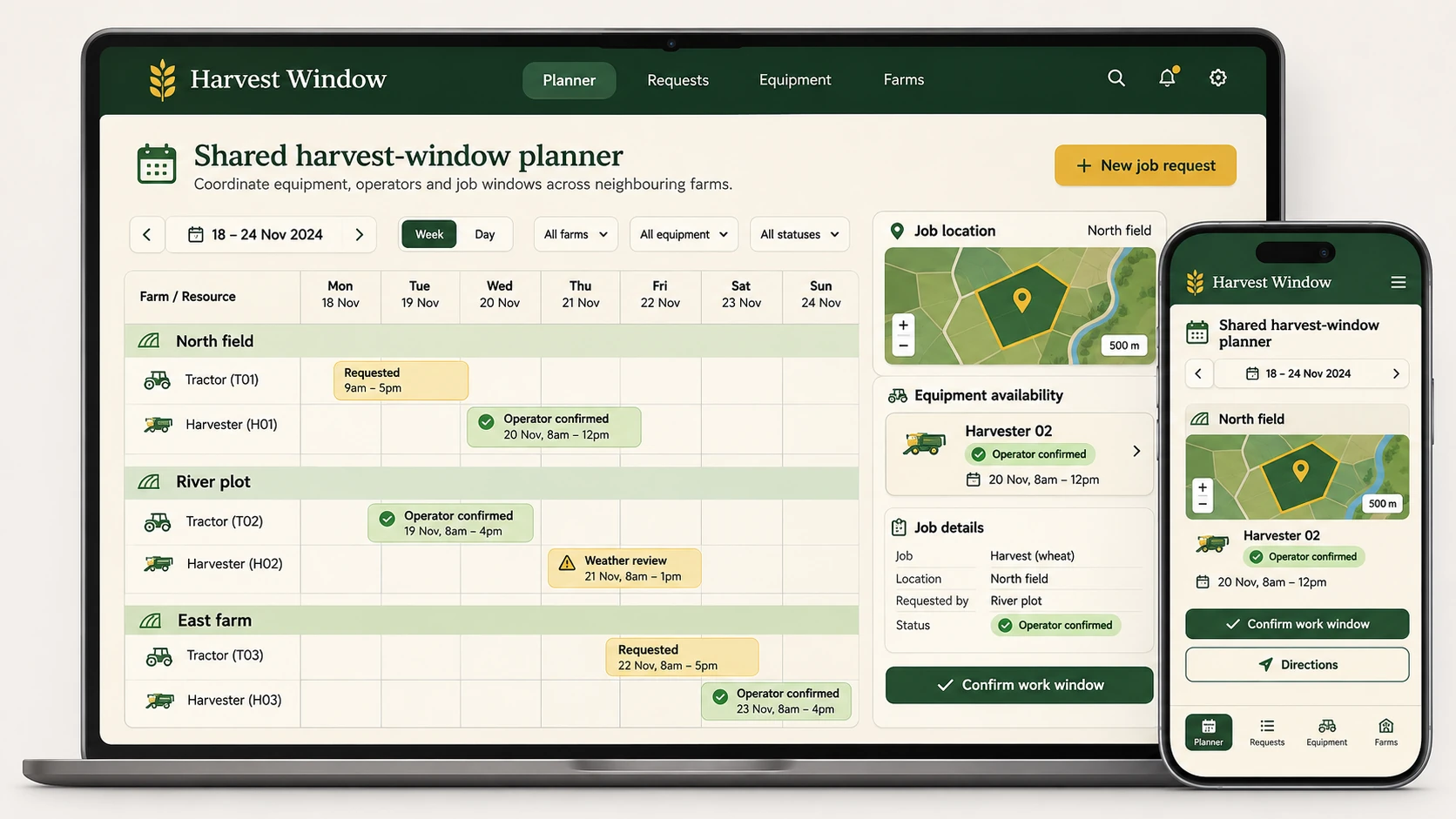
Several growers need the same machine within a short working window. Calls change as conditions change, and one tentative conversation begins to sound like a promise. A shared planning view could help your coordinator see requests, travel and equipment availability together while retaining responsibility for what can actually be confirmed.
Requests sit across calls and notes, and a tentative discussion can be mistaken for a confirmed equipment booking.
The coordinator sees requests, equipment and operator limits together, then confirms a feasible window and communicates changes explicitly.
Where it could
make a difference.
Agricultural service operators
Coordinate jobs against real equipment capacity.
Cooperatives
Make member requests visible to the coordinator.
Growers requesting work
Understand whether a window is tentative or confirmed.
Useful on: Agricultural service website, Booking portal, Business portal.
What this could mean
for your business.
The feature can support paid agricultural services and clearer use of shared equipment. Its value lies in coordination and informed commitments, with any travel or scheduling benefit measured in actual operations. Include the coordinator's effort and record maintenance when assessing whether it improves the existing service.
Start with something
worth using.
Start with one equipment type, job locations, operator availability and confirmed windows. Keep tentative requests visibly separate. Add change notifications only after the coordinator's review process is clear.
- Job and location requests
- Equipment and operator availability
- Operator-confirmed work windows
Give the promise
something to stand on.
You need an experienced coordinator, current equipment records and clear authority to confirm work. Agree how changing field conditions, breakdowns and travel affect the schedule before opening requests widely.
Support, connectivity and scheduling administration need resources. Clarify who supplies, maintains and operates the machinery, with suitable permissions and insurance arrangements. Share location and crop details only with people who need them.
How it fits what you already have
Check equipment records, maintenance blocks, operator schedules and location data. Decide who controls confirmation and how offline requests enter the current plan without creating duplicate or conflicting commitments.
Let a small beginning
teach you something.
Use recent jobs to test the planning view with a willing operator, then trial a manageable set of live requests. Ask growers to explain their status and check whether the coordinator can spot conflicts.
Can the coordinator see a scheduling conflict before confirming work, while growers understand what has actually been agreed?
Look for these signs
- Requests have clear status labels.
- Equipment blocks affect availability.
- Schedule changes reach affected growers.
A little more
clarity.
Can customers reserve a guaranteed harvest time?
Only if the operator can offer that commitment. Many arrangements need review, so use tentative or requested states and explain how confirmation and changes work.
Should the app decide the route automatically?
A route suggestion may help later, but field readiness, equipment and operator judgement matter. Begin with a coordinator-controlled plan and visible constraints.
Does a suggested date guarantee the booking?
No. Conditions can change. The operator confirms the work and communicates any revised plan.
Could this improve an existing equipment service?
Yes. It can begin as a useful addition to the service and relationships already in place.
Hello Tractor helps farmers book tractor services. It is an adjacent reference. This concept investigates shared work windows, operator confirmation and changes to a cooperative’s schedule.
What would this change
in your business?
Your customers. Your working day. The part you would love to make easier. Answer a few questions and leave with a starting plan you can keep.
Free to explore. No account or email needed for your starting plan.