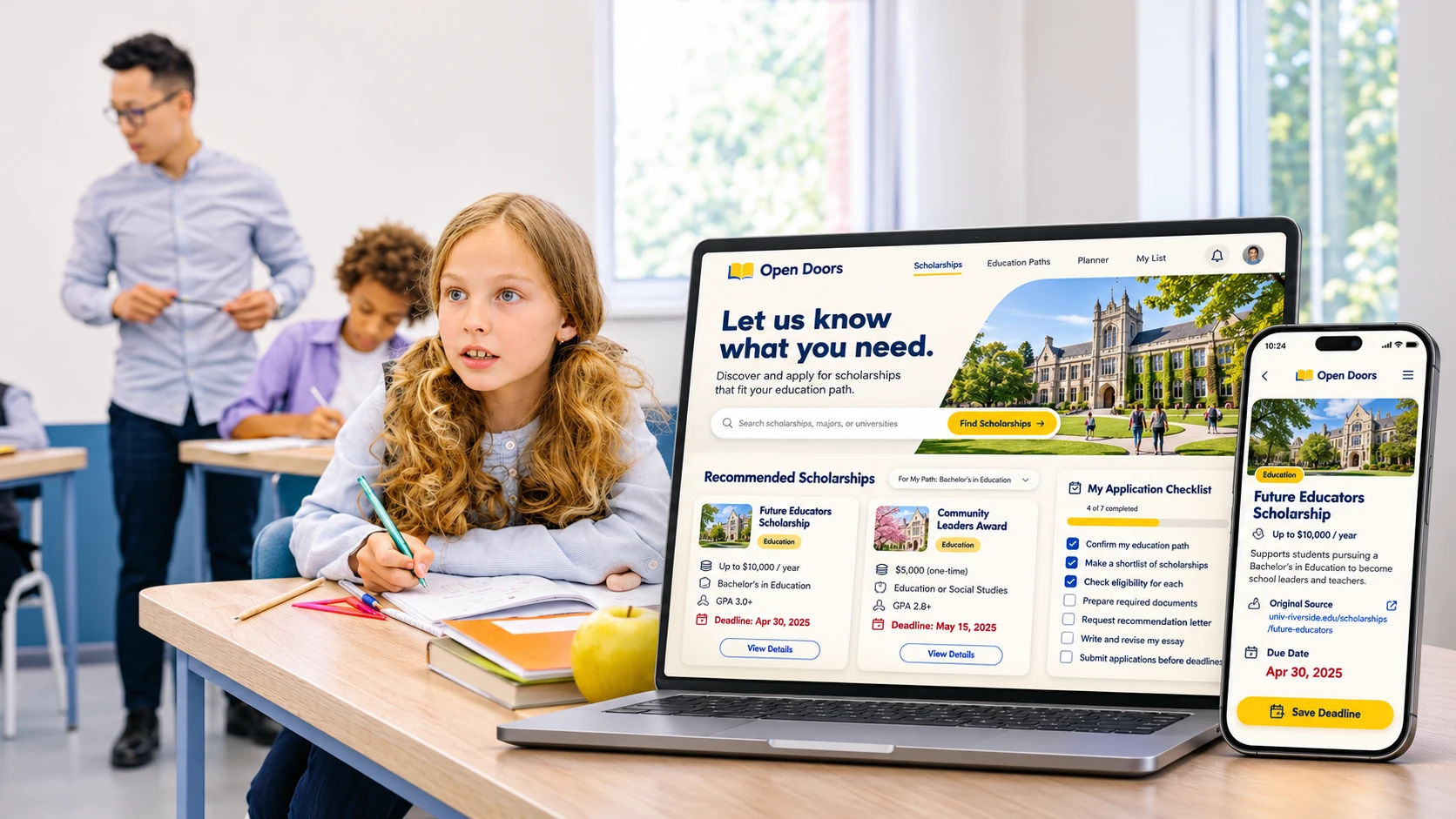
A student finds a scholarship that sounds right, but the original notice, eligibility details and document list are scattered across several pages. Your planner could bring those facts together with a private checklist, helping the student decide whether to apply and see what they still need to prepare.
A business you can
picture.
Create a scholarship information service for a defined education path. Show original sources and deadlines, then give applicants a private checklist for the documents and decisions they need.
Who would be glad
you built it?
Students planning further study
Check opportunities against their education path.
School advisers
Support several applicants with clear tasks.
Families
Understand preparation dates and required documents.
Where the money
could come from.
Schools or advising organisations could pay for an application-planning workspace, funding maintained research and group coordination. Begin with that clear institutional offer. Source checking, updates and support take time; any paid applicant review should be separately described and should never be sold as a route to guaranteed selection.
The part you could
make your own.
A carefully maintained pathway could be more useful than a huge list. Test whether clear source dates, document preparation and honest eligibility questions help students act on suitable opportunities rather than endlessly collecting links.
An angle to test with the people you want to serve.Start with something
worth using.
Choose one education path and maintain a manageable opportunity list with original source links. Add saved opportunities, eligibility questions and document reminders. Let students mark uncertainty rather than declaring them eligible from incomplete information.
- Scholarship search and eligibility filters
- Application timelines and document checklists
- Saved opportunities and source links
Give the promise
something to stand on.
You need careful source checking and a process for updating deadlines. The service should help applicants make their own decisions, while clearly distinguishing factual opportunity information from paid planning or review support.
Listings need regular review, visible dates and a way to report errors. Handle personal documents with care. Never imply that using the platform guarantees an award or special access to a selection committee.
Let a small beginning
teach you something.
Work with a school adviser and a few students preparing actual applications. Test whether they can find the original requirements, rule out unsuitable opportunities and plan document requests early enough to act.
Can a student confirm the key requirements and organise their next application task without mistaking guidance for a selection promise?
Look for these signs
- Listings link to current original notices
- Applicants understand missing requirements
- Document tasks have realistic owners and dates
A little more
clarity.
Can the service guarantee a scholarship?
Selection belongs to the scholarship provider. Your service offers information and organisation, with any optional review clearly scoped. Avoid implying that a paid plan gives preferential access or influence over the decision.
Should every opportunity detail require payment?
A useful model can keep essential opportunity facts accessible while charging schools for coordination tools or applicants for clearly defined support. Make the distinction visible so students know exactly what the paid service adds.
Scholarships.com is a reference for scholarship discovery.
Now picture it
with your name on it.
Your people. Your priorities. The version you keep thinking about. Answer a few questions and leave with a starting plan you can keep.
Free to explore. No account or email needed for your starting plan.