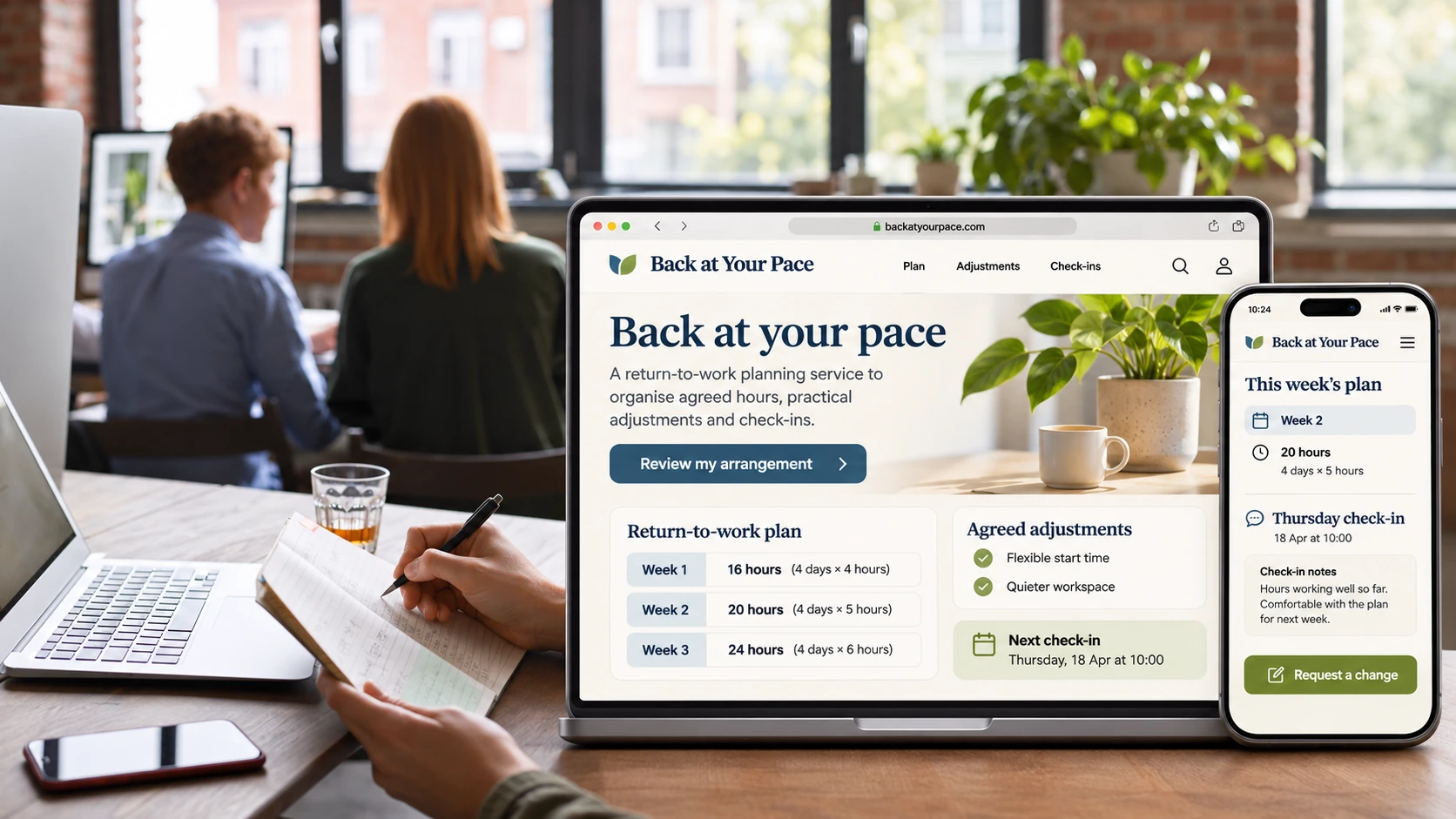
A worker is ready to return after time away, but the agreed schedule, equipment and check-in are scattered between conversations. Their manager means well and still misses a practical detail. Your service could help both sides see what was promised and who will arrange it before the first day back.
A business you can
picture.
Build a private workspace for arrangements already agreed by the relevant people. It records hours, workplace preparations, responsible contacts and chosen check-in dates without trying to make clinical decisions.
Who would be glad
you built it?
Returning employees
Clear agreed arrangements and a respectful review process
People managers
A record of practical commitments and responsibilities
Human-resources support teams
Controlled coordination of an authorised return plan
Where the money
could come from.
An employer could pay for a staff-support workspace and a defined setup service delivered with appropriate expertise. The fee covers coordination, access controls and support. The product should not sell a guaranteed return outcome or substitute for occupational, medical or employment advice; it helps people carry out arrangements already agreed through the proper process.
The part you could
make your own.
Your proposed edge is the handover from a supportive conversation to the actual working day. A visible owner for a practical arrangement could prevent goodwill from being lost through an overlooked task.
An angle to test with the people you want to serve.Start with something
worth using.
Begin with one agreed return plan. Record practical arrangements, responsible people, dates and review points. Separate restricted personal information from the tasks a manager needs to carry out.
- Show the agreed practical plan and dates.
- Assign workplace preparation tasks to named people.
- Record requested changes for human review.
Give the promise
something to stand on.
You need appropriate workplace-support partners and careful information handling. Collect only what is necessary, respect the worker’s sharing preferences and leave medical or employment decisions with qualified and authorised people.
Collect only necessary information, restrict access and respect the worker's preferences. Medical, employment and specialist decisions remain with the appropriate professionals and the people authorised to make them.
Let a small beginning
teach you something.
Work with an appropriate support professional and a consenting employee-manager pair on a suitable return. Review the agreed practical tasks, then ask whether the first review reflects the worker’s experience rather than only task completion.
Do the returning worker and manager understand the same practical arrangements and have a clear way to review what needs changing?
Look for these signs
- Commitments have responsible people and dates
- Access reflects the worker’s agreed sharing choices
- Review notes include the worker’s experience
A little more
clarity.
Will managers see private medical details?
Only information that is necessary and appropriately authorised should be shared. The first version can coordinate practical tasks without making clinical records visible to everyone involved.
Can the tool decide when someone is ready to return?
No. Readiness and related employment or medical decisions belong with the appropriate people and professionals. The workspace supports agreed arrangements after those decisions, not an automated judgement.
What should my first version focus on?
Start with the first test described here, then build around the part people actually use and would pay to keep.
Now picture it
with your name on it.
Your people. Your priorities. The version you keep thinking about. Answer a few questions and leave with a starting plan you can keep.
Free to explore. No account or email needed for your starting plan.