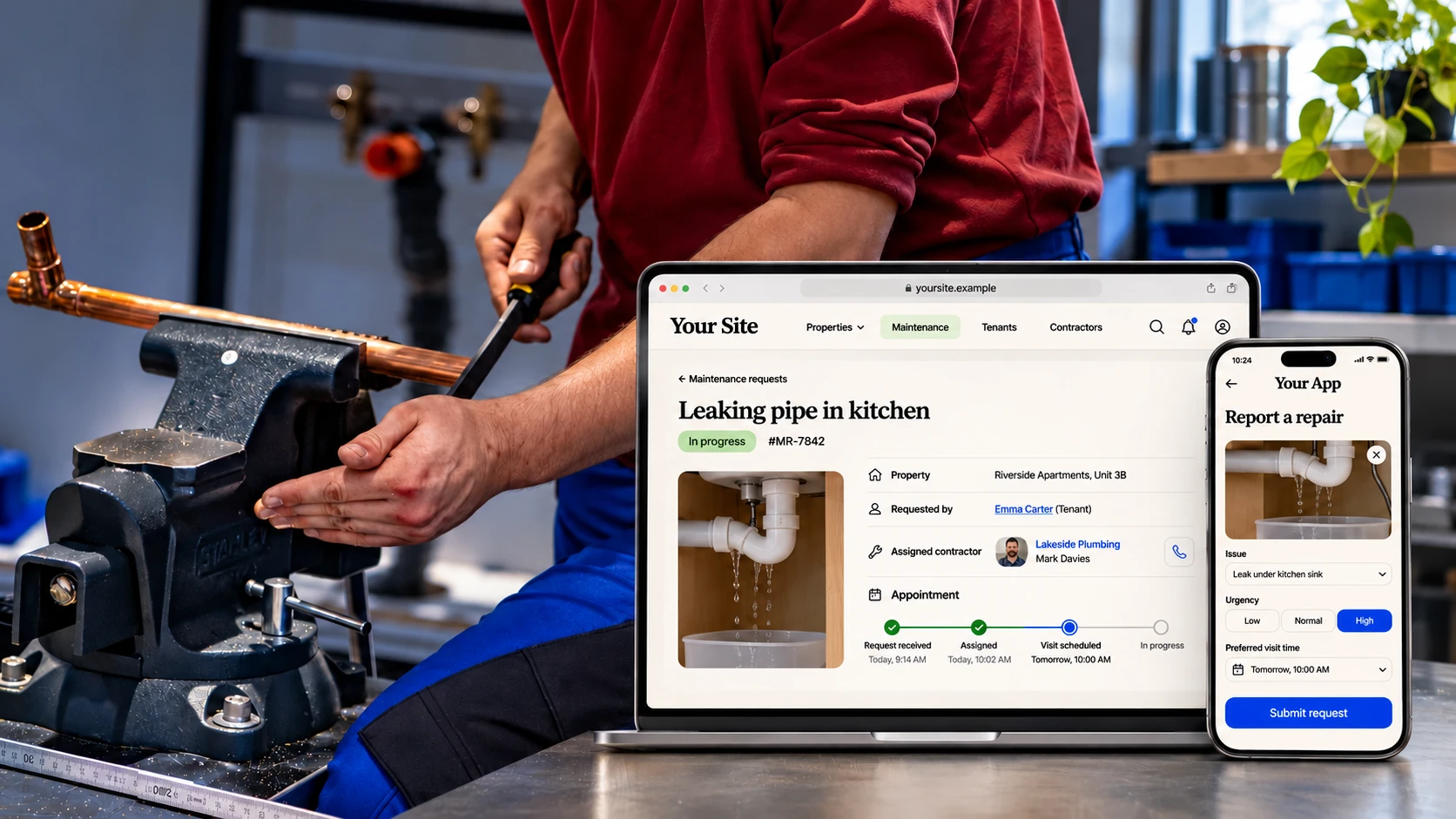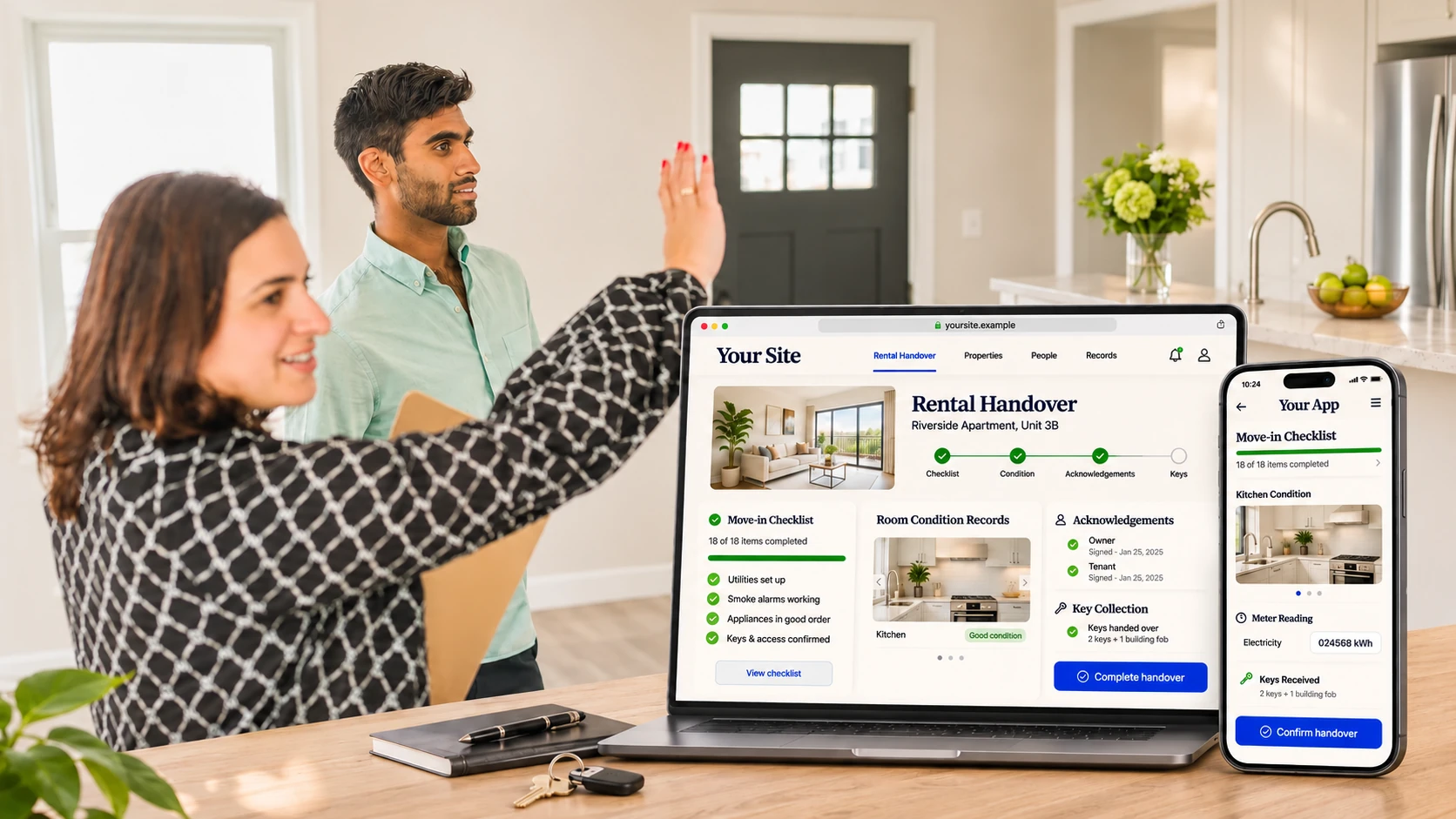
A tenant is leaving, a new occupant is preparing to arrive and the owner is still arranging a repair. Keys, meter readings and dates move between separate conversations. Your service could bring the short transition into one shared plan, so the handover is about the actual home rather than another search for missing messages.
A business you can
picture.
Start with a local property-management partner. Each move receives a workspace with agreed dates, named tasks, condition photographs and the information both sides need to review.
Who would be glad
you built it?
Property managers
A clear record of the period between occupants
Departing and incoming occupants
Understandable handover responsibilities and dates
Property owners
Visibility of repairs and agreed transition tasks
Where the money
could come from.
A property manager could pay per transition, with a recurring plan for repeated use. The fee supports coordination, document storage and support. Inspection or moving assistance should be separately scoped if offered. The workspace does not decide deposit deductions or legal responsibility; its commercial value is a clearer record for the people authorised to make those decisions.
The part you could
make your own.
Your possible difference is focusing on the narrow gap between occupants. Linking a promised repair to the incoming tenant’s handover date could make a practical dependency visible before it becomes a moving-day surprise.
An angle to test with the people you want to serve.Start with something
worth using.
Start with one property transition. Record dates, keys, meters, outstanding work and responsible people. Attach dated evidence and provide a shared handover summary that each authorised participant can review.
- Assign practical tasks before moving day.
- Record condition with dated, attributed evidence.
- Keep handover acknowledgements and open issues visible.
Give the promise
something to stand on.
You need practical property coordination experience and careful record handling. Every observation should show who supplied it, and disagreements must remain visible rather than being resolved by an automatic checklist status.
Make clear who supplied each record and how disagreements are handled. A shared checklist should reflect the actual agreement and does not itself decide deposit claims or legal responsibility.
Let a small beginning
teach you something.
Work with a property manager on a small number of upcoming transitions. Follow the checklist through the actual handover and ask each participant which details were clear and which still required separate chasing.
Can everyone identify the agreed handover tasks and clearly distinguish completed work, disputed observations and outstanding responsibilities?
Look for these signs
- Key and meter records are attributable
- Outstanding repairs remain visible
- Participants review the same handover summary
A little more
clarity.
Does ticking a box settle a deposit claim?
No. The record supports a conversation and any appropriate review. It should not turn one party’s observation into a binding conclusion about responsibility or money.
Can all participants edit everything?
Use permissions suited to their role. Let people add observations or challenge a record while preserving who supplied each item and preventing silent changes to another party’s evidence.
What should my first version focus on?
Start with the first test described here, then build around the part people actually use and would pay to keep.
Now picture it
with your name on it.
Your people. Your priorities. The version you keep thinking about. Answer a few questions and leave with a starting plan you can keep.
Free to explore. No account or email needed for your starting plan.