A recruiter speaks with a candidate who wants a different kind of role, then revisits the record weeks later when a suitable brief arrives. Your workspace could preserve that context and the candidate's sharing preferences, helping the team make a relevant introduction instead of sending another generic vacancy.
A business you can
picture.
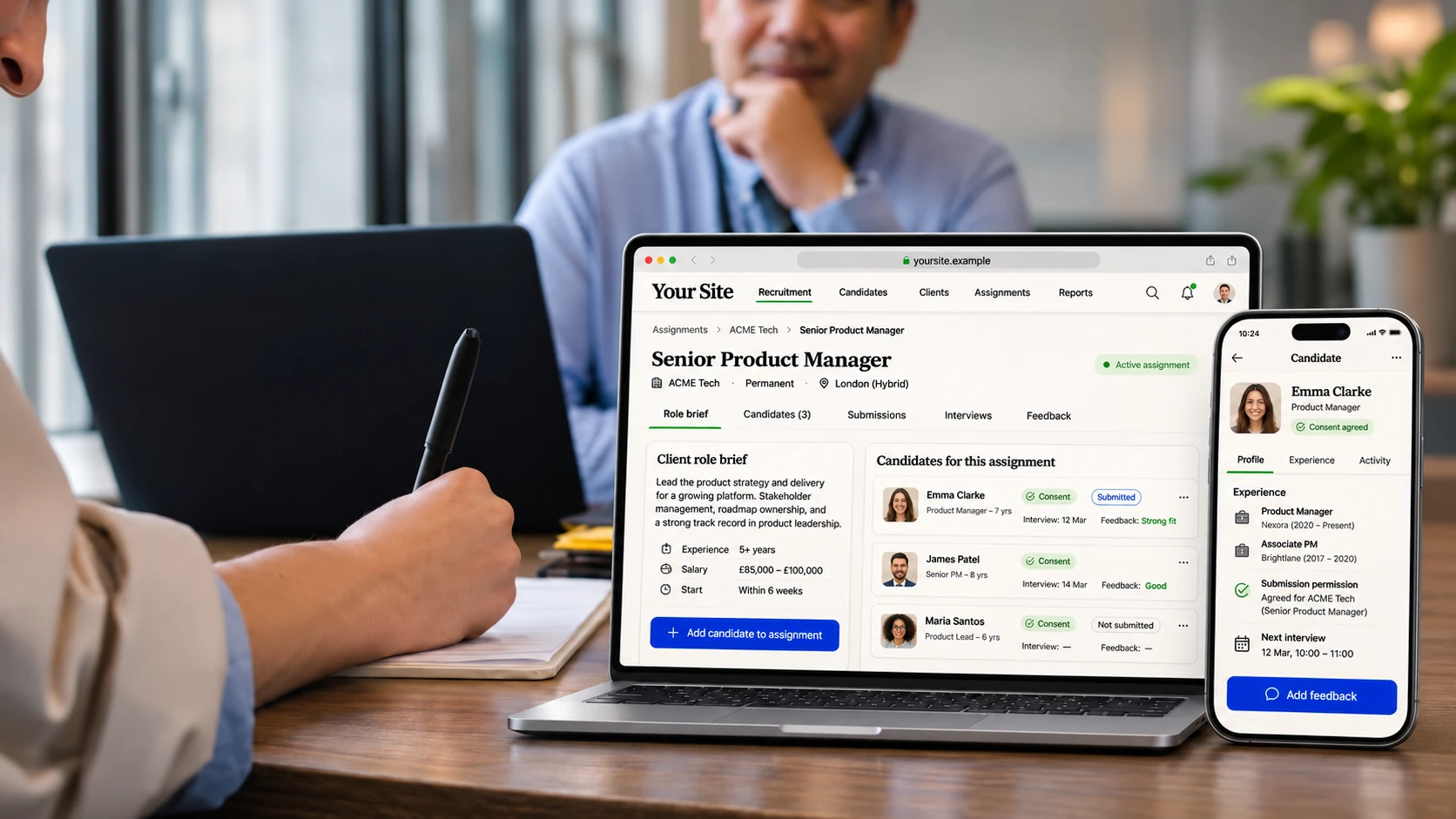
Create recruitment-agency software around candidate relationships and client assignments. Keep consent, relevant experience, submission history and interview feedback organised for the team.
Who would be glad
you built it?
Recruitment consultants
Maintain candidate relationships and next actions.
Agency teams
Coordinate client assignments and submissions.
Candidates using approved tools
Update preferences and understand sharing.
Where the money
could come from.
Agencies could pay a recurring team subscription, with migration and workflow setup separately priced. The software supports relationship and assignment management; the agency's placement fees remain its own client arrangement. Data cleanup, integrations and ongoing support create costs that should be reflected in the product's scope.
The part you could
make your own.
Remembered human context could be your edge. A candidate's priorities, agreed next step and sharing history may improve a recruiter's work more than another generic match score. Test continuity when an assignment passes between colleagues.
An angle to test with the people you want to serve.Start with something
worth using.
Start with candidate preferences, client briefs, agreed sharing permissions and submission tracking. Include interview feedback and named next actions. Keep automated outreach and ranking limited until the team has reliable records and clear communication standards.
- Candidate profiles and consent records
- Client vacancies and shortlists
- Interview feedback and placement stages
Give the promise
something to stand on.
You need insight into agency workflows and disciplined handling of personal records. Candidate goals, consent and submission history should remain usable across colleagues without turning the system into an indiscriminate distribution tool.
Candidate data should only be shared appropriately and with clear permission. Record who received a profile and why. Review any automated matching for relevance and inappropriate bias.
Let a small beginning
teach you something.
Pilot with a small agency team using appropriately authorised data. Follow one assignment from brief to candidate discussion and submission, checking whether colleagues can see what the candidate agreed to and what should happen next.
Can the recruiter make a relevant introduction with clear candidate permission and a traceable record of where information was sent?
Look for these signs
- Candidate preferences remain current
- Submissions follow agreed permission
- Follow-ups retain useful conversation context
A little more
clarity.
Can every colleague send a candidate's CV anywhere?
Define permissions and a clear consent process. A shared record should help the agency respect the candidate's choices and avoid duplicate or unwanted submissions, not make uncontrolled distribution easier.
Is an automated match enough to submit someone?
Treat matching as a possible starting point for a human conversation. Availability, goals and context may have changed, so the recruiter should confirm relevance and permission before presenting the candidate to a client.
Manatal is a reference for recruitment software.
Now picture it
with your name on it.
Your people. Your priorities. The version you keep thinking about. Answer a few questions and leave with a starting plan you can keep.
Free to explore. No account or email needed for your starting plan.