A buyer has opened ten tabs for a home appliance and still cannot compare capacity, running requirements and the total delivered price. Your guide could organise the relevant differences around real uses, helping them ask better questions and choose a retailer with clearer expectations.
A business you can
picture.
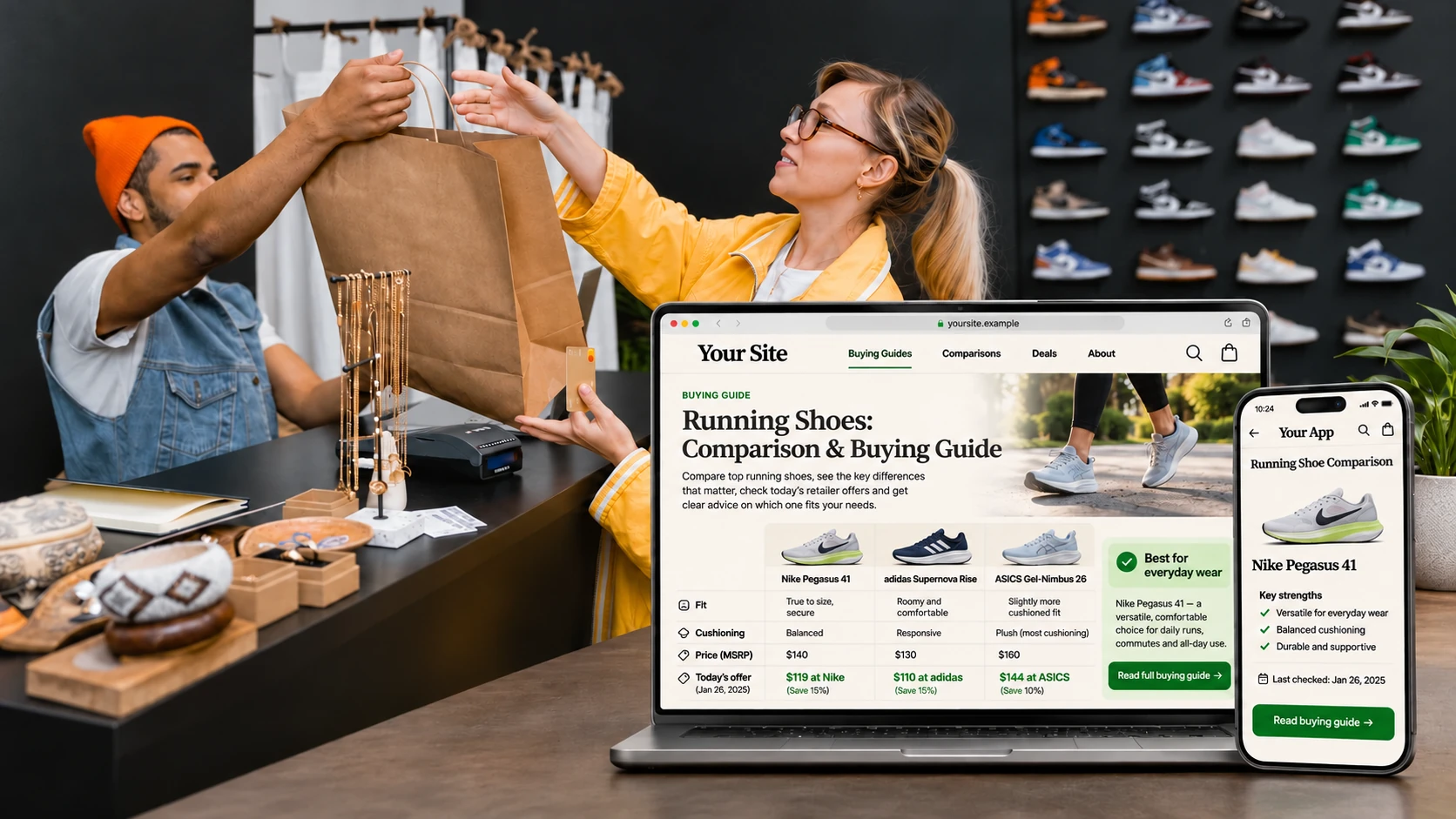
Build a comparison publication for a category you understand. Combine reliable product information, dated retailer offers and original buying guidance that explains which differences matter to different customers.
Who would be glad
you built it?
First-time category buyers
Understand which specifications matter.
Shoppers comparing a shortlist
Check equivalent details and current offers.
People replacing a product
Find a fit for their existing requirements.
Where the money
could come from.
Disclosed affiliate referrals could fund the publication when readers buy through suitable partner links. Confirm the actual arrangements before relying on them. Research, updates and editorial work cost money; payment relationships should not quietly determine supposedly independent rankings, and referral income is never a guaranteed result of publishing a comparison.
The part you could
make your own.
Use-case clarity could be your edge. Explaining why a specification matters to a small flat, busy household or particular workflow may be more useful than a universal top-ten list. Test whether readers can make a clearer shortlist.
An angle to test with the people you want to serve.Start with something
worth using.
Choose one product category and a small maintained comparison set. Include dated prices or offers, relevant specifications and original buying guidance. Show affiliate relationships and clearly flag details that require confirmation with the retailer.
- Consistent product comparison fields
- Dated retailer offers and availability
- Saved shortlists and original buying guides
Give the promise
something to stand on.
You need category knowledge, reliable information sources and a process for keeping offers current. Explain your testing or research method and distinguish hands-on findings from manufacturer claims or desk research.
Prices and stock change, so show update dates and link to the retailer for confirmation. Obtain data lawfully and distinguish hands-on testing from research based on supplied information.
Let a small beginning
teach you something.
Ask likely buyers to compare a real shortlist using your draft guide. Observe which details change their decision and which claims they want evidence for, then refine the method before expanding the category coverage.
Can a shopper explain why one product suits their use and identify which offer details still need checking?
Look for these signs
- Comparisons use consistent specifications
- Offer dates and sources are visible
- Commercial links are clearly disclosed
A little more
clarity.
Can products be ranked best without testing them?
Explain the basis of any recommendation. Research-based comparisons can be useful, but should not imply hands-on testing or comprehensive market coverage that did not occur. Make assumptions and use cases visible.
What if a retailer changes its price?
Show when an offer was checked and direct buyers to confirm current terms. Maintain a correction process and avoid presenting a cached price as a guaranteed checkout amount.
Klarna’s 2022 annual report describes PriceRunner’s price-comparison model.
Now picture it
with your name on it.
Your people. Your priorities. The version you keep thinking about. Answer a few questions and leave with a starting plan you can keep.
Free to explore. No account or email needed for your starting plan.