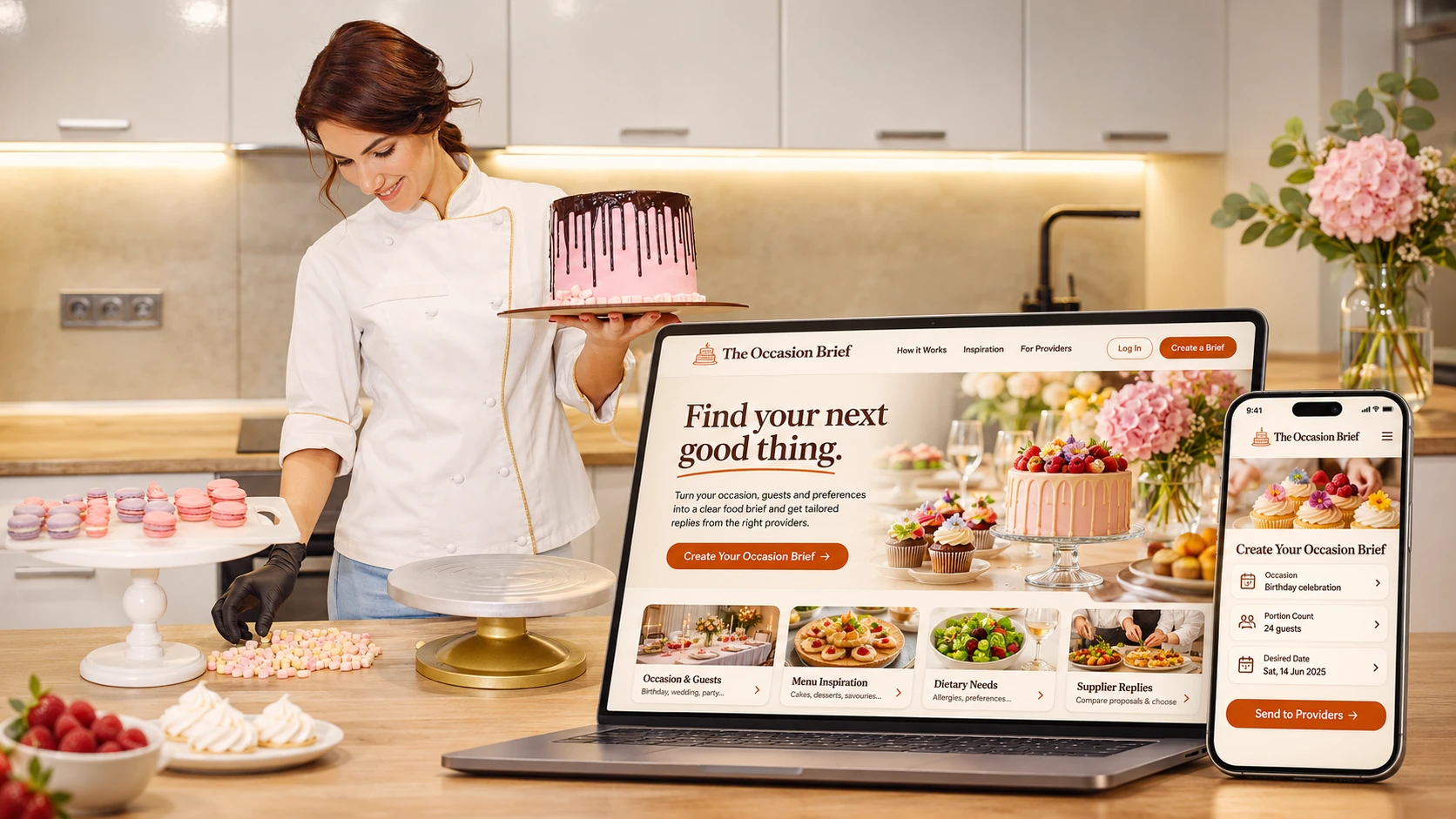
A host wants a family celebration to feel generous and relaxed, but the first catering request becomes a hurried message asking for a price for forty people. You could build a service that brings the occasion’s meaning and practical needs together, helping the kitchen propose something the host can actually picture.
A business you can
picture.
Begin with one kind of occasion and a small provider group. Hosts describe the guests, setting and service expectations, then review comparable proposals before confirming an arrangement.
Who would be glad
you built it?
Hosts planning meaningful gatherings
A clear brief that captures the desired experience
Independent caterers
Useful information before preparing a quotation
Small event organisers
A shared record of requirements and provider responses
Where the money
could come from.
Hosts could pay a fixed brief-preparation and coordination fee. The fee covers the interview, structured brief and a defined proposal review, while the catering booking remains separately agreed. If a provider commission is also earned, disclose it before commitment. Price the coordination work realistically rather than relying on vague promises of a cheaper event.
The part you could
make your own.
Your proposed difference is preserving the story behind the meal while making it operational. Knowing that guests should be able to mingle comfortably can guide a more relevant proposal than headcount and budget alone.
An angle to test with the people you want to serve.Start with something
worth using.
Focus on one occasion type. Gather guest numbers, setting, timing, service style and food requirements, then produce a host-approved brief. Invite a small number of suitable providers to submit clearly scoped proposals.
- Gather the occasion, guest numbers and service needs.
- Record food requirements for direct provider confirmation.
- Compare menus, staffing and practical arrangements.
Give the promise
something to stand on.
You need listening skills and knowledge of catering coordination. Ingredient and allergen questions must stay explicit, with providers directly confirming what they can supply and how the service will be delivered.
Providers must confirm their ability to meet food requirements and delivery commitments. Keep questions about ingredients and allergens explicit, and distinguish a proposal from a confirmed booking.
Let a small beginning
teach you something.
Work with a host planning a real small occasion and a few suitable kitchens. Review whether each proposal responds to the same brief, then ask the host which details made the decision easier to understand.
Do the host and kitchen describe the same food, service and occasion expectations before either treats the proposal as confirmed?
Look for these signs
- Provider proposals answer the actual brief
- Food requirements receive direct confirmation
- Booking status and exclusions are clear
A little more
clarity.
Does a submitted proposal confirm the catering?
No. Keep proposals, selected options and confirmed bookings visibly different. The host and provider must agree the final scope, price and terms before the occasion is treated as booked.
Can the platform guarantee allergen suitability?
It should not infer that from a form. Keep requirements explicit and require direct provider confirmation, with appropriate expertise and clear responsibility for food preparation and communication.
What should my first version focus on?
Start with the first test described here, then build around the part people actually use and would pay to keep.
Now picture it
with your name on it.
Your people. Your priorities. The version you keep thinking about. Answer a few questions and leave with a starting plan you can keep.
Free to explore. No account or email needed for your starting plan.