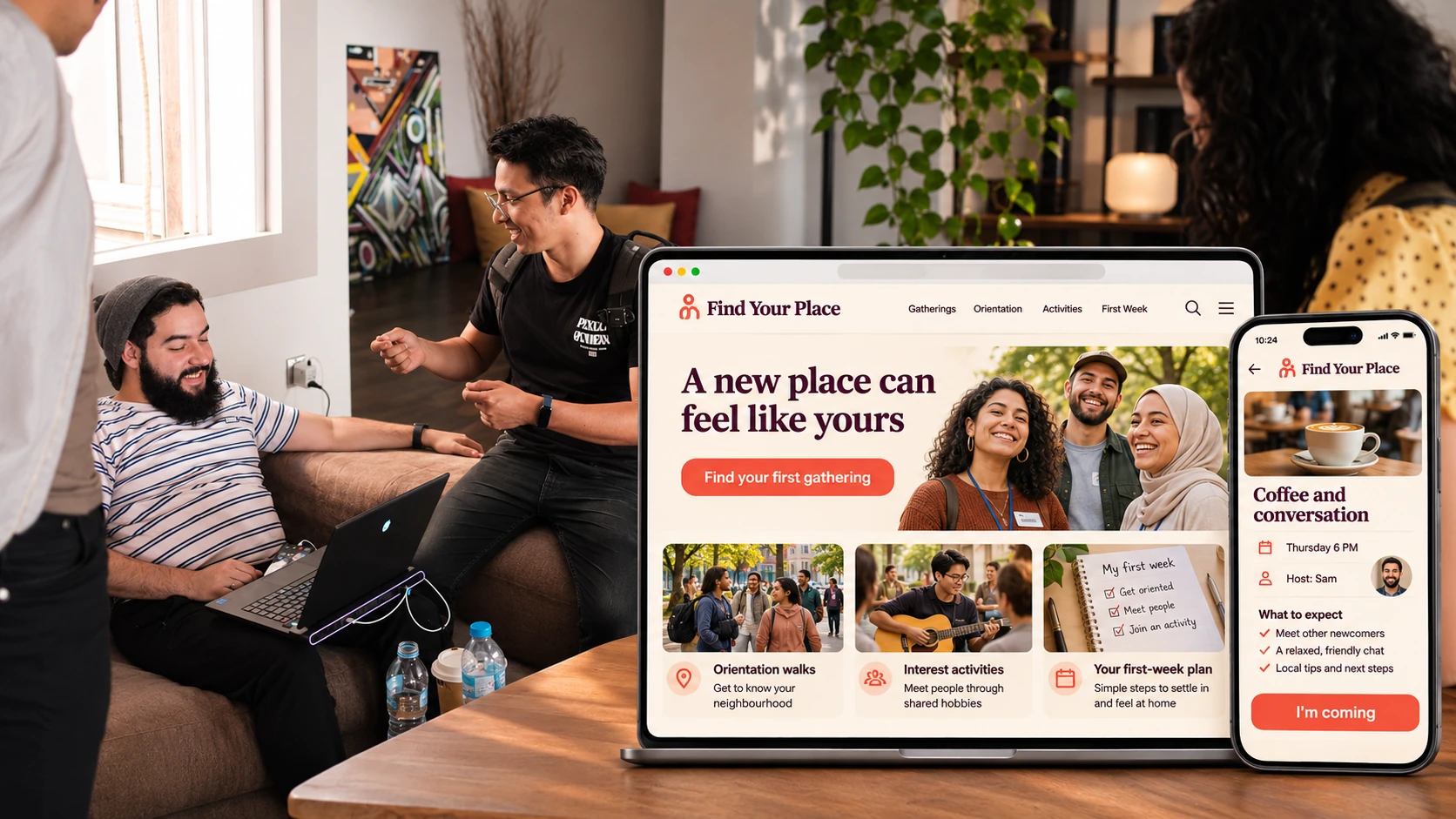
A person moves for work and knows the route to the office but little else. A large social feed feels like another room to enter alone. Your service could offer a gentler beginning: a useful local orientation, a familiar interest and a clearly described small activity they can choose without pressure.
A business you can
picture.
Choose one location and a clear newcomer group. Hosts publish small introductions and practical sessions, while participants select the pace and kinds of contact that suit them.
Who would be glad
you built it?
People newly arrived in an area
Practical orientation and optional social starting points
Employers relocating staff
A thoughtful, voluntary welcome offer
Housing communities welcoming residents
Clearly organised introductions to local activities
Where the money
could come from.
An employer could purchase optional orientation packages for newly arrived staff. The fee covers local research, host coordination and participant support, with activity costs stated separately where needed. Begin with a defined welcome experience rather than an open-ended promise of community, and give participants control over whether their employer sees attendance or personal feedback.
The part you could
make your own.
Your proposed edge is a sequence that begins with usefulness before social commitment. Finding a familiar activity or completing a practical errand could make the first local conversation feel easier for some newcomers.
An angle to test with the people you want to serve.Start with something
worth using.
Choose one arrival group and area. Offer a short orientation guide and a few hosted activities with clear details, group expectations and contact routes. Let newcomers choose what to join and what to skip.
- Offer small activities with a named host.
- Explain practical local arrangements in plain language.
- Let participants control introductions and contact.
Give the promise
something to stand on.
You need local knowledge, reviewed hosts and a responsive support process. The experience should respect different comfort levels and avoid making friendship, belonging or personal safety a guaranteed product outcome.
Review hosts, explain activity details and provide reporting and support. Avoid guarantees about friendship or personal safety; give participants enough information to decide what feels suitable.
Let a small beginning
teach you something.
Partner with an employer or housing group and invite newcomers voluntarily. Trial a short sequence of clearly described options, then ask which step felt useful and which felt like too much too soon.
Does a newcomer find one useful local connection or activity they would choose again without feeling pressured to participate?
Look for these signs
- Participants understand and choose activities freely
- Hosts deliver the described welcome
- Feedback reveals comfortable next steps
A little more
clarity.
Can we promise people will make friends?
No. You can provide thoughtful opportunities and reliable arrangements, while relationships remain personal. Describe the experience honestly and let each participant decide their own level of involvement.
Will employers receive personal participation details?
Only share what participants have knowingly agreed to and what is appropriate for the programme. A sponsored welcome should not become an undisclosed report on someone’s private social life.
What should my first version focus on?
Start with the first test described here, then build around the part people actually use and would pay to keep.
Now picture it
with your name on it.
Your people. Your priorities. The version you keep thinking about. Answer a few questions and leave with a starting plan you can keep.
Free to explore. No account or email needed for your starting plan.