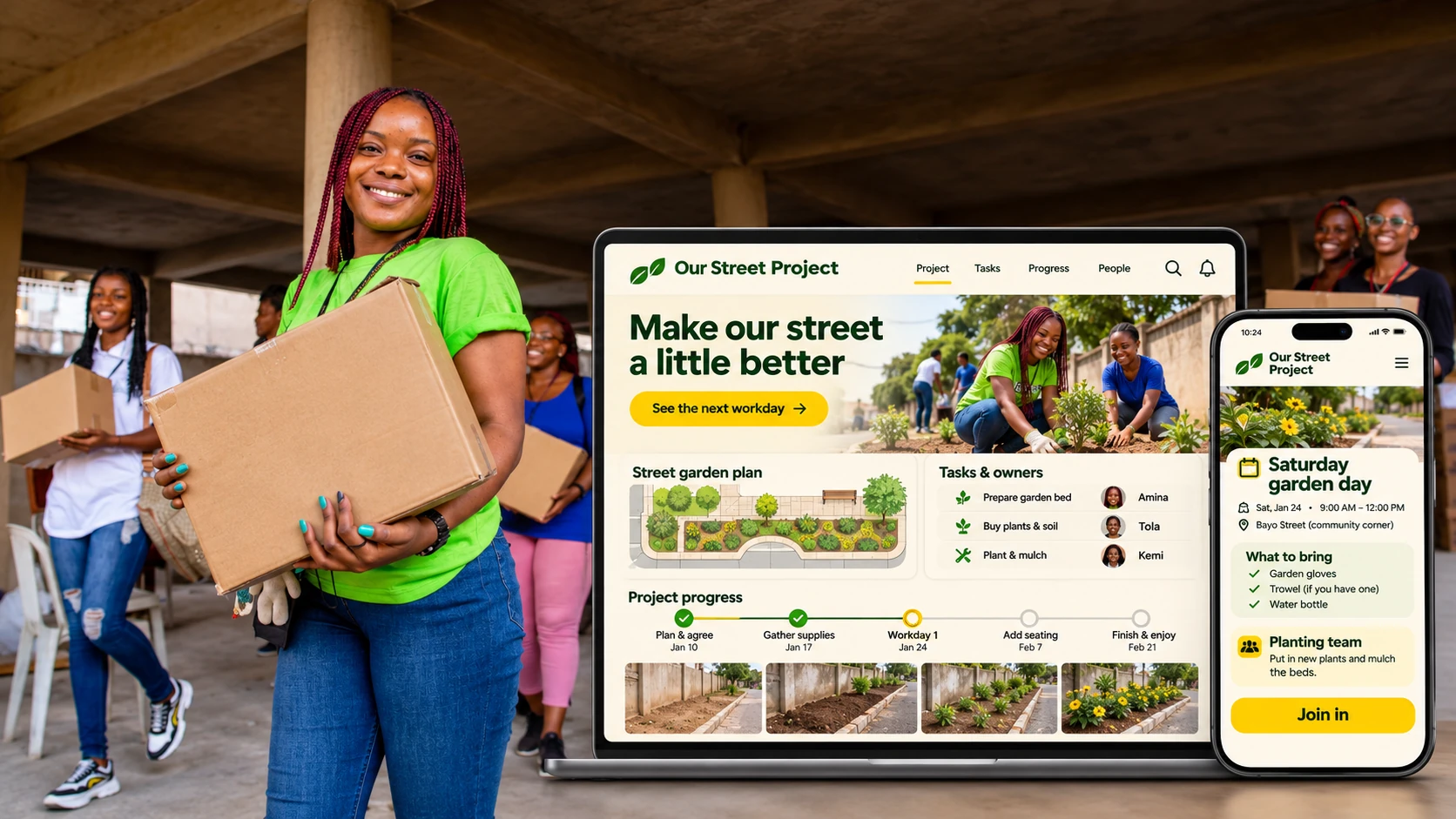
Neighbours have mentioned the neglected communal corner for months. Someone offers plants, another knows a contractor, but the conversation never becomes a plan. Your service could help them choose one achievable improvement, confirm permission and give each commitment an owner so the project can move beyond good intentions.
A business you can
picture.
Begin with a coordinator and a defined project. The workspace holds the proposal, agreed permissions, practical tasks and updates residents can understand without attending every meeting.
Who would be glad
you built it?
Resident associations
A manageable record of shared improvement projects
Volunteer organisers
Clear commitments and fewer repeated follow-up messages
Community sponsors
Transparent visibility of the work they agreed to support
Where the money
could come from.
A resident association could pay for a defined coordination package around one project. The fee supports planning, follow-up and a useful completion record. Sponsorship may fund that work if it is disclosed, but should not silently override residents’ decisions. The product’s value is organised follow-through, not a guarantee that volunteers or contractors will complete every promise.
The part you could
make your own.
Your angle could be keeping small commitments visible until they are resolved. A dated answer to who is arranging the materials may matter more to a resident group than another discussion feed.
An angle to test with the people you want to serve.Start with something
worth using.
Start with one small project. Record the agreed purpose, permissions, tasks, responsible people and next checkpoint. Share progress with residents without exposing private contact details or making every conversation public.
- Turn suggestions into a scoped project plan.
- Match volunteers to specific agreed tasks.
- Share dated progress and outstanding questions.
Give the promise
something to stand on.
You need facilitation skills and accountable local organisers. Physical work requires appropriate permission, and any money should remain in clearly authorised arrangements with visible responsibilities and records.
Confirm permissions for physical work, establish accountable organisers and protect personal contact details. Any collected funds should use appropriate existing arrangements with transparent records and clear responsibility.
Let a small beginning
teach you something.
Work with an association that already has permission to explore a modest improvement. Help it turn existing offers into named tasks and review whether residents can see what is happening without repeatedly asking the organiser.
Can the group identify the next practical action, its responsible person and the permission or resource still needed?
Look for these signs
- Tasks have willing named owners
- Necessary permissions are recorded
- Completion includes an honest account of what changed
A little more
clarity.
Will the platform collect project funds?
It does not need to in the first version. Keep funds with the group’s appropriate existing arrangement and link to authorised records rather than taking custody without a defined role.
What if residents disagree about the project?
The service should preserve the group’s decision process and show unresolved concerns. Coordination helps carry out an agreed project; it should not turn a few active voices into assumed community consent.
What should my first version focus on?
Start with the first test described here, then build around the part people actually use and would pay to keep.
Now picture it
with your name on it.
Your people. Your priorities. The version you keep thinking about. Answer a few questions and leave with a starting plan you can keep.
Free to explore. No account or email needed for your starting plan.