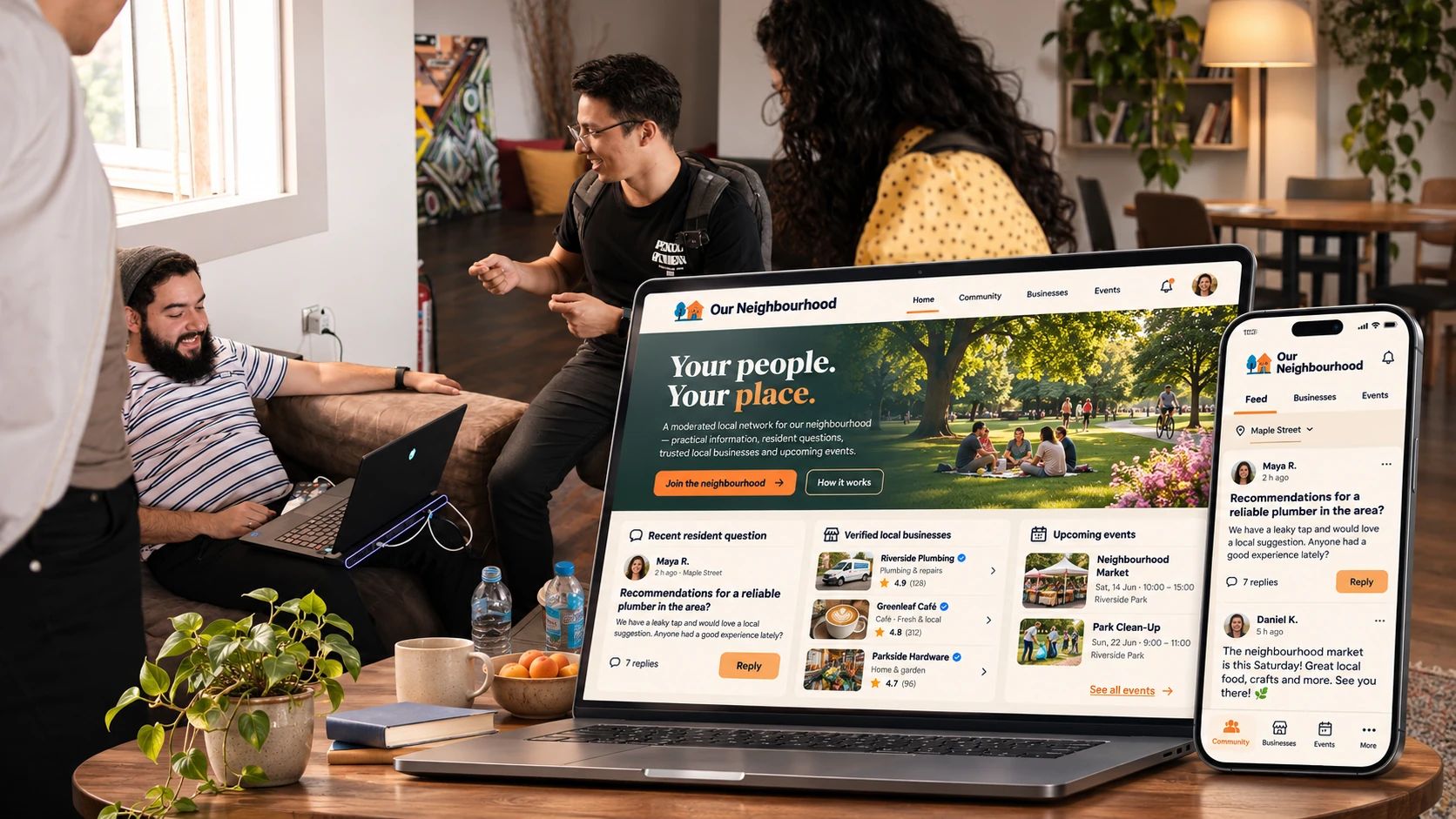
A new resident needs a repair contact and wants to know whether the weekend event is still happening. Answers are buried in old group messages, mixed with promotion and rumours. Your network could organise practical local knowledge and give the community a clear way to update or question it.
A business you can
picture.
Create a moderated local network with practical information, resident questions and clearly identified business listings. Start with a small enough area that the details can be kept useful.
Who would be glad
you built it?
New residents
Find practical information about their area.
Local organisers
Keep events and notices current.
Neighbourhood businesses
Present clearly identified services.
Where the money
could come from.
Local businesses could pay for clearly labelled profile tools or promotional placement within a defined area. The paid value should be explicit and separate from independent community discussion. Moderation, information upkeep and business support cost time; test whether businesses receive useful enquiries without promising a fixed volume or ranking.
The part you could
make your own.
Reliable small-area detail could distinguish the network. An accurate meeting point, current opening arrangement or useful newcomer guide may build more trust than trying to cover an entire city before the first neighbourhood is well served.
An angle to test with the people you want to serve.Start with something
worth using.
Begin with a small area, useful local pages, resident questions and labelled business profiles. Make sources and update dates visible where relevant. Establish moderation before enabling broad public accusations or unreviewed alerts.
- Neighbourhood discussions and notices
- Local recommendations and events
- Business profiles with clear commercial labels
Give the promise
something to stand on.
You need a close understanding of the area and active moderation. Local information can become outdated or personal quickly, so correction, privacy and a fair process for handling complaints need ongoing attention.
Moderation, identity choices and location privacy need care. Avoid publishing private addresses or turning unverified allegations into permanent searchable claims. Give residents practical controls over contact and notifications.
Let a small beginning
teach you something.
Invite a few residents and local organisers to contribute recurring questions and verified practical information. Test whether newcomers can find an answer and whether existing residents are willing to keep useful details current.
Can residents find a current useful answer while recognising the difference between community experience and paid promotion?
Look for these signs
- Outdated details receive corrections
- Paid listings are easy to identify
- Discussions remain useful and respectful
A little more
clarity.
Can a paid business listing look like a recommendation?
It should be clearly labelled as a commercial listing or placement. Explain how businesses appear and keep editorial judgement distinguishable from payment so residents can interpret the information for themselves.
How should complaints about local businesses be handled?
Use clear discussion rules, reporting and review. Encourage factual, relevant accounts and protect personal information; a community platform should not become an unchecked public accusations board.
Nextdoor is a reference for a neighbourhood network.
Now picture it
with your name on it.
Your people. Your priorities. The version you keep thinking about. Answer a few questions and leave with a starting plan you can keep.
Free to explore. No account or email needed for your starting plan.