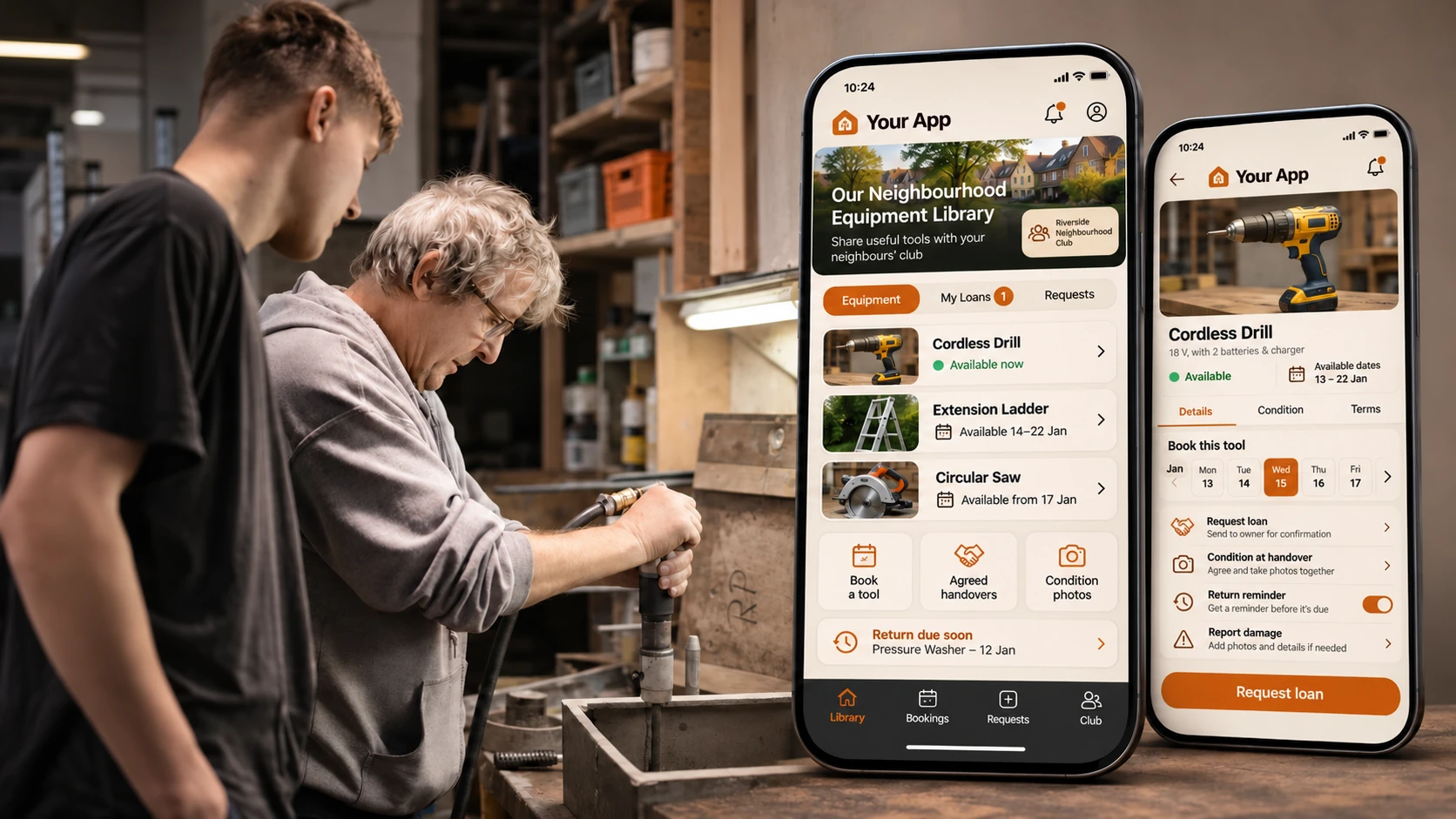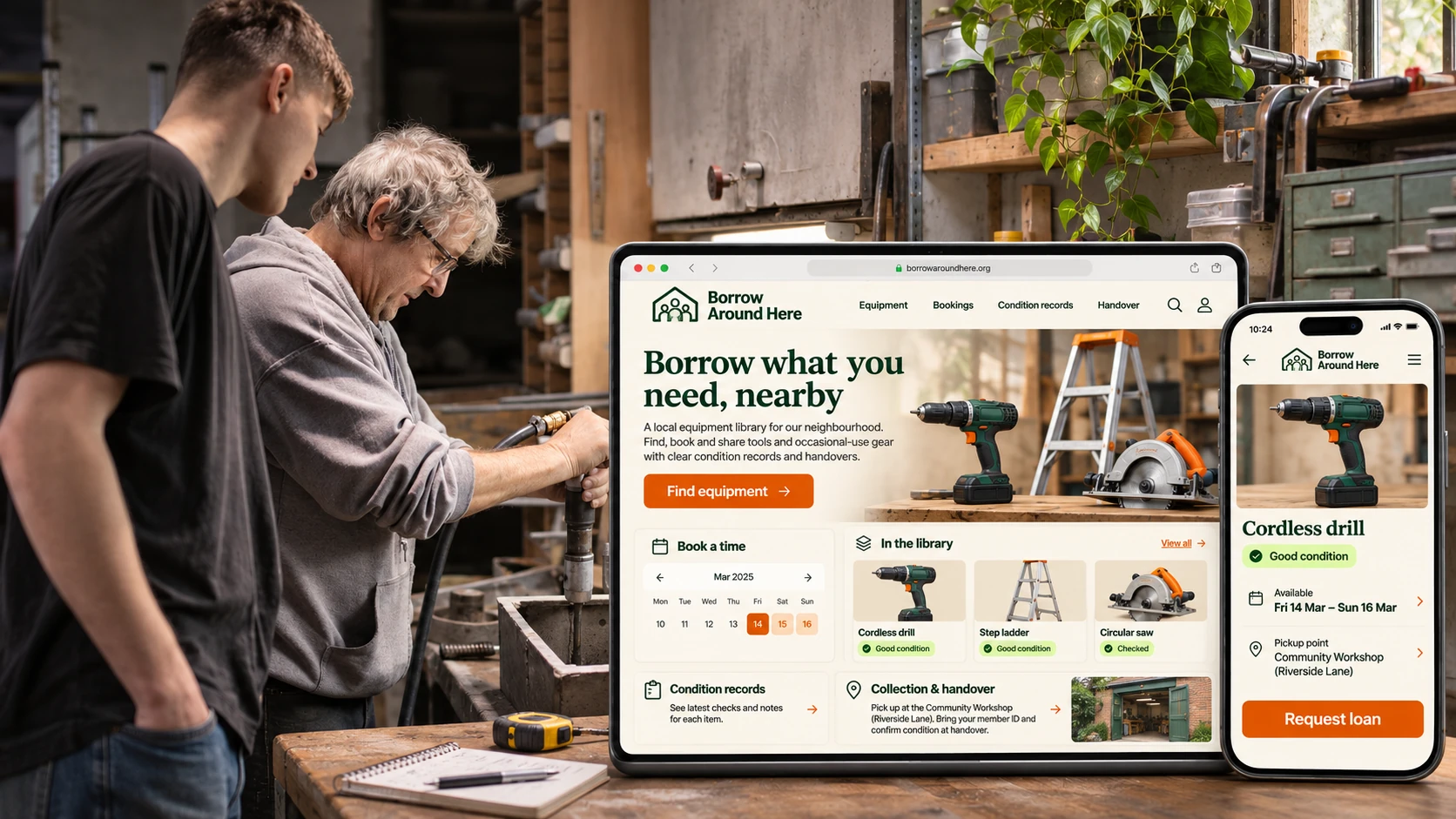
A household needs a folding table for one gathering while several sit unused nearby. The idea of sharing is simple; collection, condition and responsibility are less clear. Your club could build a dependable routine around those details, making an occasional need easier to meet without every exchange becoming a personal negotiation.
A business you can
picture.
Begin with a small managed collection and a known group. Members see available items, request a time and complete an agreed check when collecting and returning equipment.
Who would be glad
you built it?
Households with occasional equipment needs
A clear booking and collection arrangement
Community groups running small events
Access to suitable shared items
Members contributing equipment
Agreed care, availability and return expectations
Where the money
could come from.
Members could pay a modest membership plus clearly stated per-use charges, or start with a single per-use model. Pick the arrangement that covers storage, inspection, maintenance and coordination in the pilot. Deposits are separate from income and need explicit handling; the business should not depend on unclear damage charges to make sharing viable.
The part you could
make your own.
Your possible edge is the dependable local routine around the item. Knowing where collection happens, who checks condition and how a changed plan is handled may matter more than a large unreviewed inventory.
An angle to test with the people you want to serve.Start with something
worth using.
Begin with a small collection of lower-risk occasional-use items in one area. Show availability, pickup arrangements and care instructions. Record condition at handover and explain deposits or loss arrangements before booking.
- Show real availability and suitable item uses.
- Record condition at collection and return.
- Keep responsibility and support arrangements visible.
Give the promise
something to stand on.
You need a manageable inventory, local coordination and a fair condition process. Choose suitable items and plan inspection, maintenance, instructions and the response to late, damaged or missing returns.
Choose suitable items, maintain them and establish practical operating rules. Higher-risk equipment needs appropriate instruction and oversight; the first collection can focus on simpler, occasional-use items.
Let a small beginning
teach you something.
Trial a small collection with a resident group or community venue. Follow complete booking cycles and record the actual inspection and coordination work, then ask members whether the process feels clear enough to repeat.
Can members collect, use and return a suitable item under conditions that both the borrower and custodian understand?
Look for these signs
- Availability reflects actual usable items
- Condition is recorded at handover
- Returns leave the next booking workable
A little more
clarity.
Should we begin with power tools?
Only include equipment you can manage responsibly with appropriate instructions and oversight. A simpler initial collection can test booking and return habits before adding items with greater operating risks.
What happens when something is damaged?
Explain the inspection and resolution process before a member borrows. Keep condition records and distinguish ordinary wear from damage according to agreed terms rather than deciding charges informally afterwards.
What should my first version focus on?
Start with the first test described here, then build around the part people actually use and would pay to keep.
Now picture it
with your name on it.
Your people. Your priorities. The version you keep thinking about. Answer a few questions and leave with a starting plan you can keep.
Free to explore. No account or email needed for your starting plan.