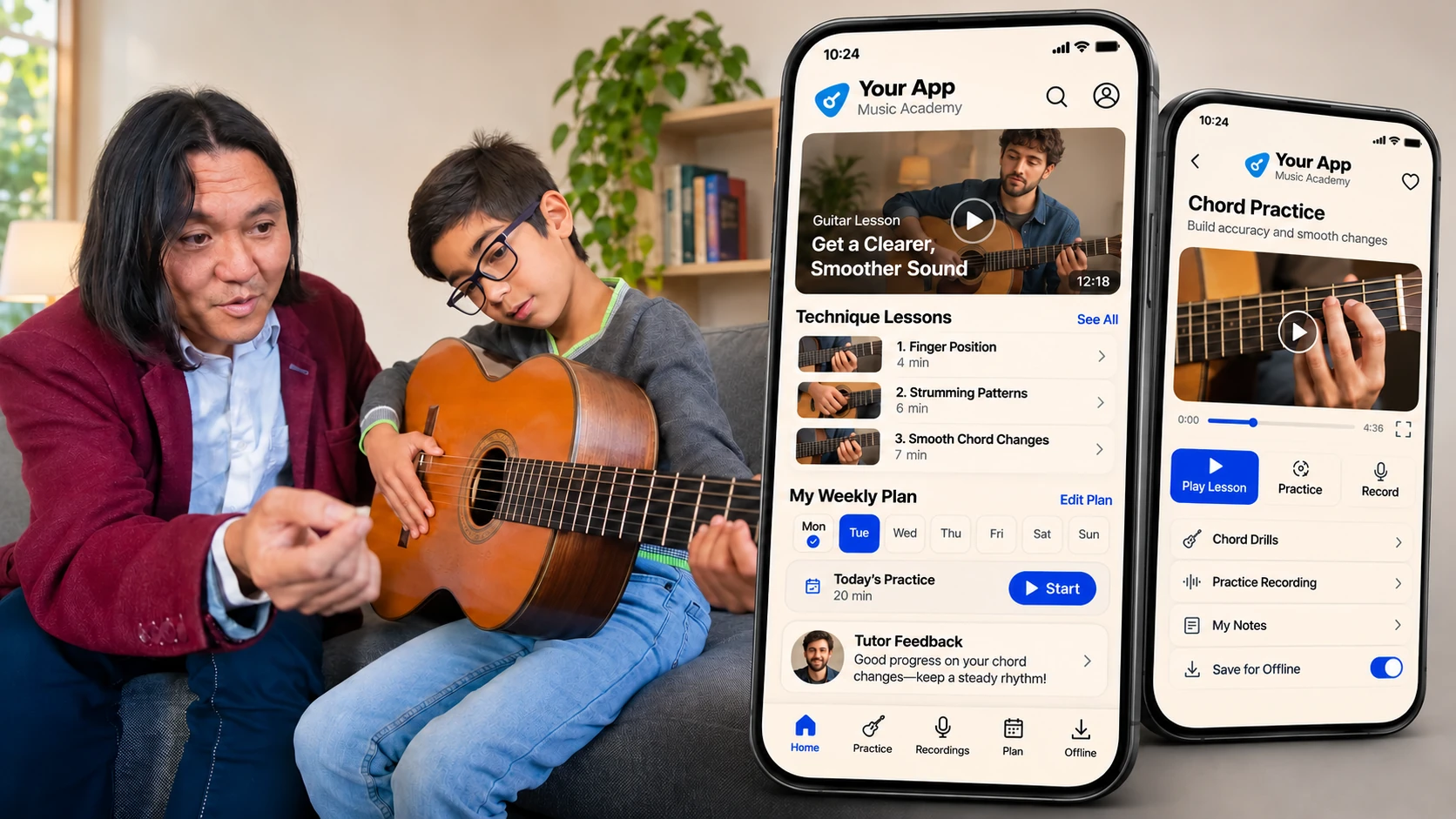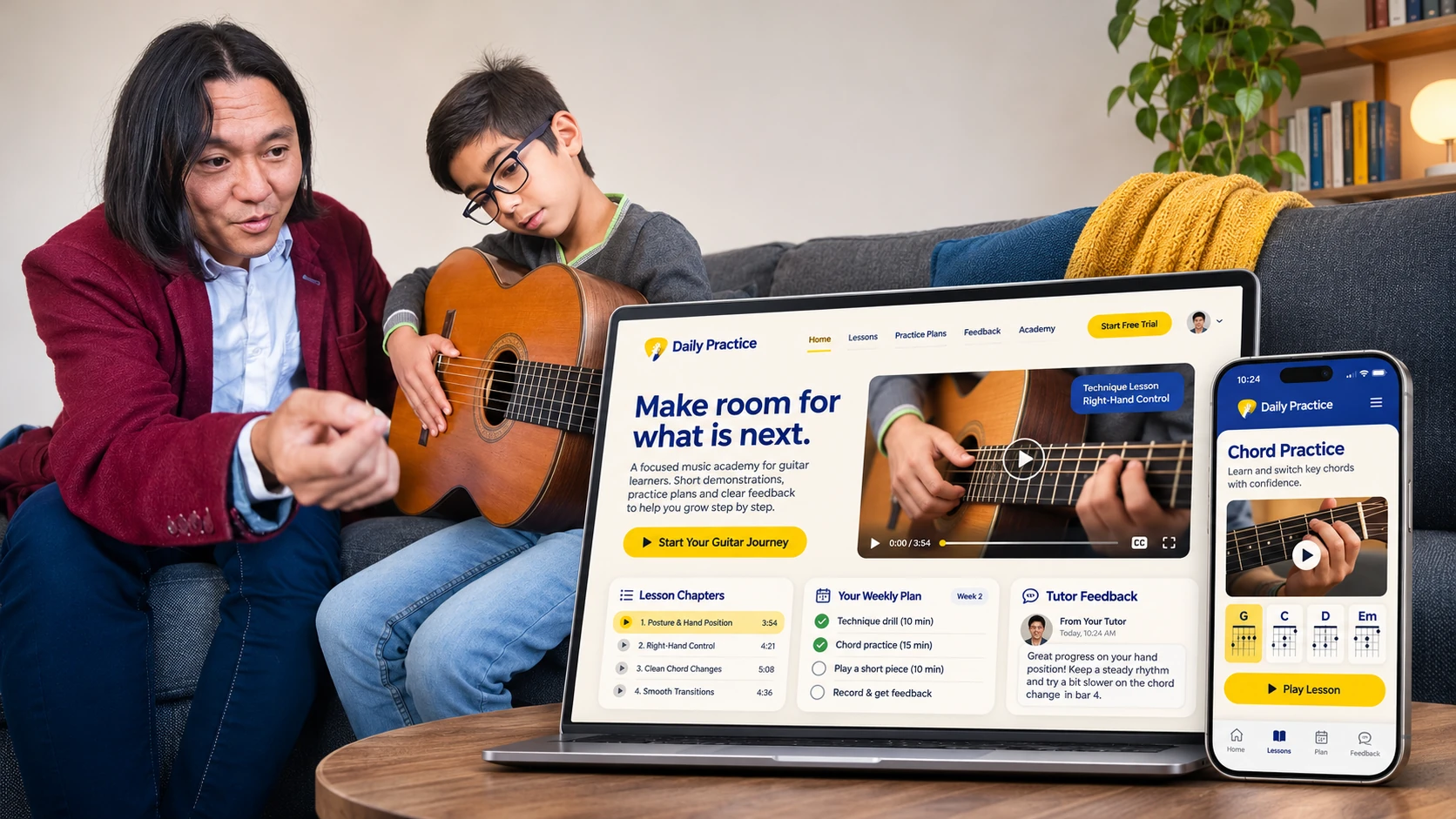
A new guitarist can play part of a song but loses enthusiasm when the difficult change keeps interrupting it. Your academy could turn that obstacle into a short focused practice session, with a clear demonstration and a way to hear progress without needing every lesson to happen live.
A business you can
picture.
Build an academy for one instrument or musical skill. Combine short demonstrations, practice plans and clear feedback opportunities around the needs of a defined learner group.
Who would be glad
you built it?
Adult beginners
Build a manageable practice routine.
Returning musicians
Revisit a specific instrument skill.
Music teachers
Support practice between lessons.
Where the money
could come from.
Learners could pay for a defined course pathway or a subscription to maintained practice material. Personal reviews can be separately priced because they require teacher time. Recording, editing, content rights, support and feedback all affect the economics; the product's value is a useful practice experience, not a promise of rapid mastery.
The part you could
make your own.
A pathway built around common sticking points could make your academy distinctive. Short exercises for a troublesome chord change or rhythm may help learners reconnect with the music they want to play. Test whether they keep practising voluntarily.
An angle to test with the people you want to serve.Start with something
worth using.
Start with one instrument and learner level, short demonstrations, practice tasks and optional recording submission. Give each session a purpose and an achievable next step rather than launching an undifferentiated video library.
- Step-by-step practice pathways
- Demonstrations and backing material
- Practice records and optional tutor review
Give the promise
something to stand on.
You need teaching experience with the chosen instrument and a realistic approach to feedback. Demonstrations, rights to teaching material and maintaining useful practice pathways are continuing work behind the platform.
Obtain rights for recordings, compositions and teaching material. Any automated feedback needs testing across devices and playing conditions. Keep clear routes to a teacher when feedback is confusing.
Let a small beginning
teach you something.
Ask a few intended learners to follow a practice task without live instruction. Listen to their attempts with permission and learn where the demonstration, pace or wording needs improvement before expanding the pathway.
Can learners understand what to practise next and hear a specific change in their own playing?
Look for these signs
- Practice tasks are revisited
- Learners identify a concrete difficulty
- Feedback leads to a more focused attempt
A little more
clarity.
Can the platform replace every live lesson?
Some learners need personal observation and adjustment. Position the academy around the teaching it can provide, with optional qualified feedback or live sessions where a recorded demonstration is not enough.
Can popular songs be used in lessons?
Check the rights needed for the material and format you publish. Original exercises, properly licensed pieces and clear teaching permissions are safer foundations than assuming every familiar song can be freely included.
Yousician is a reference for digital music learning.
Now picture it
with your name on it.
Your people. Your priorities. The version you keep thinking about. Answer a few questions and leave with a starting plan you can keep.
Free to explore. No account or email needed for your starting plan.