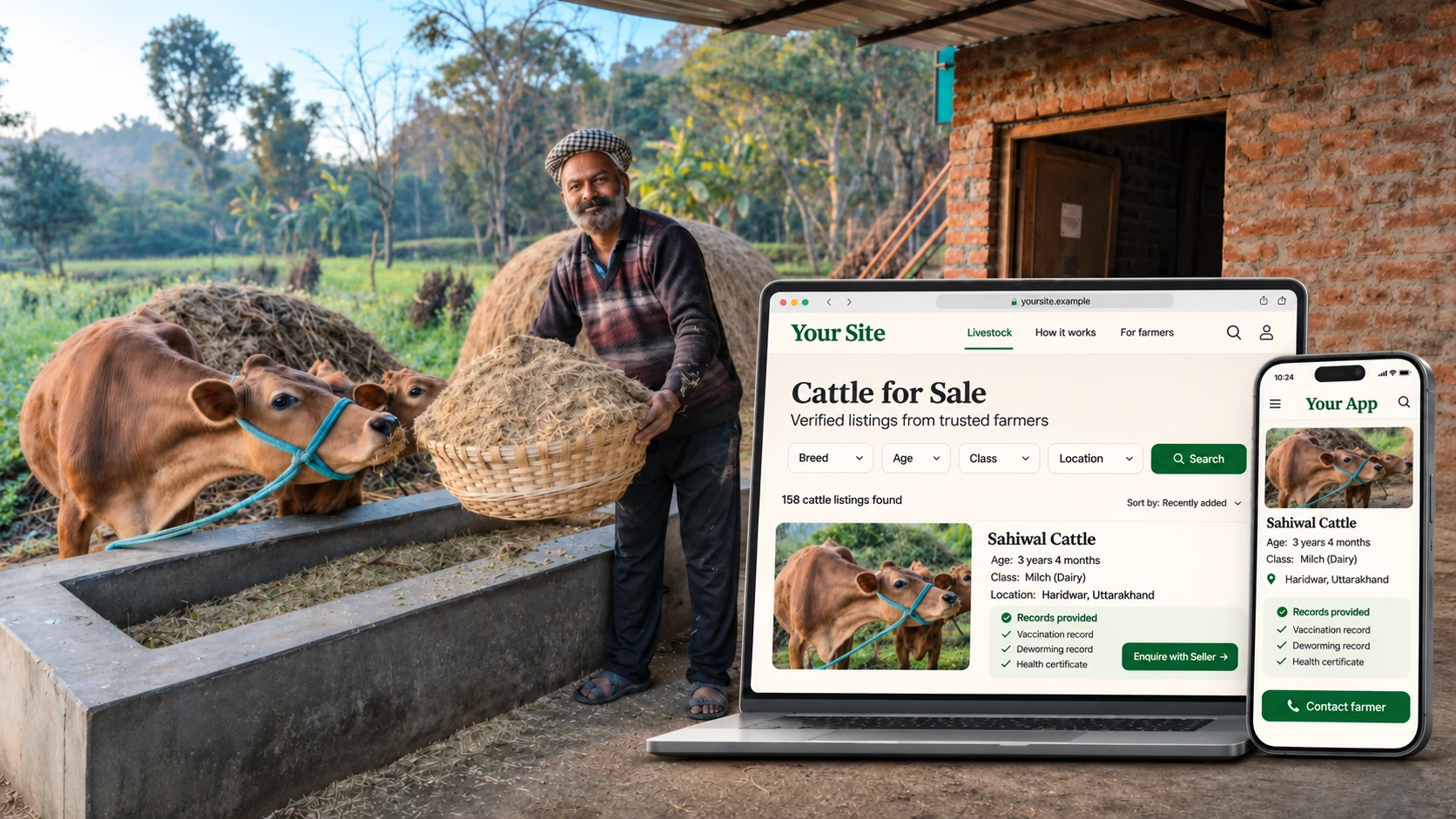
A buyer sees a promising photograph but still needs to understand the animal’s age, records, location and suitability for the intended purpose. You could create a listing service that makes those questions easier to organise, so the conversation starts with more than a price and a hopeful description.
A business you can
picture.
Create a listing service for a defined livestock category. Present age, class, location and supplied records consistently, with a clear route to the responsible seller.
Who would be glad
you built it?
Livestock buyers
Structured seller information and a record of unanswered questions
Farm sellers
Serious enquiries about accurately described animals
Agricultural advisers
Relevant documents to review within their professional role
Where the money
could come from.
Sellers could pay a clear listing fee for a stated period, including defined enquiry tools. That revenue supports listing review, hosting and support; it does not buy a health or quality endorsement. Keep professional inspections and transport services separately agreed, and avoid a fee structure that pressures the platform to present uncertain claims as settled.
The part you could
make your own.
Your version could help buyers assemble the right questions before visiting. A consistent document checklist and visible unanswered items may improve enquiry quality without pretending the platform can certify an animal from a photograph.
An angle to test with the people you want to serve.Start with something
worth using.
Choose one livestock category and a limited trading area. Collect structured descriptions, dated photographs and available records. Enable buyer enquiries and professional-check coordination before attempting online transaction completion.
- Structured animal and herd listings
- Seller enquiries and inspection arrangements
- Available records and transport information
Give the promise
something to stand on.
You need livestock knowledge, responsible seller relationships and local professional support. Listings must separate seller claims from checked evidence, with a practical process for corrections and misleading information.
Animal welfare, movement rules, health documentation and fraud controls require local expertise. Keep records current and provide a response to misleading listings or disputed seller claims.
Let a small beginning
teach you something.
Ask experienced buyers and responsible sellers to review a small set of genuine listings. Observe which missing details prevent a useful visit, then test whether your structure helps arrange better-prepared enquiries.
Can a buyer identify what the seller has supplied and which professional checks still need to happen before purchase?
Look for these signs
- Listings distinguish claims from supporting records
- Buyers ask relevant pre-visit questions
- Outdated or misleading entries are corrected
A little more
clarity.
Does a listed animal carry our guarantee?
A listing should not imply an independent health, ownership or quality guarantee. Explain the checks actually performed and leave required specialist assessment to appropriate professionals.
Can the first version avoid handling payments?
Yes. A well-structured enquiry service can be the starting offer. The seller and buyer still need clear arrangements for the eventual transaction, professional checks and any movement or delivery.
Cattle Range is a reference for livestock listings.
Now picture it
with your name on it.
Your people. Your priorities. The version you keep thinking about. Answer a few questions and leave with a starting plan you can keep.
Free to explore. No account or email needed for your starting plan.