Someone finds a plot that seems perfect for a future home, but the listing leaves access, boundaries and document status unclear. Your portal could organise the available information consistently and point towards the independent checks needed, helping the person take a more informed next step.
A business you can
picture.
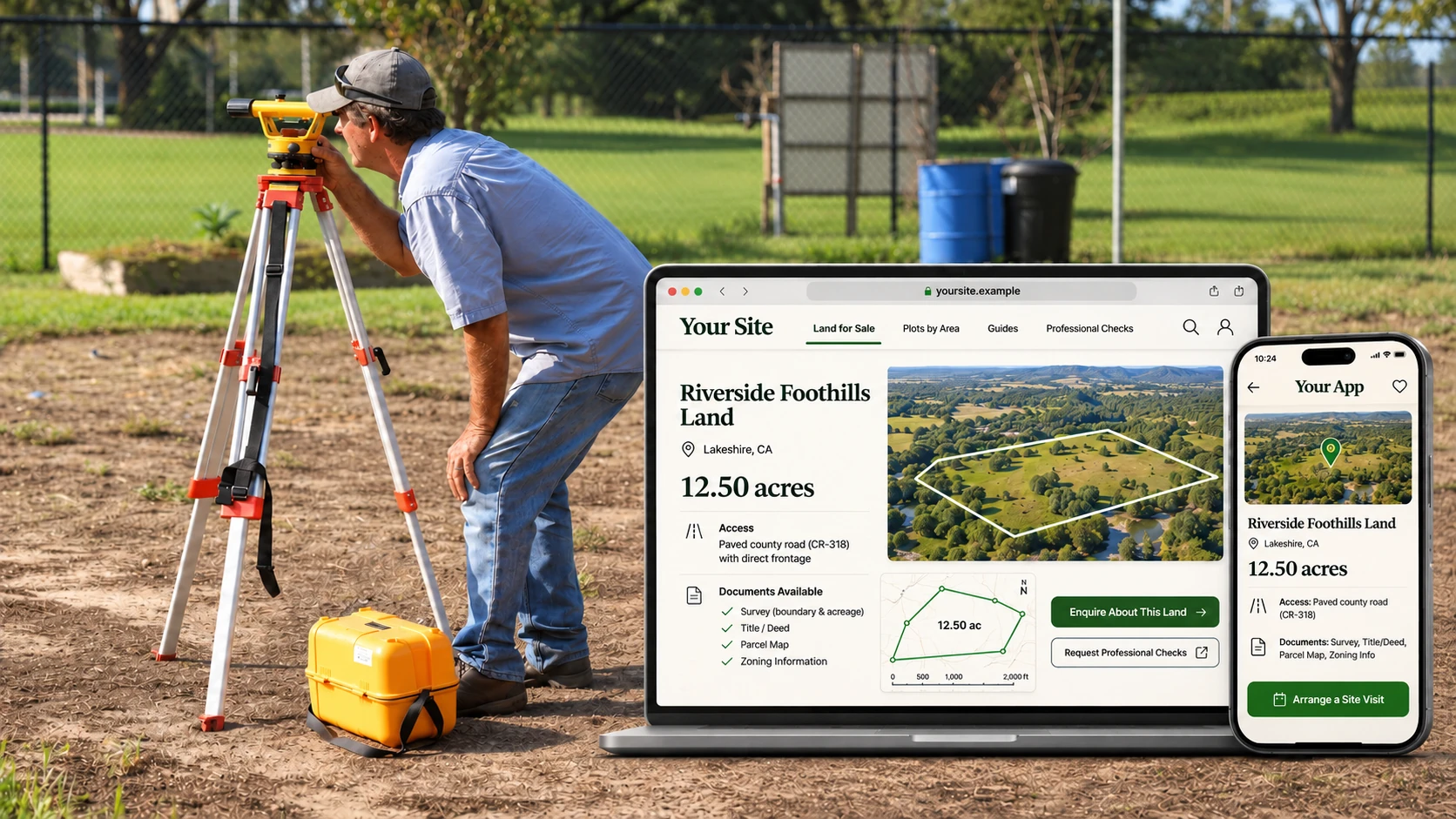
Create a land listing portal for a defined market. Present location, stated size, access and supplied documents consistently, with a route to independent professional checks where needed.
Who would be glad
you built it?
People exploring land purchases
Understand stated site details and questions.
Land agents and sellers
Present listings with clear supplied evidence.
Professional advisers
Review organised information for clients.
Where the money
could come from.
Sellers or agents could pay for listing and enquiry-management tools. Label paid placement clearly and keep it separate from any verification claim. Onboarding, document organisation and corrections require resources; money paid for land or a reservation is not ordinary listing revenue and needs its own carefully established process.
The part you could
make your own.
Consistent practical evidence could distinguish the portal. A clear account of access, stated boundaries, document sources and unresolved questions may be more useful than a dramatic investment headline. Test whether it helps buyers prepare a better professional review.
An angle to test with the people you want to serve.Start with something
worth using.
Choose a defined market and a small reviewed seller group. Present location, stated dimensions, access information and document descriptions consistently. Keep enquiries separate from commitments and make independent verification a clear part of the buyer's journey.
- Land listings and location information
- Document availability and seller enquiries
- Saved comparisons and viewing requests
Give the promise
something to stand on.
You need a carefully defined listing role and appropriate professional relationships. Land claims can be consequential; show what is supplied, what has been checked and what remains unresolved without implying the portal establishes ownership.
Land ownership and development rights require appropriate local due diligence. Identify who supplied each detail and distinguish platform checks from legal or surveyor conclusions. Keep outdated listings under review.
Let a small beginning
teach you something.
Ask prospective buyers and suitable property professionals to review sample listings. Identify the missing questions that would prevent a sensible site visit, then test whether agents can maintain those details accurately.
Can a prospective buyer identify the important unanswered site and document questions before making a commitment?
Look for these signs
- Listings distinguish supplied and checked information
- Responsible contacts are identifiable
- Enquiries lead to appropriate independent checks
A little more
clarity.
Does a published listing prove ownership?
No. A listing organises information but does not by itself establish title, boundaries or the right to sell. Explain the portal's checks accurately and direct buyers towards appropriate independent professional verification.
Should buyers pay a reservation fee through the portal?
Only within a properly reviewed transaction model with clear recipients, conditions and refund arrangements. The first version can focus on informed enquiries while those more consequential processes are designed separately.
LandWatch is a reference for land discovery listings.
Now picture it
with your name on it.
Your people. Your priorities. The version you keep thinking about. Answer a few questions and leave with a starting plan you can keep.
Free to explore. No account or email needed for your starting plan.